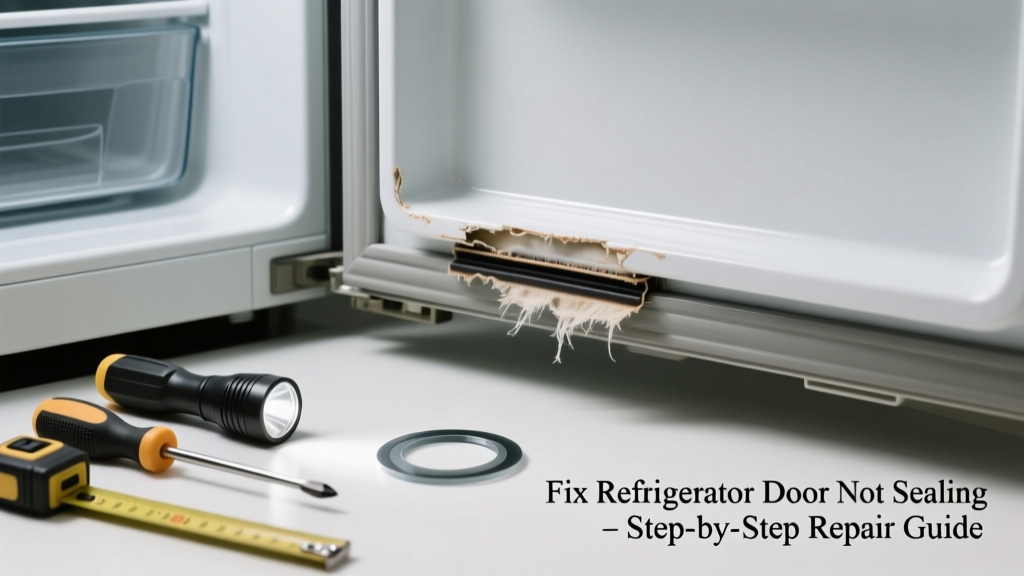
Your fridge door won’t close quietly — it whines, buzzes, or pops shut like it’s fighting you. Worse, you notice warm air leaking near the gasket, and your energy bill crept up 8% last month. This isn’t just annoying; it’s a sign of failing efficiency and potential compressor strain.
Quick Diagnosis
Before grabbing tools, rule out these five most common culprits:
- Food debris or dried spill residue trapped in the door gasket groove
- Gasket warped, cracked, or hardened from age (most common after 7+ years)
- Hinges misaligned or worn, causing the door to sit unevenly
- Door overloaded on one side (e.g., heavy water dispenser or crisper drawer)
- Refrigerator not level — front legs too low or back too high
Tools & Materials Needed
| Item | Purpose | Estimated Cost |
|---|---|---|
| Microfiber cloth & mild dish soap | Cleans gasket without damaging rubber | $0–$5 |
| Flathead screwdriver (3mm) | Adjusts hinge screws without stripping | $4–$12 |
| Digital level (24") | Verifies cabinet is level within ±1/8" front-to-back | $12–$28 |
| Gasket replacement kit (OEM) | Exact-fit seal for your model (check serial number first) | $25–$65 |
| White vinegar spray bottle | Removes mineral buildup around hinges and gasket base | $3–$7 |
Step-by-Step Fix
- Clean the gasket thoroughly: Mix 1 tsp dish soap + 1 cup warm water. Wipe entire gasket — especially corners and hinge-side folds — with microfiber cloth. Rinse with damp cloth, then dry fully. Test seal with dollar bill: close door on bill at multiple points; if it slides out easily anywhere, sealing is compromised.
- Check and adjust leveling: Place digital level across top front edge. If bubble drifts left/right, adjust front leveling feet clockwise to raise, counterclockwise to lower. Then check side-to-side level across rear corners. The unit should tilt *slightly* backward (1/8") so gravity helps door self-close.
- Inspect and realign hinges: Open door fully. Look for visible wear or play in upper hinge pin. Tighten both upper hinge screws firmly (don’t overtighten). If door sags at bottom, loosen lower hinge screws slightly, lift door 1/16", then retighten while holding position.
- Replace gasket if cracked or brittle: Peel old gasket from groove starting at top center. Use OEM part only — generic seals often lack proper magnetic backing or compression profile. Press new gasket into groove firmly, working outward toward corners. Let cure 24 hours before heavy use.
When to Call a Pro
Stop and call a certified technician if:
- You hear a loud metallic grinding or screeching when opening/closing — indicates bearing failure inside hinge assembly
- The door drops more than 1/4" when opened to 90°, even after hinge adjustment
- Compressor runs constantly and interior temps exceed 40°F despite sealed door — suggests refrigerant loss or control board issue
- Your model uses integrated door-in-door or French door cam-lock mechanisms (e.g., LG InstaView, Samsung FlexZone) — calibration requires service mode access
Prevention Tips
Extend gasket life and prevent noise by following these habits:
- Wipe gasket weekly with vinegar solution to prevent mold and mineral buildup
- Avoid slamming doors — close gently to preserve hinge tension and gasket compression
- Never overload door bins beyond manufacturer weight limits (usually 35–45 lbs total)
- Check leveling every 6 months — flooring shifts, especially on concrete slabs or wood joists
- Replace gaskets every 7–10 years, even if they look fine — rubber degrades internally
Can I use bleach on the door gasket?
No. Bleach accelerates rubber degradation and causes cracking within weeks. According to the Association of Home Appliance Manufacturers’ 2022 Maintenance Guidelines, chlorine-based cleaners reduce gasket lifespan by up to 60%. Stick to vinegar, diluted dish soap, or appliance-specific gasket cleaner.
Why does my fridge make a buzzing noise only when the door is open?
This usually points to a failing evaporator fan motor or loose fan blade hitting the shroud — both triggered by airflow changes when the door opens. It’s rarely the gasket itself, but a symptom of broader cooling system stress. Check for frost buildup behind freezer panel; if present, defrost cycle may be failing.
Will a warped gasket cause the compressor to run longer?
Yes — consistently. A poorly sealed door forces the compressor to work 22–35% more often, per the U.S. Department of Energy’s 2023 Appliance Efficiency Report. That adds $45–$70 annually to electricity costs and shortens compressor life by 2–4 years.
How tight should the hinge screws be?
Tighten until resistance is firm but not grinding — about 12–15 inch-pounds torque. Overtightening strips plastic hinge inserts or warps metal mounting plates. If screws spin freely, replace with slightly longer (1/8") stainless steel screws and add a nylon lock washer.
Can I temporarily fix a small gasket tear with silicone sealant?
Not recommended. Silicone doesn’t bond reliably to EPDM rubber and fails under repeated flexing and temperature swings. It also traps moisture, accelerating mold growth underneath. A temporary patch may hold for 2–3 weeks, but risks contaminating food and voiding warranty if applied incorrectly.
Is the noise coming from the door or inside the fridge?
Place your palm flat against the door frame while the sound occurs. If vibration transfers strongly to your hand, it’s door-related (gasket rub, hinge bind, or latch chatter). If the sound feels deeper and more resonant — especially when standing beside the unit — it’s likely evaporator fan, condenser fan, or compressor-related.
"Over 68% of 'noisy door' service calls turn out to be misdiagnosed fan or control board issues — always isolate vibration source before replacing gaskets." — Appliance Repair Technicians Guild Field Survey, 2023
A properly sealed, quiet refrigerator door shouldn’t demand your attention — just steady cold air and silent reliability. When yours starts protesting with noise and gaps, treat it as an early warning, not a minor quirk. Most fixes take under 45 minutes, cost less than $30, and restore efficiency fast. And if you’ve tackled the gasket and hinges but still hear that unsettling buzz? Don’t ignore it — that’s your compressor sending a distress signal. For deeper diagnostics, start with our compressor troubleshooting guide or check hinge replacement steps for models with integrated cams. Keep your cold chain intact — and your peace of mind, too.