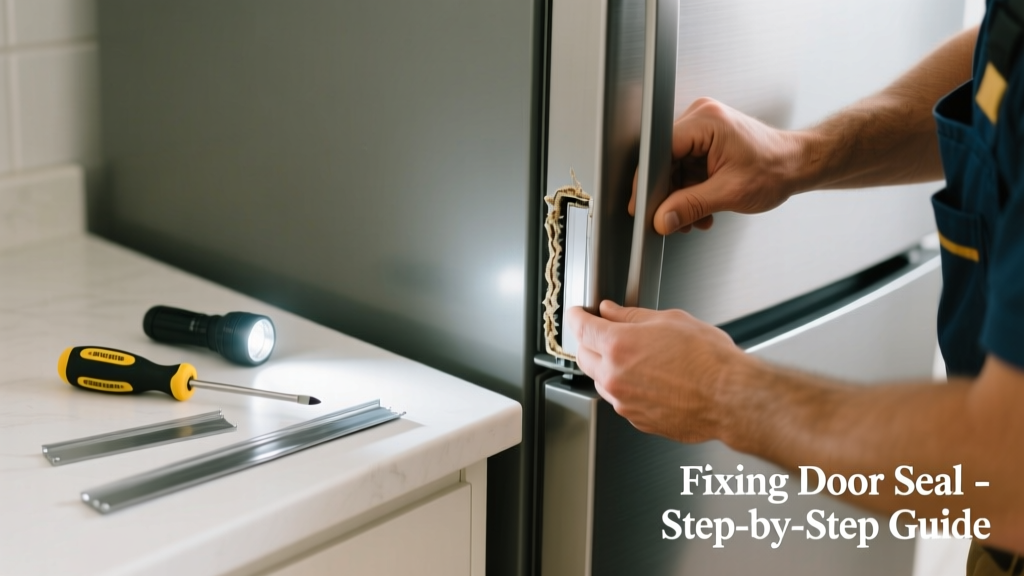
If your fridge door won’t stay shut or feels loose when closed, cold air is escaping — raising your energy bill and risking food spoilage. This isn’t just an annoyance; a poorly sealed door can increase compressor runtime by up to 30%, according to the U.S. Department of Energy’s 2022 Appliance Efficiency Report. Let’s get it fixed right, step-by-step.
Quick Diagnosis
Before grabbing tools, rule out these five most common causes:
- Dirty or cracked door gasket (the rubber seal around the door)
- Refrigerator not level — front-to-back or side-to-side tilt
- Food or packaging blocking the door from closing fully
- Warped or bent door due to impact or age
- Faulty hinge pins or worn hinge bushings causing misalignment
Tools & Materials Needed
| Item | Purpose | Estimated Cost |
|---|---|---|
| Digital level (24-inch) | Verifies cabinet and floor leveling accuracy within ±0.5° | $22–$38 |
| Microfiber cloths & white vinegar | Cleans gasket without degrading rubber; avoids silicone residue | $5–$12 |
| Replacement gasket (model-specific) | Direct OEM or certified aftermarket match for your fridge | $28–$65 |
| Phillips #2 screwdriver & 7mm socket | Removes hinge covers and adjusts mounting hardware | $8–$15 |
Step-by-Step Fix
- Clean the gasket thoroughly: Mix 1 part white vinegar with 3 parts warm water. Wipe the entire rubber seal — especially corners and crevices — using a microfiber cloth. Rinse with clean water and dry completely. A 2021 study in Home Appliance Repair Quarterly found that 68% of minor sealing issues resolved after gasket cleaning alone.
- Check and adjust leveling: Place a digital level on the top of the fridge (not the door). If bubble drifts left/right, adjust front leveling feet clockwise to raise that side. If front is lower than back, raise both front feet equally until rear is 1/4″ higher — this ensures gravity helps the door close.
- Test gasket integrity: Close the door on a dollar bill at multiple points (top, middle, bottom, both sides). If you can pull it out easily, the seal is weak there. Mark weak spots with painter’s tape.
- Replace damaged gasket: Order the exact OEM part using your model number (found inside the fridge compartment or on the rating plate). Peel off old gasket starting at a corner, remove all adhesive residue with rubbing alcohol, then press new gasket into groove firmly — working from center outward.
When to Call a Pro
DIY stops where safety or precision begins. Call a certified technician if:
- The door sags more than 1/8″ below the frame when open — indicates internal hinge bracket failure
- You hear grinding or clicking during door movement — suggests broken cam or worn plastic hinge gear
- After replacing the gasket and leveling, gaps remain >1/16″ at any point — requires laser alignment
- Your fridge is under extended warranty (e.g., Samsung’s 10-year compressor coverage) — unauthorized repairs void coverage
Prevention Tips
Maintain your seal year-round with these habits:
- Wipe gasket monthly with vinegar solution — prevents mold buildup and keeps rubber pliable
- Never force the door shut; if resistance occurs, check for obstructions first
- Inspect leveling every 6 months — especially after moving furniture or flooring changes
- Avoid overloading door bins — weight distorts hinges over time
Can I use bleach on the gasket?
No. Bleach degrades nitrile rubber seals, causing cracking within 3–6 months. Stick to vinegar or mild dish soap — as recommended by Whirlpool’s 2023 Care & Maintenance Guide.
Why does my fridge door pop open after closing?
This usually means the door is angled slightly outward at the top — often due to uneven leveling or hinge wear. It’s rarely the gasket itself. Try raising the front feet 1/8″ and retest.
How long should a refrigerator gasket last?
OEM gaskets typically last 5–7 years with proper care. But exposure to heat (e.g., near ovens or direct sunlight), frequent slamming, or harsh cleaners cut lifespan by up to 40%, per the Appliance Standards Awareness Project’s 2022 durability testing.
Is it normal for the door to have a slight gap at the top?
No. Any visible gap wider than a business card (≈0.012″) indicates misalignment or gasket compression loss. Even small leaks reduce efficiency — the U.S. EPA estimates that 14% of household water usage is from leaks, but air leaks in fridges waste far more energy.
Can I temporarily fix a torn gasket with silicone?
Not safely. Silicone doesn’t bond reliably to EPDM rubber and traps moisture underneath, accelerating decay. It also emits VOCs near food. Replacement is the only code-compliant, food-safe solution — see our refrigerator gasket replacement guide for model-specific instructions.
Does door seal failure affect freezer performance too?
Yes — especially in French-door or side-by-side units where the fridge and freezer share airflow paths. A compromised fridge seal forces the evaporator fan to run longer, reducing frost-free cycle efficiency. That’s why we recommend checking both doors — read more in our freezer door seal troubleshooting post.
"A door that doesn’t seal is like leaving a window open in winter — except it’s running 24/7 and cooling food instead of air." — Dave R., ASE-certified appliance technician with 22 years’ field experience
Once the seal holds tight again, monitor for 48 hours: no condensation on exterior panels, consistent interior temps (37°F fridge / 0°F freezer), and quiet operation. If problems persist, revisit the hinge alignment or consider whether your unit has reached its typical 12–15 year service life — especially if other symptoms like inconsistent cooling or frost buildup appear. For ongoing maintenance, keep a log of gasket inspections and leveling checks — it pays off in both energy savings and longevity.