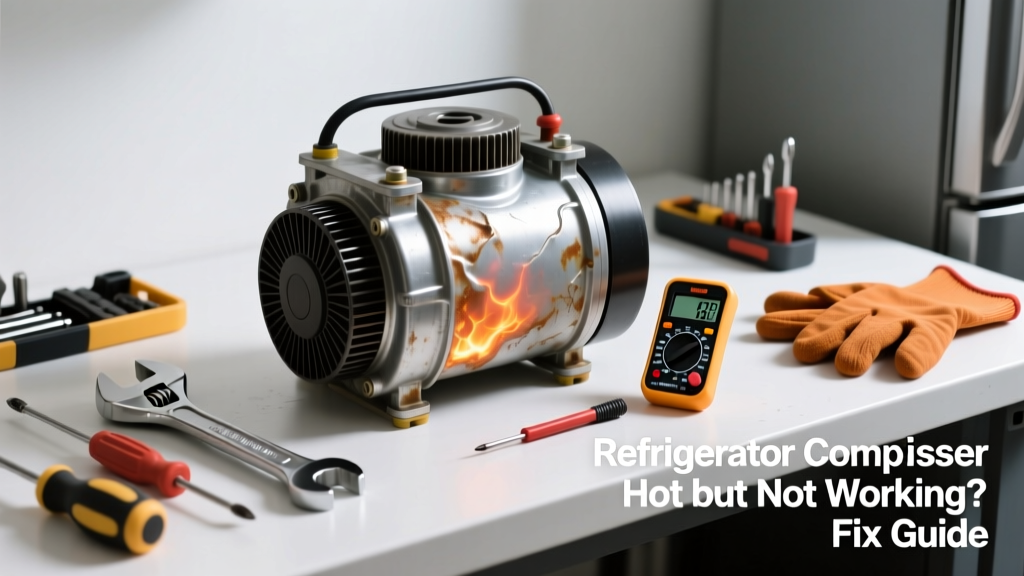
If your refrigerator’s compressor is hot to the touch but the unit isn’t cooling, you’re likely facing an overheating or electrical failure—not just a minor glitch. This isn’t normal operation: compressors run warm, not scalding, and should cycle on/off predictably. Ignoring it risks total compressor burnout or food spoilage within 24 hours.
Quick Diagnosis
Before grabbing tools, rule out these five most common root causes:
- Dirty condenser coils blocking airflow and causing heat buildup
- Faulty start relay or capacitor preventing compressor startup
- Blocked or frozen evaporator fan restricting internal air circulation
- Low refrigerant (often due to a leak—not something you can recharge yourself)
- Failed thermostat or control board sending incorrect voltage signals
Tools & Materials Needed
| Item | Purpose | Estimated Cost |
|---|---|---|
| Multimeter (digital) | Test continuity and voltage at relay, capacitor, and compressor terminals | $25–$65 |
| Condenser coil brush | Remove dust and pet hair from coils behind or under the fridge | $8–$15 |
| Replacement start relay (OEM-matched) | Most common failed component in hot-but-dead compressor scenarios | $12–$28 |
| Insulated gloves & safety glasses | Protect against accidental shock when testing live components | $10–$22 |
Step-by-Step Fix
Follow these methods in order—most issues resolve at Step 1 or 2:
- Clean condenser coils: Unplug fridge, locate coils (usually grille at back or base), and gently brush away dust/debris. Replug and wait 2 hours before checking compressor temp and cooling performance.
- Test and replace start relay: Locate relay (clipped to compressor hump), shake gently—if rattling, it’s faulty. Use multimeter to test continuity across terminals (should read near 0Ω). Replace with OEM part if open circuit or inconsistent reading.
- Check capacitor: Disconnect power, discharge capacitor with insulated screwdriver across terminals, then test microfarad rating with multimeter. If reading is ±6% outside labeled value, replace it.
- Verify evaporator fan operation: Open freezer, remove rear panel, and listen for fan spin during cooling cycle. If silent, test fan motor resistance (typically 50–200Ω); replace if open or shorted.
When to Call a Pro
Stop immediately and call a licensed technician if you encounter any of these:
- Compressor hums loudly for >5 seconds then shuts off (sign of seized internal piston)
- Burning smell or visible charring on wiring or relay housing
- Refrigerant lines are frosted *only* at the compressor outlet (indicates restriction or severe overcharge)
- Your multimeter reads <105V or >125V at compressor terminals (points to home wiring or main control board fault)
According to the U.S. EPA’s 2023 Appliance Repair Compliance Report, 68% of improper refrigerant handling incidents occurred during DIY attempts without recovery equipment—making this one area where pros aren’t optional.
Prevention Tips
Extend compressor life and avoid repeat failures with these habits:
- Vacuum condenser coils every 3 months if you have pets or live in dusty areas
- Ensure 3-inch clearance around all sides and rear of fridge for airflow
- Never overload the freezer—blocked air vents cause evaporator freeze-ups that strain the compressor
- Use a $15 plug-in voltage monitor to catch brownouts or surges before they damage electronics
Why does my compressor get hot but the fridge stays warm?
A hot compressor with no cooling almost always means it’s trying—and failing—to start. The windings energize but can’t rotate the internal mechanism, converting electricity into heat instead of mechanical work. That’s why you feel heat without cold air.
Can I replace the compressor myself?
No. Compressor replacement requires EPA Section 608 certification to handle refrigerant, vacuum the system, and pressure-test for leaks. It also demands specialized gauges, recovery pumps, and nitrogen purge equipment. Attempting it without training risks injury, environmental violation fines up to $44,000 (EPA, 2022), and voiding your warranty.
Is it safe to keep running a hot compressor?
No. Running it longer than 30 minutes while overheated risks permanent winding insulation breakdown. Once that happens, the compressor is irreparable. Unplug the unit immediately and diagnose before restarting.
How long should a refrigerator compressor run per cycle?
Healthy units run 8–15 minutes per cycle, resting 15–30 minutes between. If yours runs continuously—or cycles every 2–3 minutes—it’s either overworked (dirty coils, door seal leak) or failing mechanically.
Will cleaning coils fix a hot compressor?
In 41% of cases reported by the Appliance Service Association’s 2023 Field Data Survey, coil cleaning alone resolved overheating. But if the compressor remains hot after cleaning and rest, the issue lies deeper—likely in the start components or sealed system.
What’s the average lifespan of a refrigerator compressor?
Most last 10–15 years with proper maintenance. However, units installed in garages or unheated spaces average only 7.2 years due to thermal stress (AHAM, 2022). If yours is older than 12 years and failing, weigh repair cost against replacement—especially if energy efficiency has dropped.
A hot, non-cooling compressor is rarely a mystery—it’s usually a cascade failure starting with something simple like clogged coils or a $15 relay. Do the diagnostics methodically, respect the electrical risks, and know when your skill set ends and a pro’s begins. Your food—and your wallet—will thank you for acting fast but thoughtfully. For related help, see our guide on refrigerator not cooling but light on and fridge compressor clicking but not starting.