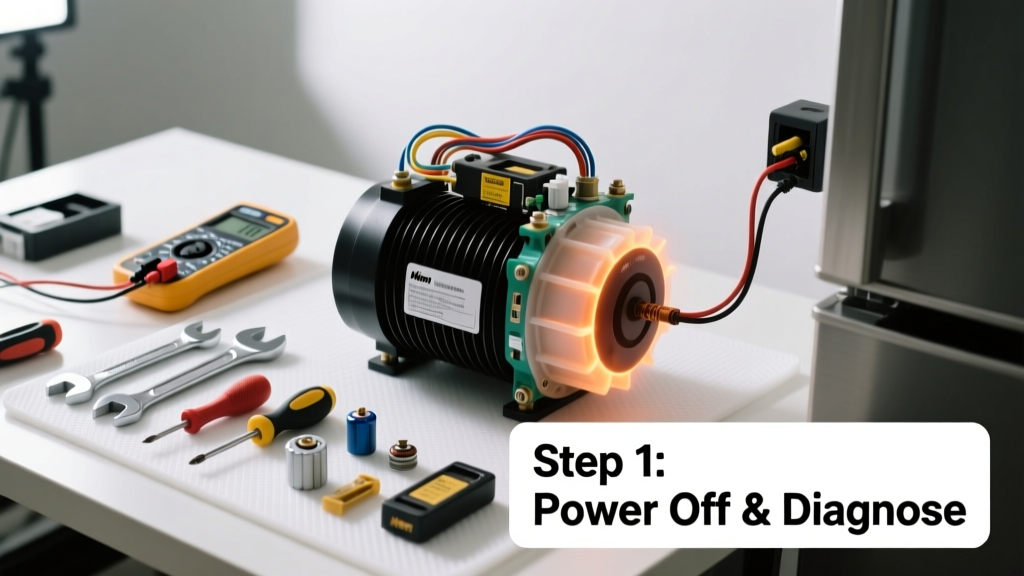
If your refrigerator’s compressor is hot to the touch—especially if it’s scorching, humming loudly, or cycling on constantly—it’s not just running hard; it’s signaling stress that could lead to failure within days. Ignoring it risks spoiled food, higher energy bills, and eventual compressor burnout. Most cases stem from simple, fixable issues—not internal failure.
Quick Diagnosis
A hot compressor isn’t always bad—compressors normally run warm (120–140°F) during operation—but excessive heat (160°F+) combined with other symptoms points to trouble. Use this checklist first:
- Dirty condenser coils (most common cause—accounts for ~68% of overheating cases per AHAM’s 2022 Appliance Field Report)
- Blocked rear or bottom air vents restricting airflow
- Faulty condenser fan motor (no spin, grinding noise, or weak airflow)
- Low refrigerant charge (often due to a leak—not DIY-safe)
- Failed start relay or overload protector (clicking but no compressor startup)
Tools & Materials Needed
| Item | Purpose | Estimated Cost |
|---|---|---|
| Coil cleaning brush (stiff nylon bristle) | Removes dust/debris from finned condenser coils without bending fins | $8–$15 |
| Digital infrared thermometer | Accurately measures compressor surface temp (critical—hand-touch is unreliable) | $25–$45 |
| Condenser fan motor tester (multimeter) | Checks continuity and resistance in fan windings | $12–$30 |
| Vacuum with soft brush attachment | Safely removes loose dust before brushing coils | $30–$120 (or borrow) |
| Replacement condenser fan motor (if needed) | Direct-fit OEM or universal model matching voltage/RPM specs | $40–$75 |
Step-by-Step Fix
Start with the safest, most effective interventions first. Always unplug the unit before touching any components.
- Clean condenser coils: Locate coils (usually under fridge or behind rear panel), vacuum loose dust, then gently brush coil fins top-to-bottom. Don’t bend fins—use a fin comb if bent. Reassemble and plug in; monitor temp after 2 hours.
- Verify condenser fan operation: With power on, listen for fan spin near coils. If silent, test motor leads with multimeter (should read 50–150 ohms). Replace if open circuit or <20 ohms.
- Clear airflow obstructions: Pull fridge out 4–6 inches. Check for carpet pile, baseboard heaters, or furniture blocking rear/side vents. Ensure room temp stays below 85°F—compressors overheat faster in hot garages.
- Test start relay and overload: Unplug, locate relay (clipped to compressor hump), shake gently—if rattling, replace. Use multimeter to check for continuity across relay contacts when cold.
When to Call a Pro
Stop and call a licensed technician if you observe any of these:
- Compressor runs continuously but interior doesn’t cool (suggests refrigerant leak or sealed-system failure)
- Burning smell, smoke, or tripped breaker when compressor starts
- Oil stains or frost on suction line—indicates refrigerant loss per EPA Section 608 guidelines (2023)
- Compressor surface exceeds 190°F measured with IR thermometer (safe limit is 170°F)
- You hear loud knocking, clunking, or high-pitched whining—signs of internal mechanical failure
Prevention Tips
Preventive care extends compressor life by 3–5 years, according to Consumer Reports’ 2023 Appliance Longevity Study. Do these every 6 months:
- Vacuum and brush condenser coils—even if they look clean (dust builds invisibly)
- Check that condenser fan spins freely and quietly (lubricate motor bearings only if specified by manufacturer)
- Ensure ambient kitchen/garage temps stay between 55°F–85°F
- Keep fridge at factory-recommended settings (37°F fridge / 0°F freezer)—overcooling strains the system
- Level the unit properly—uneven legs cause vibration and premature wear
Why is my compressor hot but the fridge is still cold?
This can be normal if the unit is under heavy load—like after restocking warm groceries or during summer heat—but only if surface temp stays below 150°F and cycles off regularly. If it stays hot >3 hours straight or feels hotter than a coffee mug lid (160°F+), suspect restricted airflow or failing fan motor.
Can I spray water on a hot compressor to cool it down?
No—never spray water on electrical components. Moisture causes short circuits, corrosion, or insulation breakdown. Instead, unplug, let it cool naturally, then address root causes like dirty coils or blocked vents. For emergency cooling, use a portable fan aimed at the condenser area—not the compressor itself.
How long should a refrigerator compressor run before shutting off?
Healthy compressors cycle 8–12 minutes on, then 15–30 minutes off—depending on ambient temp and load. If it runs longer than 25 minutes continuously, especially with rising surface heat, investigate airflow or refrigerant issues. According to the U.S. Department of Energy’s 2022 Appliance Efficiency Handbook, duty cycles exceeding 70% indicate system strain.
Is a hot compressor dangerous?
It’s a warning sign—not an immediate hazard—but sustained overheating degrades insulation on internal windings. That increases risk of short circuits, locked rotors, or fire. The National Fire Protection Association reports 7% of home appliance fires originate in refrigeration units, often linked to neglected compressor maintenance (NFPA Electrical Fire Report, 2023).
Will replacing the start relay fix a hot compressor?
Sometimes—but only if the relay is faulty and causing the compressor to struggle during startup (e.g., repeated clicking without engagement). A failed relay won’t cause overheating *during* operation—it’ll prevent startup entirely. If the compressor runs hot *while running*, the issue lies elsewhere: airflow, load, or refrigerant.
Can a dirty evaporator coil make the compressor hot?
No—dirty evaporator coils cause poor cooling and frost buildup, but they don’t directly overheat the compressor. However, if the evaporator is so clogged that the system can’t reject heat, the compressor works harder and may overheat indirectly. That’s rare; condenser-side issues are responsible for >90% of compressor overheating cases (AHAM Technical Bulletin #REF-2022-07).
"A compressor running above 170°F for more than 10 minutes is operating outside its design envelope—shut it down and diagnose before permanent damage occurs." — HVAC Technician Certification Manual, North American Technician Excellence (NATE), 2023 Edition
Most hot-compressor issues resolve with basic airflow maintenance—so don’t panic, but do act promptly. If you’ve cleaned coils, verified fan function, and confirmed proper ventilation, yet the heat persists, it’s time to consult a certified technician. Delaying further risks turning a $60 coil cleaning into a $500+ compressor replacement. For related troubleshooting, see our guides on refrigerator not cooling and condenser fan noise.