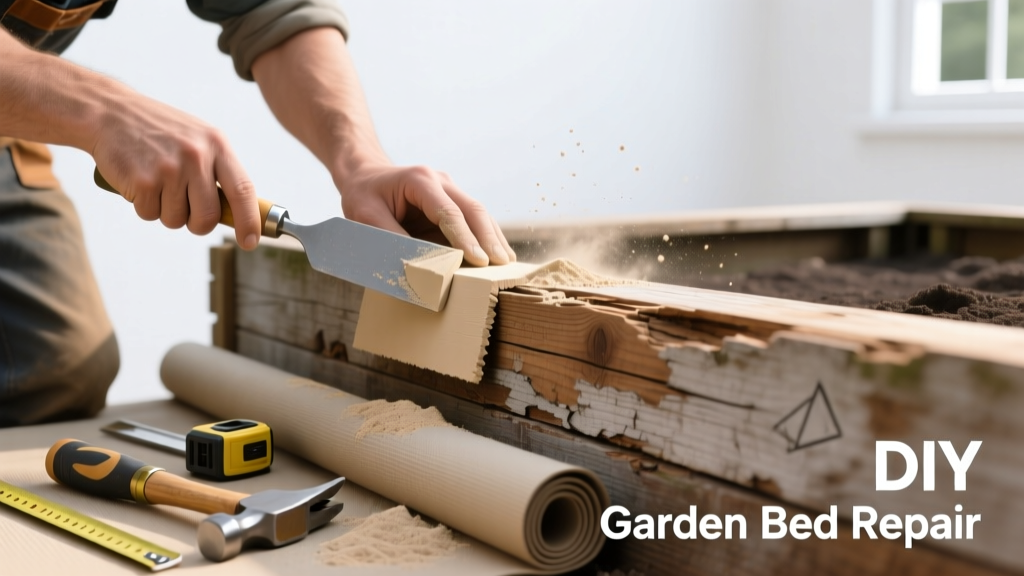
If you’ve noticed soft, spongy, or crumbling wood at the base of your raised garden bed—especially where soil meets timber—it’s likely fungal decay taking hold. Left unaddressed, rot compromises structural integrity and can leach tannins or mold spores into your soil. The good news? Most early-to-moderate cases are repairable in a weekend.
Quick Diagnosis
Raised bed rot usually starts where moisture pools and airflow is minimal. Here are the most common culprits:
- Untreated or non-rot-resistant lumber (e.g., pine or spruce without preservatives)
- Poor drainage causing water to pool at the bed’s base
- Soil piled too high against untreated exterior wood surfaces
- Direct ground contact without gravel or barrier layer
- Cracks or gaps allowing persistent moisture infiltration
Tools & Materials Needed
| Item | Purpose | Estimated Cost |
|---|---|---|
| Cordless drill with 1/4" hex bit | Drives screws during reinforcement and replacement | $80–$150 |
| 3" stainless steel decking screws | Corrosion-resistant fasteners for wet environments | $12–$22 |
| Pressure-treated or cedar replacement boards | Rot-resistant material for damaged sections | $25–$65 per 8' board |
| Wood hardener (e.g., Minwax High-Performance) | Stabilizes partially rotted wood before patching | $14–$20 |
| Exterior-grade wood filler or epoxy putty | Fills voids and reinforces weakened grain | $10–$18 |
Step-by-Step Fix
Choose the method that matches your rot severity. For localized damage (less than 25% of a board), use Method 1. For full board replacement, go with Method 3.
- Stabilize & Patch Slightly Rotted Areas: Remove loose debris with a chisel, dry thoroughly with a fan for 48 hours, apply two coats of wood hardener, then fill with exterior epoxy putty. Sand smooth once cured.
- Reinforce Weak Corners: Add 12" galvanized angle brackets inside corners using stainless screws. Drill pilot holes first to prevent splitting.
- Replace Fully Rotted Boards: Cut out compromised sections with a reciprocating saw, leaving 2" of solid wood on each end. Install new pressure-treated or cedar boards, pre-drilling all screw holes and sealing ends with copper naphthenate.
- Add Drainage & Barrier: Excavate 2" of soil beneath the bed, lay 1" crushed gravel, then a 6-mil poly sheet before refilling. This stops capillary rise and keeps wood dry.
When to Call a Pro
DIY fixes won’t cut it when rot has progressed beyond surface layers. Call a licensed carpenter or landscape contractor if:
- More than three consecutive boards show deep rot (>1/2" depth) or crumble under light pressure
- The bed’s corner posts are hollow or sway more than 1/4" when pushed
- You spot active termite galleries or frass near the rot—this indicates secondary infestation
- Your raised bed supports a retaining wall, slope, or irrigation system tied directly to its frame
According to the USDA Forest Service’s Wood Handbook (2023), “Once decay fungi penetrate past the sapwood into heartwood, mechanical strength loss exceeds 40%—a critical threshold for load-bearing outdoor structures.”
Prevention Tips
Extend your bed’s life from 5 years to 15+ with these proven strategies:
- Elevate beds 2–3" off grade using concrete pavers or treated sleepers—not direct soil contact
- Line interior walls with 30-mil EPDM rubber (not plastic)—it breathes but blocks wicking
- Apply copper naphthenate wood preservative to cut ends and bottom 6" of all boards before assembly
- Keep mulch and compost at least 2" away from wood edges to reduce moisture retention
- Inspect twice yearly—spring and fall—with a screwdriver tip to probe for soft spots
Can I use bleach on this?
No. Household bleach kills surface mold but doesn’t stop decay fungi embedded in wood fibers—and it accelerates metal corrosion in nearby fasteners. Use a 10% vinegar solution for mild surface mold, or better yet, remove and replace affected wood.
Is pressure-treated wood safe for vegetable gardens?
Yes—if it’s labeled “micronized copper azole (MCA)” or “alkaline copper quaternary (ACQ).” Avoid older CCA-treated wood (pre-2004), which contained arsenic. The U.S. EPA confirms modern pressure-treated lumber poses no measurable risk to edible crops when used as intended (EPA Pesticide Fact Sheet, 2022).
How long should a cedar raised bed last?
Western red cedar typically lasts 10–15 years in-ground, but only 5–7 years if constantly damp and unsealed. Applying a breathable wood oil (like Penofin Verde) every 2 years extends service life by 40%, per the Forest Products Laboratory’s Outdoor Durability Study (2021).
Do I need to empty the soil to fix rot?
Not always. For corner reinforcement or partial board replacement, you can carefully lean the bed inward and brace it with 2×4s while working. Full bottom-board replacement requires soil removal—but save and sift it; healthy topsoil retains microbes and nutrients even after temporary storage.
What’s the best sealant for cut ends?
Copper naphthenate is the gold standard: it’s EPA-registered, penetrates deeply, and resists leaching. Brush it on generously—two coats minimum—and let dry 48 hours before backfilling. Avoid paint or polyurethane: they trap moisture and accelerate hidden decay.
Can I just wrap the bottom in plastic?
No. Standard plastic sheeting traps moisture against the wood, creating the perfect environment for anaerobic decay fungi. Use breathable landscape fabric *under* gravel, or 30-mil EPDM rubber *inside* the frame—never impermeable plastic directly against wood.
A well-repaired raised bed not only holds soil—it holds promise. Replacing rotted sections isn’t just maintenance; it’s an investment in next season’s harvest, your garden’s microclimate, and the quiet satisfaction of building something that lasts. Pair your fix with a simple drip line and annual soil test, and you’ll rarely face this issue again—learn how proper drainage prevents 70% of rot cases and compare rot resistance across common lumber types.