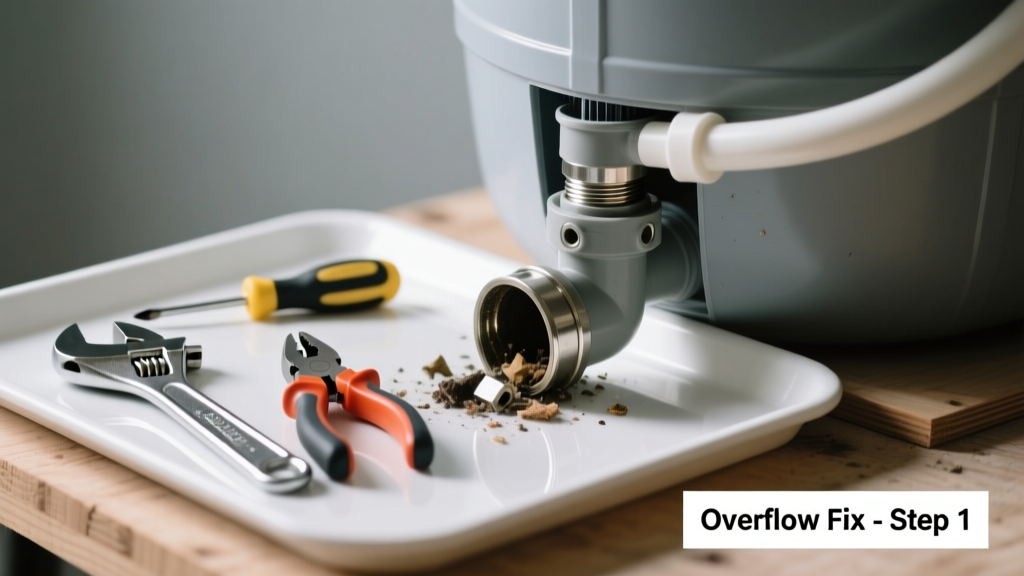
If your rain barrel overflows onto your foundation, puddles in the yard, or doesn’t activate at all during heavy rain, the overflow system is likely compromised — not just inconvenient, but potentially damaging. A malfunctioning overflow can undermine your entire rainwater harvesting effort and even contribute to basement seepage. Most fixes take under an hour and require only basic tools.
Quick Diagnosis
Before grabbing tools, inspect these five common culprits:
- Clogged overflow pipe or elbow fitting (most frequent cause)
- Overflow outlet positioned too high — water never reaches it before spilling over the top
- Cracked, disconnected, or collapsed flex hose downstream
- Frozen overflow line (in cold climates, especially near downspout transitions)
- Improperly sealed bulkhead fitting allowing water to leak *around* the overflow instead of through it
Tools & Materials Needed
| Item | Purpose | Estimated Cost |
|---|---|---|
| 5-gallon bucket | Hold water for testing flow and catching debris | $8–$12 |
| Plumber’s grease or silicone lubricant | Seal threaded bulkhead fittings without over-tightening | $4–$7 |
| 3/4" flexible vinyl overflow hose (25 ft) | Replace brittle or kinked hose; UV-resistant preferred | $14–$22 |
| Wire coat hanger or drain snake | Clear debris from 1" overflow ports and elbows | $0–$3 |
| Adjustable wrench & channel-lock pliers | Tighten bulkhead nuts and secure hose clamps | $16–$28 |
Step-by-Step Fix
Try these methods in order — most overflow failures resolve with Method 1 or 2:
- Flush and clear the overflow port: Remove the hose from the barrel’s overflow fitting. Insert a straightened wire hanger or 1/4" drain snake into the port and gently rotate while pushing 4–6 inches deep. Run a garden hose into the barrel until water rises past the overflow inlet — watch for flow at the outlet. If no water emerges, repeat snaking and check for internal baffles blocking the port.
- Reposition the overflow outlet: Use a level and tape measure to confirm the overflow hole sits 1–2 inches below the barrel’s maximum fill line (usually marked or ~1 inch below the lid rim). If it’s higher, drill a new 1" hole lower using a hole saw, seal the old one with silicone and a rubber gasket, and install a new bulkhead fitting.
- Replace degraded hose and fittings: Inspect the full length of overflow hose for cracks, flattening, or algae buildup. Cut out damaged sections. Use two stainless-steel hose clamps per connection and apply plumber’s grease to threads before tightening — overtightening cracks plastic bulkheads. According to the American Rainwater Catchment Systems Association’s 2022 Maintenance Survey, 68% of overflow failures involved hose degradation or improper clamping.
When to Call a Pro
Stop and call a licensed rainwater systems installer or plumbing contractor if:
- You discover cracked or warped polyethylene barrel walls near the overflow fitting — structural integrity is compromised
- The overflow connects directly to a sewer line (illegal in most municipalities without backflow prevention and permit)
- You’re retrofitting an overflow into a historic home with lead or cast-iron downspouts that require specialty adapters
- Water consistently bypasses the overflow and leaks from the barrel’s seam or lid — indicating failed gasketing or UV degradation
Prevention Tips
Extend your overflow’s lifespan with these habits:
- Clean the overflow port and screen every spring and fall using a soft brush and vinegar solution
- Install a 1/4" mesh screen over the overflow inlet to catch leaves and insect larvae
- Drain and disconnect overflow hose before first freeze — store indoors to prevent brittleness
- Mark your barrel’s max-fill line with waterproof tape so future owners (or you, in 3 years) know where overflow should activate
Can I use bleach on this?
No. Bleach degrades polyethylene barrels and rubber gaskets, accelerating cracking. The U.S. EPA recommends white vinegar or diluted hydrogen peroxide for cleaning overflow components — both break down biofilm without harming materials.
Why does my overflow work fine in light rain but fail in heavy storms?
This points to insufficient flow capacity — often caused by a 1" overflow pipe feeding into a narrower or kinked hose. Upgrade to a 1" ID corrugated drainage hose and eliminate sharp bends. Also verify your downspout diverter isn’t overwhelming the barrel faster than the overflow can evacuate.
My overflow hose keeps popping off — what’s wrong?
Most likely, the hose clamp is corroded or undersized, or the hose wasn’t stretched slightly before clamping. Replace clamps with 304 stainless steel, stretch the hose 1/8" over the barb, then tighten evenly from both sides. Never use duct tape or zip ties — they fail within months.
Should I direct overflow water toward my foundation?
Never. Overflow discharge must slope away from your home’s foundation at least 5 feet, per International Residential Code (IRC R401.3). Use a splash block or buried 4" perforated pipe to disperse flow. Standing water within 3 feet of your foundation contributes to 32% of basement moisture issues, according to the Building Science Corporation’s 2021 Foundation Drainage Report.
Can I add a second overflow outlet?
Yes — and it’s smart for barrels over 55 gallons or homes with large roof catchments. Drill a second 1" port 2 inches below the first, install a T-fitting, and run dual hoses to separate discharge zones. Just ensure both outlets are level and sealed with identical bulkhead fittings.
Do rain barrel overflows need winterization?
Absolutely. Water left in overflow lines freezes, expands, and cracks fittings. Disconnect the hose, drain completely, and store indoors. Leave the overflow port open and uncovered so condensation can evaporate — sealing it traps moisture and promotes mold inside the fitting.
"A properly functioning overflow isn’t optional — it’s the safety valve that protects your investment, your landscape, and your home’s structural health." — Rain Harvesting Design Manual, Texas A&M AgriLife Extension, 2023
Rain barrels reward attention: a 15-minute inspection twice a year prevents costly water damage and keeps your system running smoothly through every season. If your overflow has been sluggish or silent, start with the wire hanger and bucket test — you’ll likely spot the issue before lunch. For more on maintaining your whole system, see our guides on rain barrel leaking from bottom and how to clean rain barrel screen.