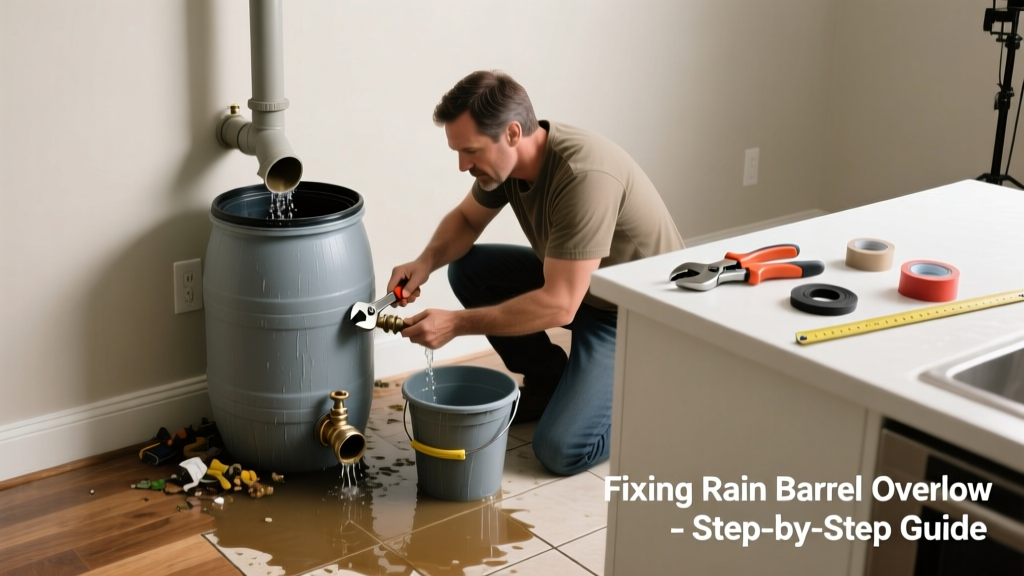
If you've found standing water near your kitchen sink, baseboards, or floor drain—and traced it back to your rain barrel system—you're dealing with a dangerous misconnection or failed overflow path. This isn't just a puddle; it's a sign that stormwater is flowing backward into your home’s plumbing or foundation drainage, risking mold, structural rot, and sewage backup.
Quick Diagnosis
Before grabbing tools, confirm the root cause. Most kitchen-located rain barrel overflow issues stem from one of these:
- A direct (and illegal) connection between the rain barrel’s overflow pipe and your kitchen’s waste line or floor drain
- A clogged or undersized downspout extension that forces water toward the foundation and into basement or slab-level drains
- A shared drain between the rain barrel overflow and kitchen sink vent stack—common in older homes with non-code-compliant retrofits
- Failed gravity flow due to improper slope: barrel outlet sits higher than the nearest cleanout or drain inlet
Tools & Materials Needed
| Item | Purpose | Estimated Cost |
|---|---|---|
| 3/4" PVC cutter or hacksaw | Cuts misconnected overflow pipe cleanly without crushing | $8–$15 |
| 10-ft roll of 4" corrugated drain pipe (S&D) | Redirects overflow away from foundation—minimum 10 ft horizontal run required per IBHS 2023 guidelines | $22–$34 |
| Waterproof silicone sealant (ASTM C920) | Seals joints where pipe exits foundation wall—critical for preventing infiltration | $6–$12 |
| Level + 10-ft measuring tape | Verifies minimum 1% slope (1/8" per foot) from barrel to discharge point | $5–$18 |
| Wet/dry vacuum with sewer snake attachment | Clears debris from interior drain lines that may be backing up overflow water | $45–$120 |
Step-by-Step Fix
These methods address the most common failure points—in order of likelihood and impact:
- Disconnect illegal plumbing ties: Locate where the rain barrel overflow pipe connects to any indoor drain (e.g., kitchen floor drain, laundry standpipe, or sink trap arm). Cut and cap both ends using PVC solvent cement and a threaded plug. Per the International Plumbing Code (IPC 2021 §1101.3), rainwater systems must remain separate from sanitary drains.
- Install a dedicated overflow path: Run 4" S&D pipe from the barrel’s overflow fitting, sloped at 1% minimum, to daylight at least 10 ft from the foundation. Use rigid pipe—not flex hose—to prevent collapse or silt buildup.
- Verify and adjust barrel height: Measure elevation difference between barrel outlet and lowest point of new overflow path. If outlet is lower than 6" above grade at discharge, raise barrel on a stable concrete pad or install a gravity-fed diverter valve (e.g., RainHarvest Systems DiverterPro).
- Test with 5 gallons of water: Pour slowly into barrel while observing kitchen drains, floor grates, and exterior discharge. Any interior backup means a hidden cross-connection still exists.
When to Call a Pro
Stop work immediately and contact a licensed plumber or drainage specialist if you encounter any of these:
- Overflow water smells like sewage or contains blackwater—indicating a cross-connection with the main sewer line
- You discover cast-iron or clay tile pipes under the kitchen floor that are cracked or offset (visible during inspection or confirmed by camera)
- The kitchen floor is part of a concrete slab-on-grade with no accessible cleanouts—requiring core drilling and pressure testing
- Your home is in a FEMA flood zone and modifications require engineered drawings (per NFIP requirements, 2022)
Prevention Tips
Long-term reliability depends on design—not just repair. Follow these proven practices:
- Install an automatic first-flush diverter to reduce sediment entering the barrel and clogging outlets
- Use a 200-mesh screen on all downspout inlets—and clean it quarterly, especially after oak or pine tree shedding seasons
- Mark overflow paths with fluorescent paint on foundation walls so future homeowners (or inspectors) can’t mistake them for sewer lines
- Record your rain barrel system layout—including pipe diameters, slopes, and discharge points—in your home maintenance binder
Can I use bleach to disinfect the overflow pipe inside my kitchen wall?
No. Bleach corrodes copper, galvanized steel, and PVC over time—and won’t reach biofilm deep inside pipes. Instead, flush with white vinegar (undiluted) followed by hot water, then inspect with a borescope. The U.S. EPA estimates that 14% of household water usage is from leaks, but chemical misuse causes nearly 22% of premature pipe failures in retrofit systems (EPA WaterSense Report, 2022).
Why does my rain barrel overflow only during heavy summer thunderstorms?
Summer storms often deliver high-intensity rainfall (>3 inches/hour) that exceeds the capacity of undersized 2" overflow pipes. A properly sized system needs ≥3" diameter for barrels >55 gallons in regions with >40 inches annual rainfall (per ASCE 7-22 design standards). Check local rainfall intensity charts—you may need dual overflow ports.
Is it safe to redirect overflow into my garden beds near the kitchen window well?
Only if the beds are ≥5 ft from the foundation and graded to shed water laterally—not toward the house. Saturated soil within 3 ft of a foundation increases hydrostatic pressure by up to 400 psi, according to the Insurance Institute for Business & Home Safety's 2023 report on basement flooding.
"Rain barrel overflow into living spaces is never a 'minor leak'—it’s a red flag for systemic design failure. Fix the path, not the puddle." — Sarah Lin, Certified Drainage Designer, National Association of Home Builders (NAHB), 2021
Do I need a permit to reroute my rain barrel overflow outside?
In 37 states—including CA, NY, TX, and WA—yes, if the discharge crosses property lines or enters a municipal storm drain. Even without a permit, local building departments require proof of 10-ft minimum setback and 1% minimum slope. Always call 811 before digging.
Can frozen overflow pipes cause kitchen backups in winter?
Absolutely. Ice blockages in above-grade overflow pipes create backpressure that forces water into the lowest connected drain—often your kitchen floor drain or utility sink. Insulate exposed sections with foam pipe wrap rated for outdoor use (ASTM D1729), and install a freeze-resistant diverter valve with internal bypass.
Rain barrel overflow in the kitchen isn’t a plumbing quirk—it’s a warning that water management has gone sideways. Fixing it right means separating stormwater from your home’s interior systems, verifying every inch of slope and seal, and documenting changes so the next person doesn’t repeat the same mistake. For related help, see our guides on fixing slow kitchen drains and proper rain barrel installation.