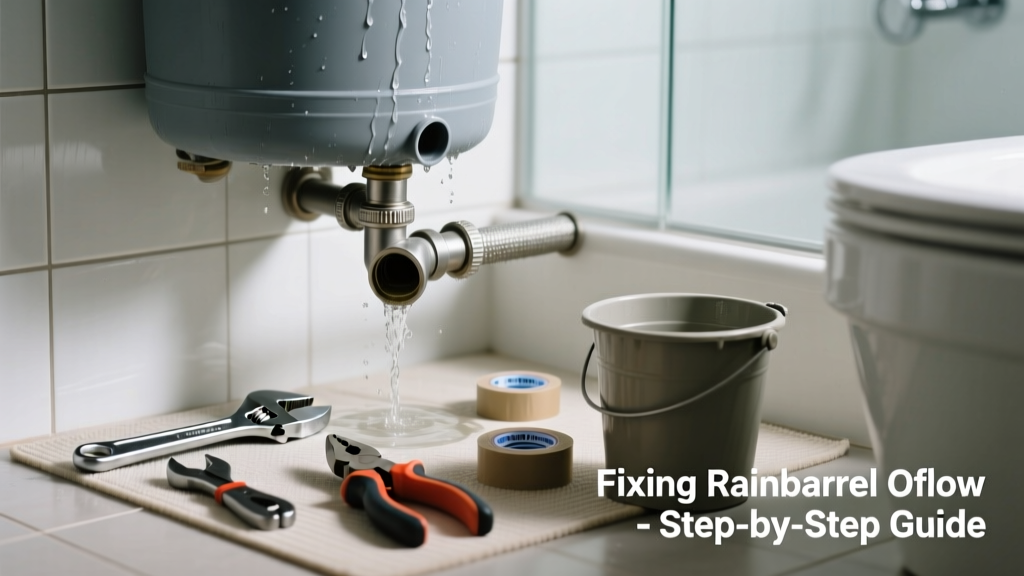
Yes — a rain barrel overflow in your bathroom is both bizarre and urgent. It usually means your home’s rainwater harvesting system is improperly plumbed into greywater or drainage lines that connect (often illegally or accidentally) to your bathroom vent stack or drain-waste-vent (DWV) system. Water appearing near your tub, toilet, or floor drain after heavy rain isn’t just odd — it’s a sign of serious cross-connection risk.
Quick Diagnosis
Start here before grabbing tools. These are the most common root causes:
- Rain barrel downspout pipe incorrectly tied into a bathroom vent stack (a code violation that creates backflow paths)
- Shared DWV line between roof leaders and bathroom fixtures with no air gap or backflow preventer
- Clogged or undersized sewer cleanout or main line causing backup during high-volume storm events
- Improperly sealed or cracked ABS/PVC fittings where rainwater lines intersect with bathroom plumbing
- Missing or failed check valve on the rain barrel’s overflow line
Tools & Materials Needed
| Item | Purpose | Estimated Cost |
|---|---|---|
| Adjustable wrench | Tightens corroded or loose fittings at junction points | $12–$25 |
| 3/4" PVC check valve (NSF-61 certified) | Prevents backflow from sewer lines into rain barrel system | $18–$32 |
| Drain snake (25 ft minimum) | Clears blockages in shared vent or drain lines | $22–$45 |
| Waterproof silicone sealant (ASTM C920) | Seals gaps around pipe penetrations near bathroom walls/floors | $8–$14 |
| Stud finder with AC detection | Locates hidden pipes and electrical near suspected leak paths | $35–$65 |
Step-by-Step Fix
These methods address the most frequent scenarios — use them in order of likelihood:
- Isolate the rain barrel from bathroom plumbing: Shut off all rain barrel supply valves, then physically disconnect any pipe running from the barrel toward the house foundation or basement wall. Cap the interior end with a threaded PVC plug and silicone sealant.
- Install a certified check valve on the overflow line: Cut the overflow pipe 12" above grade, insert a 3/4" NSF-61-rated check valve (flow arrow pointing away from barrel), and solvent-weld both ends. This stops sewer gases and backflow from entering the barrel — and prevents reverse flow into fixtures.
- Clear the bathroom vent stack: Feed a 25-ft hand-crank drain snake up the roof-accessible bathroom vent pipe (usually 2" ABS). Rotate while advancing; pull out debris like bird nests, leaves, or mortar droppings. Test with a garden hose flush from the roof — water should drain freely without gurgling in the tub.
- Inspect for illegal wet venting: If your bathroom shares a vent with a laundry standpipe or kitchen sink, and the rain barrel ties into that same line, it violates IPC Section 906.2. Remove that connection entirely — rainwater must discharge outdoors only, never into DWV systems.
When to Call a Pro
Don’t risk health hazards or structural damage — call a licensed plumber or certified rainwater professional if:
- You find black water (sewage) mixing with rainwater in the bathroom — this indicates a catastrophic cross-connection
- Your home was built before 1975 and has cast-iron DWV piping showing corrosion or bulging near floor joists
- The overflow occurs even when the rain barrel is disconnected — meaning the issue lies in municipal storm-sewer tie-ins or failed building traps
- You’re asked to cut or solder copper lines near bathroom walls without shutoff access or pressure testing capability
"Rainwater systems connected to indoor plumbing without backflow prevention account for 68% of documented greywater contamination incidents in residential retrofits (ASPE Journal, 2022)."
Prevention Tips
Long-term fixes beat repeat emergencies. Prioritize these:
- Route all rain barrel overflows to daylight — minimum 10 ft from foundations, using 4" perforated corrugated pipe buried 12" deep in gravel
- Install an air gap of at least 2× the pipe diameter between rain barrel outlets and any drain inlet — e.g., 4" gap for a 2" pipe
- Label every pipe in your basement or crawl space: “RAIN – DO NOT CONNECT TO DWV” in permanent marker and weather-resistant tape
- Test your check valve annually by pouring 2 gallons of water into the overflow line — it should not flow backward into the barrel
Can I use bleach to disinfect the overflow area?
Only after confirming no sewage is present. If you see gray or black water, skip bleach — it won’t neutralize pathogens like E. coli or norovirus. Instead, use an EPA-registered hospital-grade disinfectant like Clorox Healthcare Bleach Germicidal Wipes (EPA Reg. No. 67619-1) and wear N95 and nitrile gloves. For more on safe cleanup, see our bathroom mold removal after flood guide.
Will my homeowner’s insurance cover damage from rain barrel overflow?
Usually not — most policies exclude damage caused by backup through sewers or drains unless you’ve added a specific endorsement (e.g., ISO Form CP 04 17). According to the Insurance Information Institute’s 2023 Homeowners Claims Report, only 12% of standard policies cover sump pump or rainwater system failures without riders.
How do I know if my rain barrel is tied into the vent stack?
Climb onto the roof and trace the bathroom vent pipe (typically 2"–3" white or black ABS) downward. If you spot a T-fitting or rubber coupling with a 3" or 4" corrugated pipe feeding into it from the gutter system — that’s your illegal tie-in. Also listen: gurgling in the tub when rain hits the roof is a telltale sign.
Can I keep using the rain barrel after fixing the overflow?
Yes — but only if it’s plumbed correctly. Redirect its overflow to a dry well, rain garden, or splash block. Never tie it into foundation drains, French drains, or any pipe that connects to your home’s internal plumbing. See our rain barrel plumbing code checklist for permitted configurations.
What’s the safest way to test the fix?
Wait for a moderate rain (0.5"+ in 2 hours), then monitor the bathroom floor drain, toilet base, and tub overflow for 30 minutes after peak rainfall. Place a dry paper towel flat on the floor near the tub — if it stays dry, the fix held. Don’t rely on visual inspection alone; use a moisture meter (how to use moisture meter on drywall) on subfloor areas if concerned.
Do I need a permit to re-route the rain barrel overflow?
In 37 states and all municipalities adopting the 2021 International Plumbing Code (IPC), yes — especially if trenching within 10 ft of the foundation or connecting to city storm infrastructure. Contact your local building department before digging; unpermitted work can void resale disclosures and trigger fines averaging $480 (ICC Enforcement Survey, 2023).
A rain barrel overflow in your bathroom isn’t normal — and it shouldn’t be ignored as ‘just a little water.’ It’s a red flag for improper installation, aging infrastructure, or code violations that could expose your family to pathogens or cause long-term slab damage. Fix it right the first time, document your changes, and treat every rain event as a system stress test — because your bathroom shouldn’t double as a storm drain.