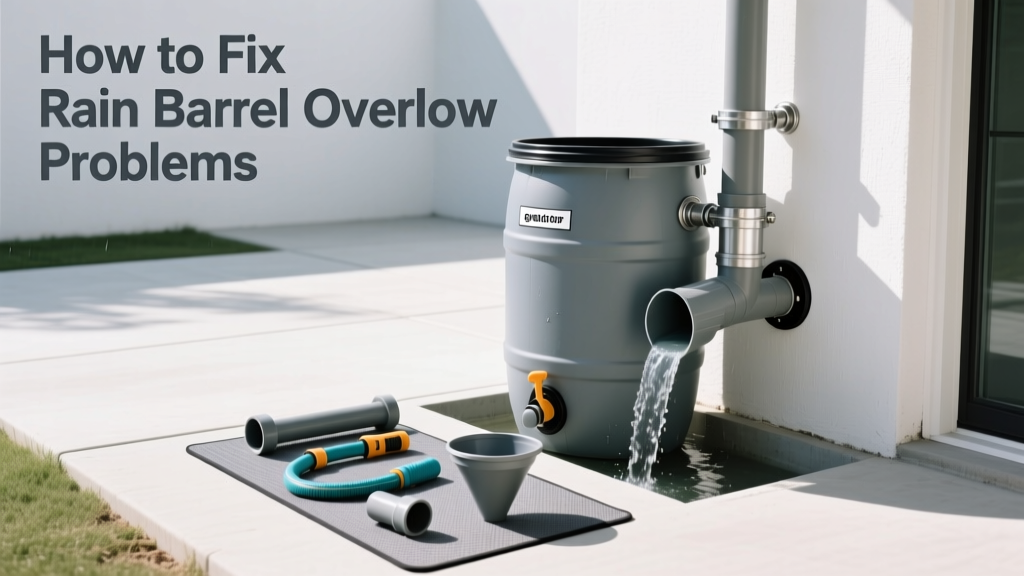
Rain barrels are great for conservation—but when they overflow, they can erode foundations, flood gardens, or even wash away mulch beds overnight. If you’re seeing water spilling over the top during light rain, it’s not just inconvenient—it’s a sign your system is out of balance. Let’s get it sorted before the next storm hits.
Quick Diagnosis
Start by checking these common culprits—most overflow issues trace back to one (or more) of these:
- Clogged downspout or inlet screen blocking flow
- Overflow pipe missing, disconnected, or too small (less than 1.5-inch diameter)
- Barrel full from prior rainfall with no outlet or diverter in place
- Improper slope: barrel positioned lower than gutter outlet, causing backflow
- Frozen or debris-jammed overflow hose in winter or fall
Tools & Materials Needed
| Item | Purpose | Estimated Cost |
|---|---|---|
| Adjustable wrench | Tightens hose clamps and fittings on overflow adapters | $8–$15 |
| 1.5-inch PVC overflow elbow & pipe | Directs excess water safely away from foundation | $6–$12 |
| Mesh gutter guard or fine stainless steel screen | Prevents leaves and pine needles from clogging inlet | $4–$9 |
| Level and measuring tape | Ensures proper barrel height relative to downspout outlet | $5–$10 |
| Food-grade silicone sealant | Seals threaded connections to prevent slow leaks at overflow port | $3–$7 |
Step-by-Step Fix
Try these methods in order—start simple, escalate only if needed:
- Clean the inlet and overflow path: Remove the screen, scrub with a stiff brush, and flush the overflow hole with a garden hose. Check that water exits freely from the bottom of the overflow tube.
- Install or reconnect an extended overflow hose: Attach a 1.5-inch flexible corrugated hose (minimum 6 ft long) to the overflow port using a stainless steel clamp. Route it at least 5 feet from your foundation and secure with landscape staples.
- Add a first-flush diverter: This device captures the initial dirty runoff, preventing sediment buildup that restricts flow. Kits like the Rain Harvesting Supply Model RD-2 install inline between gutter and barrel.
- Upgrade to dual-outlet configuration: Drill a second overflow port near the top (use a 1.5-inch hole saw), install a T-fitting, and run two hoses—one to a soaker line, one to a splash block. This handles heavy downpours without pressure spikes.
When to Call a Pro
Don’t risk injury or property damage—call a licensed rainwater harvesting specialist if:
- Your home has a basement or crawlspace within 10 feet of the barrel location and you notice persistent pooling or damp drywall
- You need to modify roof gutters or install a hard-piped underground drainage system
- The overflow coincides with sump pump activation or sewer backup signs (e.g., gurgling drains)
- You’re in a municipality with strict stormwater ordinances—like Portland’s Clean River Rewards program—and need documentation for rebate compliance
Prevention Tips
Overflow isn’t inevitable—it’s avoidable with smart habits and seasonal checks:
- Inspect and clean inlet screens every 3 weeks during peak leaf-fall (October–November)
- Drain and disconnect barrels before first freeze; store upright to prevent cracking
- Use a rain gauge app (like RadarScope) to anticipate heavy storms and manually drain before they hit
- Install a $25 float valve kit (e.g., Rainwater Management Solutions RV-1) that auto-shuts off inflow at 90% capacity
Can I use bleach to clean my rain barrel overflow pipe?
No—bleach corrodes plastic fittings and kills beneficial microbes in nearby soil. Instead, use white vinegar mixed 1:1 with warm water, followed by a thorough rinse. According to the U.S. EPA’s 2022 Residential Rainwater Harvesting Guidelines, chlorine-based cleaners reduce system lifespan by up to 40% when used repeatedly.
Why does my rain barrel overflow only during heavy rain—even with an overflow hose?
Most standard overflow hoses max out at ~12 gallons per minute. During a 2-inch-per-hour deluge, your average 4x30-ft roof sheds ~15 gallons/minute. That mismatch causes backup. Upgrade to a 2-inch rigid PVC overflow or add a second outlet—
"A single 1.5-inch overflow is adequate for roofs under 600 sq ft—beyond that, oversizing is non-negotiable." — Rainwater Collection Handbook, American Rainwater Catchment Systems Association (ARCSA), 2021
Will freezing damage my overflow pipe?
Yes—if water remains trapped inside. Always disconnect, drain, and store overflow hoses indoors before temperatures drop below 32°F. Rigid PVC can crack at -4°F; flexible polyethylene holds up to -20°F but still fails if ice forms inside bends.
Can I direct overflow into my vegetable garden?
Only if the overflow is untreated and flows *after* the first 10 minutes of rain (which carries roof contaminants). Better yet: route overflow to a rain garden planted with native sedges and iris—these filter runoff naturally. See our guide on building a rain garden for plant lists and sizing tips.
Do I need a permit for an overflow extension?
In 17 states—including California, Texas, and Colorado—permits are required for any rainwater system discharging beyond the property line. Check with your local building department or consult the ARCSA State Regulatory Database (2023 edition) before extending pipes past your curb.
How often should I replace my overflow hose?
Every 3 years for UV-exposed black rubber hoses; every 5 years for buried or shaded corrugated polyethylene. Cracks, stiffness, or discoloration mean it’s time—brittle hoses split under pressure and cause sudden flooding.
A properly managed rain barrel shouldn’t be a liability—it should quietly support your garden, cut water bills, and handle storms without drama. With regular maintenance and the right overflow setup, you’ll turn what was once a puddle problem into a reliable part of your home’s water resilience plan.