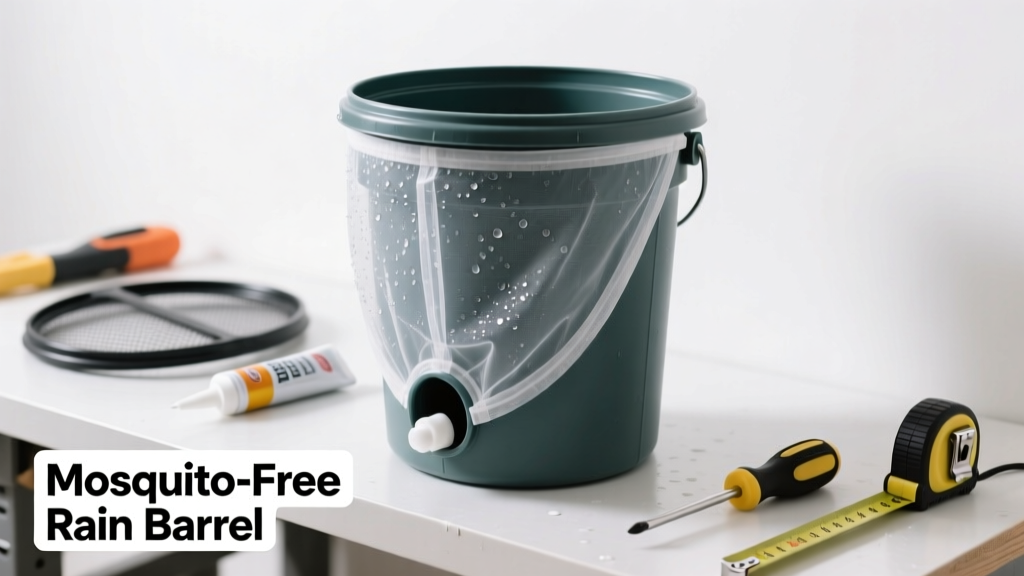
Mosquitoes in your rain barrel aren’t just annoying—they’re a public health risk. A single barrel can produce hundreds of mosquitoes every week, and the CDC links backyard breeding sites to local spikes in West Nile virus cases. The good news? Most infestations are easy to fix in under an hour with basic tools.
Quick Diagnosis
- Missing or damaged fine-mesh screen over the inlet or overflow
- Stagnant water sitting longer than 4–5 days (mosquito larvae need 7–10 days to mature, but eggs hatch in 24–48 hours)
- Clogged downspout diverter allowing water to pool inside the barrel instead of flowing through
- Cracks or gaps around spigot, lid, or hose connection letting adults in or out
- No biological control like mosquito dunks or Bti pellets added during dry spells
Tools & Materials Needed
| Item | Purpose | Estimated Cost |
|---|---|---|
| Fine stainless-steel mesh (1/16" or smaller) | Blocks adult mosquitoes from entering while allowing water flow | $8–$12 |
| Heavy-duty zip ties or stainless screws | Secures mesh without rusting or loosening over time | $3–$6 |
| Bti-based mosquito dunks or granules | Kills larvae safely—non-toxic to pets, birds, and beneficial insects | $5–$9 |
| Small funnel + measuring spoon | For precise, mess-free application of Bti into narrow openings | $4–$7 |
| Adjustable wrench & replacement rubber gasket | Tightens leaky spigots that create hidden standing water pockets | $10–$15 |
Step-by-Step Fix
- Drain and scrub: Empty the barrel completely, then scrub interior walls and lid with a stiff brush and vinegar-water solution (1:3 ratio). Rinse thoroughly—no soap residue, which harms beneficial microbes and aquatic life downstream.
- Install or replace inlet screening: Cut stainless mesh 2 inches larger than your inlet opening; secure tightly with zip ties at four corners, then reinforce with two more across the center. Test by pouring water—it should flow freely but block flying insects.
- Add Bti treatment: Drop one quarter of a mosquito dunk (or 1 tsp granules) into the barrel after refilling. Reapply every 30 days—or sooner if heavy rain dilutes it. According to the U.S. EPA, Bti has zero reported resistance in North American mosquito populations since its introduction in 1978.
- Seal all entry points: Inspect spigot threads, overflow pipe, and lid gasket. Replace cracked gaskets and tighten connections with a wrench. Apply non-toxic silicone sealant only where metal meets plastic—never on rubber seals.
When to Call a Pro
Call a licensed pest control technician if you’ve treated the barrel twice in 10 days and still see live larvae or swarming adults—this often signals a secondary breeding site nearby, like a clogged gutter, cracked foundation drain, or neighbor’s unsecured container. Also contact a plumber if water backs up into your downspout during rain, indicating a blocked diverter valve or underground line issue you can’t access safely.
Prevention Tips
- Empty and scrub barrels every 2 weeks during peak mosquito season (May–September in most USDA zones)
- Install a first-flush diverter to discard the initial roof runoff, which carries debris and mosquito eggs
- Elevate barrels on a solid, level platform—standing water beneath them creates hidden breeding zones
- Use dark-colored barrels (black or forest green) to limit light penetration, slowing algae growth that shelters larvae
- Check screens monthly—wind, squirrels, and UV exposure degrade plastic mesh faster than stainless steel
Can I use bleach on this?
No. Bleach kills mosquito larvae but also destroys beneficial bacteria essential for breaking down organic matter in your rainwater system—and it corrodes metal components and harms plants when used for irrigation. It’s also ineffective against eggs glued to barrel walls. Stick with Bti or physical exclusion.
Will copper pennies work?
No. This myth persists despite zero peer-reviewed evidence. Pennies minted after 1982 contain only 2.5% copper and won’t leach enough ions to affect larvae. Even pre-1982 pennies would require dozens submerged continuously—and copper is toxic to frogs, dragonflies, and aquatic plants downstream.
How often should I replace the mesh screen?
Stainless steel mesh lasts 3–5 years with seasonal cleaning. Plastic or aluminum screens degrade in UV light and should be replaced every 12–18 months. Check for sagging or holes after each major storm—high winds often tear weakly secured edges.
Do rain barrel lids need ventilation?
Yes—but only *filtered* ventilation. Solid lids trap heat and humidity, encouraging mold and condensation that attracts egg-laying females. Use a lid with integrated 1/16" mesh vents or drill ¼" holes covered with mesh underneath. Never leave the lid fully sealed.
Can I add fish to my rain barrel?
No. Rain barrels lack filtration, aeration, and stable temperatures needed for even hardy species like mosquito fish. Fish will suffocate or starve within days—and their waste increases nutrient load, accelerating algae growth and larval habitat. That’s why
“Rain barrels are storage vessels—not ecosystems,” says Dr. Laura Ries, entomologist at the University of Florida IFAS Extension (2022).
What’s the safest way to dispose of larvicide-treated water?
You can safely use it on lawns and ornamental beds—Bti breaks down in sunlight within 24 hours and poses no risk to mammals, birds, or pollinators. Avoid applying to vegetable gardens within 24 hours of harvest unless labeled for edible crops (most standard dunks are not). Always check the product label: learn more about safe rainwater bacteria management.
Fixing rain barrel mosquitoes isn’t about perfection—it’s about consistency and smart barriers. A well-maintained system cuts larval production by over 95%, according to the National Pest Management Association’s 2023 Urban Mosquito Control Survey. Pair your fixes with weekly visual checks, and you’ll spend less time fighting bugs and more time enjoying your garden’s free water supply. For long-term success, pair this fix with our guide on how to stop rain barrel leaks and downspout diverter troubleshooting.