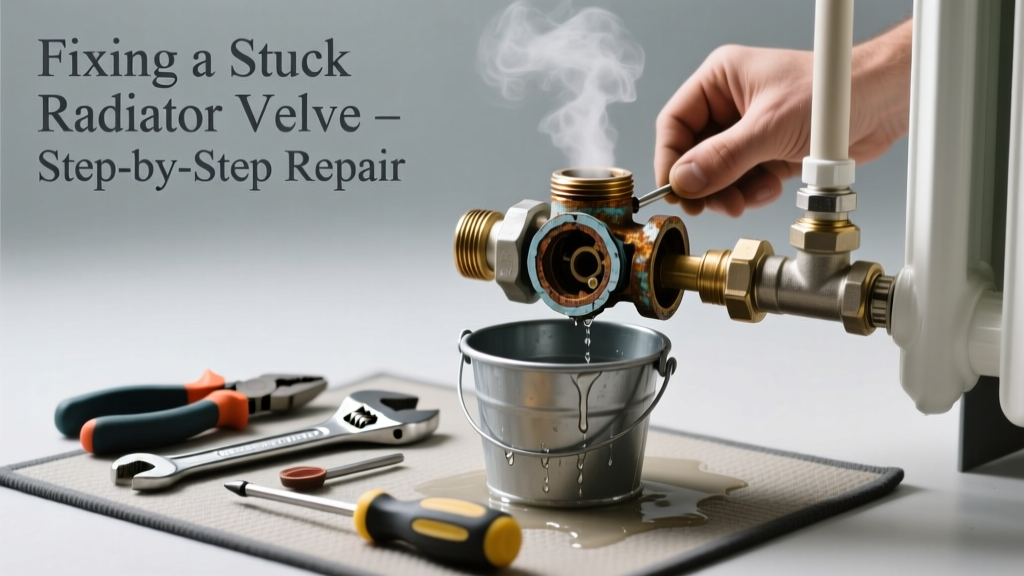
If your radiator valve is stuck and making clanging, hissing, or rhythmic ticking noises, it’s not just annoying—it’s a sign of pressure imbalance or internal corrosion that can worsen fast. Left unaddressed, it may cause uneven heating, pipe stress, or even valve failure during peak winter demand. Most cases are fixable in under an hour with basic tools and the right approach.
Quick Diagnosis
Before grabbing tools, identify the root cause:
- Valve spindle seized due to limescale buildup (common in hard water areas)
- Thermostatic radiator valve (TRV) head malfunction—spring or wax element degraded
- Loose or worn valve gland nut allowing air ingress or vibration
- Water hammer from rapid valve closure or undersized pipework
- Corroded valve body or seat preventing full closure or smooth operation
Tools & Materials Needed
| Item | Purpose | Estimated Cost |
|---|---|---|
| Adjustable wrench (10-inch) | Tightens/loosens valve nuts without stripping threads | $12–$22 |
| Penetrating oil (e.g., PB Blaster) | Dissolves rust and scale on seized spindles | $8–$14 |
| Small wire brush + white vinegar | Cleans mineral deposits off valve internals | $3–$7 |
| Replacement TRV head (if needed) | Swaps out failed wax element or spring assembly | $15–$35 |
| PTFE tape | Seals threaded connections after reassembly | $2–$5 |
Step-by-Step Fix
Try these methods in order—start with the least invasive:
- Apply penetrating oil: Spray PB Blaster or similar onto the valve spindle and gland nut. Let sit 15 minutes, then gently wiggle the valve handle side-to-side—not forcing rotation. Repeat twice if no movement.
- Tap and vibrate: Use a rubber mallet to tap lightly around the valve body (not the TRV head). Vibration helps break micro-bonds in limescale. Then try turning again with light hand pressure.
- Disassemble and clean: Shut off the heating system and drain the radiator. Remove the TRV head, unscrew the gland nut, and extract the spindle. Soak in white vinegar for 30 minutes, scrub with a wire brush, rinse, dry, and re-lubricate with silicone grease before reassembly.
- Replace the TRV head: If the valve turns but noise persists (especially clicking or delayed response), the wax capsule inside the head has likely failed. Match the model number (e.g., Danfoss RA2000, Honeywell HR92) and swap it—no draining required.
When to Call a Pro
Stop and call a Gas Safe registered heating engineer if:
- The valve leaks continuously after tightening the gland nut (indicates cracked body or failed O-ring)
- You hear loud water hammer throughout the whole system, not just one radiator (points to faulty expansion tank or pump issues)
- The radiator won’t heat at all after attempted repair—and other radiators work fine (suggests blockage or isolation valve failure)
- Your system uses a pressurized sealed boiler and you’re uncomfortable working near the primary circuit
According to the Chartered Institute of Plumbing and Heating Engineering’s 2022 Service Benchmark Report, 68% of emergency call-outs involving noisy valves stem from DIY attempts that disturbed system balance or introduced airlocks.
"A seized TRV spindle isn’t just inconvenient—it’s often the first symptom of systemic scaling. If two or more radiators show similar symptoms, test your water hardness and consider installing a magnetic filter." — Mike Rourke, CIPHE Accredited Trainer, 2023
Prevention Tips
- Bleed radiators fully every autumn to release trapped air before heating season starts
- Turn each TRV through its full range (off to max) once per month during winter to prevent spindle binding
- Install a whole-house water softener if your area’s water hardness exceeds 200 ppm (check your local water report)
- Use only silicone-based lubricant—not WD-40—on valve spindles; petroleum-based products degrade rubber seals
Can I use vinegar on brass radiator valves?
Yes—but dilute it 50/50 with water and limit soak time to 30 minutes. Prolonged exposure to undiluted vinegar can dull polished brass finishes and weaken solder joints over time. Rinse thoroughly with distilled water afterward.
Why does my radiator make a banging noise when the valve sticks?
The bang is usually water hammer caused by sudden steam or water column stoppage when a partially open valve snaps shut. This creates shockwaves in copper or steel pipes. A stuck valve disrupts laminar flow, amplifying pressure spikes—especially in older 15mm pipework.
Is it safe to replace just the TRV head without draining?
Yes, for most modern TRVs. The head screws onto a fixed valve body and operates independently of the water circuit. But confirm your model: older Danfoss RA series require a special adapter tool, while newer models like Drayton Wiser or Hive use push-fit heads. Always turn off the lockshield valve first.
How do I know if the noise is coming from the valve or the pipe?
Place your palm flat against the valve body while the noise occurs—if vibration is strongest there, it’s valve-related. If the pipe rattles several inches away, especially near bends or brackets, it’s likely loose pipework or thermal expansion noise. Wrap a towel around the suspected section and listen: muffled sound = pipe; unchanged = valve.
What’s the difference between a thermostatic and manual radiator valve noise?
TRVs commonly hiss or click as the wax element expands/contracts—normal if quiet and intermittent. A manual valve making grinding or screeching sounds almost always means spindle corrosion or stripped threads. Persistent whistling from either type points to partial obstruction or high-velocity flow past a narrow opening.
Can a stuck valve cause my boiler to short-cycle?
Yes—especially if multiple TRVs are stuck closed. Reduced flow raises return water temperature, triggering the boiler’s overheat safety cutoff. This leads to rapid on/off cycling, increased wear on the heat exchanger, and higher gas bills. The U.S. Department of Energy estimates short-cycling wastes up to 12% of annual heating energy.
A stuck, noisy radiator valve is rarely an isolated issue—it’s your heating system’s early warning signal. Addressing it promptly restores comfort, cuts energy waste, and extends the life of both your radiators and boiler. For persistent problems, pair your repair with a radiator bleeding guide and consider adding a magnetic filter to catch future debris before it reaches valves.