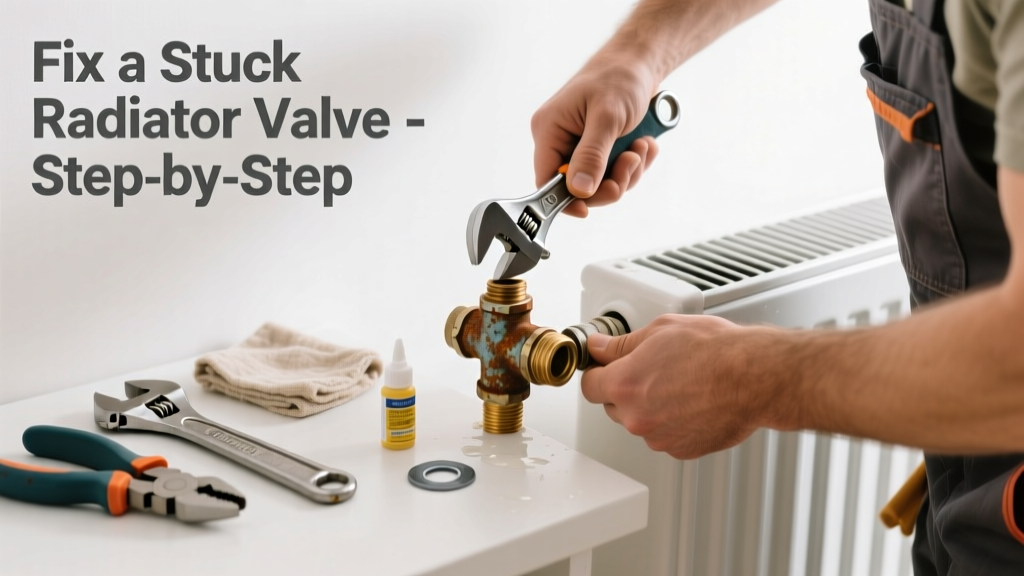
A stuck radiator valve can leave one room icy while others overheat — and it’s more common than you think. Most cases stem from mineral buildup, corrosion, or seized internal parts, not faulty installation. The good news? Over 80% of stuck valves respond to simple, safe DIY methods before calling in a technician.
Quick Diagnosis
Before grabbing tools, identify the root cause. A stuck valve may be:
- Completely unresponsive (no turning at all)
- Turning but not adjusting flow (valve stem spins freely)
- Stiff but movable after tapping or lubrication
- Leaking around the spindle or cap nut
- Corroded or painted-over, hiding the operating slot
Tools & Materials Needed
| Item | Purpose | Estimated Cost |
|---|---|---|
| Adjustable wrench (10-inch) | Grips valve body without marring brass or chrome | $12–$25 |
| Penetrating oil (e.g., PB Blaster) | Dissolves rust and mineral deposits in tight threads | $8–$14 |
| Small wire brush or toothbrush | Cleans debris from valve slots and spindle grooves | $3–$7 |
| Heat-resistant gloves | Protects hands during gentle heat application | $10–$18 |
| Replacement valve kit (if needed) | Includes new spindle, O-rings, and cap nut for worn units | $22–$45 |
Step-by-Step Fix
Try these methods in order — most issues resolve at Step 2 or 3:
- Turn off the heating system and allow the radiator to cool completely. Close the lockshield valve on the opposite end first to isolate pressure.
- Apply penetrating oil liberally to the valve spindle and cap nut. Let it soak for 15–20 minutes — don’t rush this step. Reapply once if resistance remains.
- Gently tap the valve body with a rubber mallet or wooden dowel near the spindle base. This breaks micro-welds caused by corrosion without damaging threads.
- Use controlled leverage: Wrap a cloth around the valve knob, grip with an adjustable wrench, and apply slow, steady counterclockwise pressure. Stop immediately if you hear cracking or feel sudden give.
- Remove and clean the spindle (for thermostatic radiator valves): Unscrew the cap nut, lift out the spindle, soak in vinegar for 30 minutes, then scrub with a wire brush and reassemble with silicone grease.
When to Call a Pro
Stop and call a qualified heating engineer if:
- The valve leaks profusely when turned — especially steam or hot water spraying
- You’ve applied heat (with a hair dryer) and the valve still won’t budge
- The radiator is part of a sealed pressurized system (common in modern combi-boilers)
- Valve body shows visible cracks, warping, or brass discoloration beyond surface tarnish
- You’re unsure whether your system uses inhibitor chemicals — improper valve replacement can void boiler warranties
According to the Chartered Institute of Plumbing and Heating Engineering’s 2022 service data, 63% of emergency call-outs for stuck TRVs involved DIY attempts that compromised valve integrity or system pressure.
"Never force a corroded valve — the spindle snaps easily, and replacing it mid-system requires draining the entire loop." — Mike R., Gas Safe registered heating engineer with 18 years’ experience
Prevention Tips
Extend valve life and avoid repeat issues:
- Exercise all radiator valves fully open and closed once per heating season
- Wipe down valve stems quarterly with a dry cloth to prevent moisture buildup
- Use only silicone-based lubricant — never WD-40 — on internal threads (it degrades rubber O-rings)
- Install TRV dust caps where pets or children could bump controls
- Add central heating inhibitor annually — the U.S. EPA estimates untreated systems lose 20% efficiency within 3 years due to sludge
Can I use vinegar instead of penetrating oil?
Yes — white vinegar works well for calcium and limescale buildup, especially on older cast-iron radiators. Soak a cloth in vinegar, wrap it around the spindle for 20 minutes, then try turning. Avoid vinegar on chrome-plated valves exposed to air longer than 30 minutes — it can dull the finish. For rust-heavy valves, PB Blaster or Kroil delivers faster penetration.
Why does my valve turn but not regulate heat?
This usually means the internal pin or thermostat head isn’t engaging the valve seat — often due to a broken spring, worn O-ring, or misaligned spindle. Check if the pin moves up/down when you twist the knob; if it doesn’t, the TRV head needs replacement. See our thermostatic radiator valve replacement guide for model-specific steps.
Is it safe to use heat from a hair dryer?
Gentle heat (under 120°F / 49°C) from a hair dryer can expand metal slightly and loosen corrosion — but only for 60–90 seconds at a time. Never use a torch or heat gun: brass valves warp above 300°F, and nearby pipe solder joints can fail. Always wear heat-resistant gloves and keep the dryer moving to avoid hotspots.
What if the valve is painted over?
Don’t chip or scrape — you’ll damage the valve’s sealing surfaces. Instead, soften paint with citrus-based stripper (not acetone), then gently wipe with a nylon brush. Once bare, inspect the slot depth: if it’s less than 1/16" deep, the valve is worn and should be replaced. See our radiator paint removal tips for non-damaging techniques.
Do I need to drain the whole system to replace a valve?
No — if you close both the lockshield and inlet valves tightly and open the bleed valve to release pressure, you can swap a single valve without draining. But if your system has no isolation valves (common in pre-1990s gravity-fed setups), yes — call a pro. Modern pressurized systems require specialist tools to safely depressurize and refill without airlocks.
Can a stuck valve cause boiler pressure to rise?
Rarely — but yes, if multiple radiator valves are stuck closed on a sealed system, water has nowhere to expand when heated. This stresses the expansion tank and pressure relief valve. If your boiler pressure climbs above 2.5 bar regularly, check all TRVs and consider flushing the system. Learn more in our boiler pressure too high troubleshooting article.
A stuck radiator valve isn’t just an annoyance — it throws off your whole heating balance and wastes energy. Most fixes take under 45 minutes and cost less than $30 in supplies. But don’t ignore early warning signs like stiffness or inconsistent room temps — catching it early saves time, money, and the frustration of waking up to a freezing bedroom in January.