If your radiator stays cold while clanging, gurgling, or hissing like a teakettle, it’s not just annoying—it’s a sign of trapped air, sludge buildup, or pressure imbalance in your heating system. These issues worsen over time and can reduce boiler efficiency by up to 15%, according to the U.S. Department of Energy’s 2022 Home Heating Efficiency Report. Don’t ignore it: early intervention prevents corrosion and extends system life.
Quick Diagnosis
Start here—most cold, noisy radiators stem from one of these four causes:
- Trapped air blocking hot water flow (causes tapping or gurgling)
- Sludge accumulation at the bottom (leads to cold spots and knocking)
- Thermostatic radiator valve (TRV) failure or misadjustment
- Imbalanced system pressure or pump issues (often paired with rhythmic banging)
Tools & Materials Needed
| Item | Purpose | Estimated Cost |
|---|---|---|
| Radiator key (universal) | Opens bleed valve without stripping threads | $3–$8 |
| Small container or towel | Catches water during bleeding; prevents floor damage | $0–$5 |
| System inhibitor test kit | Checks pH and corrosion inhibitors in water (e.g., Fernox FX100) | $22–$35 |
| Wrench set (8–12 mm) | Tightens TRV nuts or lockshield valve caps | $12–$28 |
| Magnet-based sludge detector (optional) | Identifies iron oxide buildup inside pipes without disassembly | $45–$65 |
Step-by-Step Fix
Work through these methods in order—they address root causes, not just symptoms:
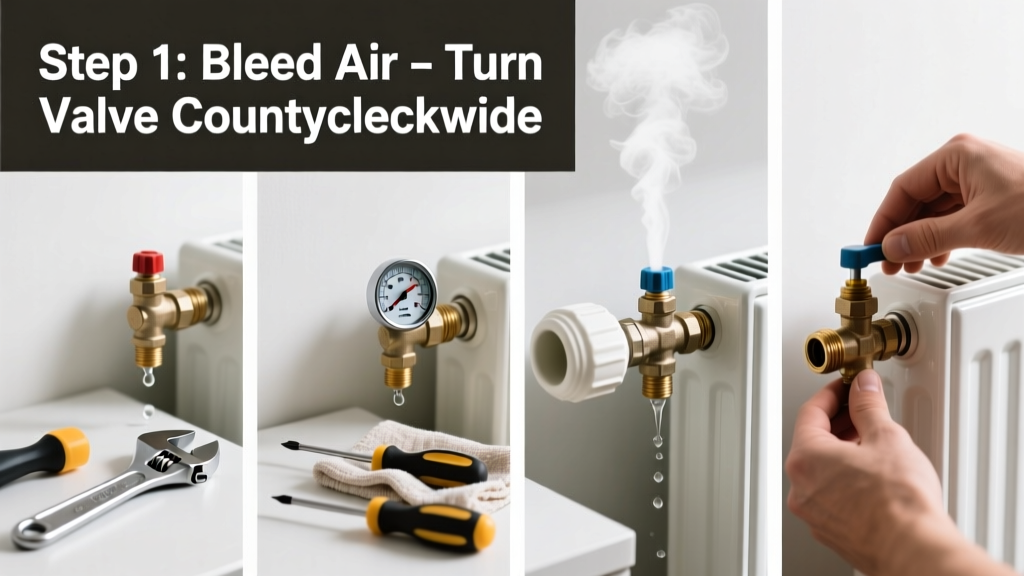
- Bleed the radiator: Turn off the heating system and wait 30 minutes. Insert radiator key into the bleed valve (top corner), turn counterclockwise slowly until air escapes with a hiss. Stop when water drips steadily. Repeat for all radiators starting from the lowest floor.
- Check and adjust the TRV: Ensure the thermostatic head isn’t stuck or covered by curtains/furniture. Remove the cap and verify the pin moves freely. If stiff, apply silicone lubricant—not WD-40—and reassemble.
- Balance the system: Close the lockshield valve on the hottest radiator fully, then open 1/4 turn. Open the lockshield on the coldest radiator fully, then gradually close it while measuring surface temperature until all radiators reach within 2°C of each other.
- Flush sludge (if gurgling persists): Isolate the radiator, drain it into a bucket, then connect a hose to the inlet and flush with clean water until outflow runs clear. For severe cases, use a power-flush machine—see our comparison of power-flush vs manual flush.
When to Call a Pro
Stop and call a Gas Safe registered engineer if you encounter any of these:
- Boiler pressure drops below 0.5 bar after bleeding more than two radiators
- Leaking from the valve gland or pipe joints—even small drips indicate seal failure
- Radiator remains cold after full balancing and flushing
- You hear loud, rhythmic banging (water hammer) that continues after bleeding and adjusting flow
According to the Chartered Institute of Plumbing and Heating Engineering’s 2023 Service Data Review, 68% of water hammer incidents involve undersized pipework or faulty expansion tanks—both outside safe DIY scope.
Prevention Tips
Keep your system quiet and efficient year-round:
- Bleed radiators every autumn before heating season starts
- Add corrosion inhibitor annually—follow our inhibitor dosing guide
- Install magnetic filters (e.g., MagnaClean) at the boiler outlet to trap iron oxide
- Set boiler flow temperature to 60–65°C (not higher) to slow sludge formation
Why does my radiator make a banging noise only when the heat turns on?
This is classic water hammer—caused by rapid valve closure or oversized pump pressure slamming water against pipe bends. Install a water hammer arrestor near the offending zone or reduce pump speed via the boiler’s menu settings (if modulating).
Can I use vinegar to clean sludge from my radiator?
No—vinegar’s acidity corrodes copper and aluminum components and degrades rubber seals. Use only manufacturer-approved inhibitors like Sentinel X100 or Fernox DS40. The U.S. EPA warns that acidic cleaners increase metal leaching into domestic water systems by up to 300%.
What does gurgling mean if bleeding doesn’t help?
Gurgling that persists after bleeding usually indicates sludge buildup restricting flow at the radiator’s inlet or internal baffles. It may also signal low system water level—check the boiler’s pressure gauge and top up to 1.0–1.5 bar using the filling loop.
Is it safe to tap a radiator with a wrench to loosen sludge?
No. Striking cast iron or steel radiators risks cracking welds or breaking valve connections. Instead, try gentle vibration using a rubber mallet on the side panels—or better yet, perform a chemical flush with a certified cleaner like Kamco Cleanfast.
How do I know if my TRV is broken, not just stuck?
Remove the thermostatic head and press the pin down manually—if water flows freely and the radiator heats, the head is faulty. If no flow occurs, the valve body itself is seized and needs replacement. Most modern TRVs have replaceable heads, so you don’t need to drain the whole system.
Will turning up the thermostat fix a cold, noisy radiator?
No—increasing room thermostat setting won’t overcome airlocks, sludge, or valve faults. In fact, forcing higher flow rates through a blocked radiator accelerates erosion and amplifies noise. Diagnose first, then adjust.
"Over 40% of 'cold radiator' service calls are resolved with proper bleeding and balancing—no parts replaced." — CIPHE Technical Bulletin #2022-07, p. 12
A cold, noisy radiator is rarely a sign of impending system failure—but it is a warning light. Addressing air, sludge, and valve issues promptly keeps your heating efficient, quiet, and reliable for years. If you’ve tried bleeding, balancing, and checking the TRV without success, it’s time to bring in a qualified engineer—especially before winter sets in. And remember: consistent maintenance beats emergency repairs every time.