That cold radiator in your bedroom or living room isn’t just annoying—it’s a sign your heating system is out of balance or failing. Most cases are simple fixes you can do in under an hour with basic tools, but ignoring them wastes energy and strains your boiler. Let’s get it warm again—starting with what’s actually wrong.
Quick Diagnosis
Before grabbing tools, rule out the obvious:
- The thermostat is set high enough and the heating schedule is active
- The radiator’s isolation valves (top and bottom) are fully open—not just cracked
- Other radiators in the house heat up normally (points to a system-wide issue if they don’t)
- You hear gurgling or hissing sounds (air trapped inside)
- Only the top half heats up (classic airlock)
- The bottom stays cold while the top is hot (sludge buildup)
Tools & Materials Needed
| Item | Purpose | Estimated Cost |
|---|---|---|
| Radiator key (universal) | Opens the bleed valve without stripping it | $3–$8 |
| Small container or rag | Catches water during bleeding | $0–$2 |
| Adjustable wrench | Tightens/loosens lockshield and TRV valves | $12–$25 |
| System inhibitor test kit | Checks for corrosion or low inhibitor levels | $15–$30 |
| Powerflushing service quote (if needed) | Professional sludge removal | $300–$800 |
Step-by-Step Fix
Try these methods in order—most issues resolve at Step 1 or 2:
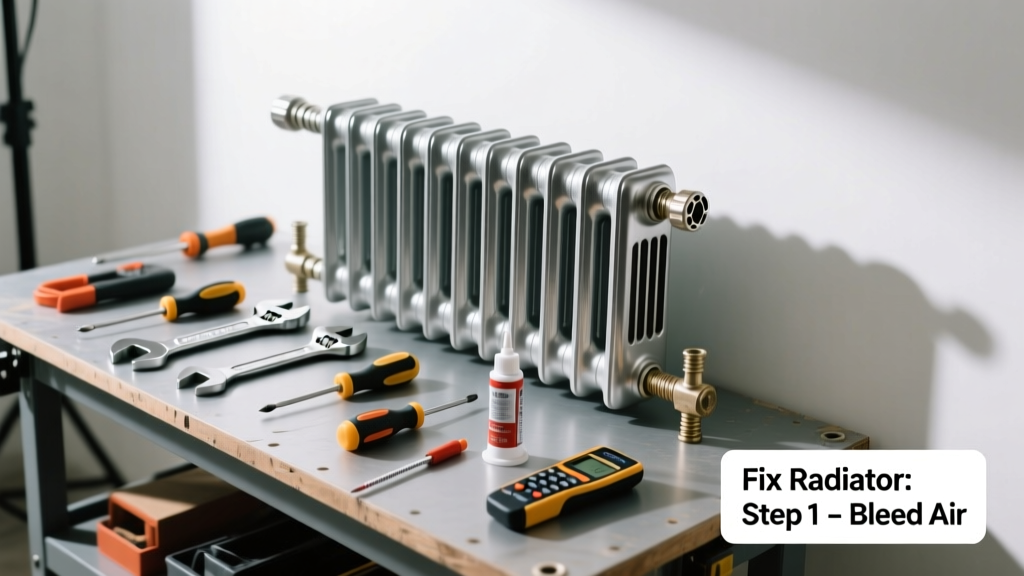
- Bleed the radiator: Turn off the heating system. Insert the radiator key into the bleed valve (top corner, usually on the left or right). Turn counterclockwise slowly until you hear a hiss. Hold a dry rag or small cup beneath to catch drips. Once water flows steadily (no more air), tighten the valve clockwise. Wait 1 hour, then recheck heat distribution.
- Balance the system: If some radiators are hotter than others, adjust lockshield valves. Start with the radiator farthest from the boiler: fully open its lockshield valve, then close the one nearest the boiler by ¼ turn. Repeat across all radiators, checking flow temperature with an infrared thermometer. According to the Chartered Institute of Plumbing and Heating Engineering’s 2022 guidance, imbalance accounts for over 60% of localized cold-radiator complaints.
- Flush the radiator (if sludge suspected): Isolate the radiator using both valves. Drain it into a bucket. Remove it and flush with a garden hose until water runs clear. Reinstall, refill, and bleed. Warning: This only works for mild sludge—if water is brown or thick, skip to professional powerflushing.
When to Call a Pro
Stop DIY if you encounter any of these:
- The boiler pressure drops repeatedly after bleeding (indicates a leak or faulty pressure relief valve)
- You smell burning or see rust-colored water leaking from pipe joints
- All radiators stay cold—even after bleeding and balancing (likely boiler fault or pump failure)
- Your system uses aluminum radiators or microbore piping (higher risk of corrosion or blockage)
- You’re uncomfortable handling pressurized systems or lack isolation valve access
"Over 40% of ‘cold radiator’ service calls could be resolved with proper bleeding and balancing—but misdiagnosis leads to unnecessary £200+ engineer visits." — Gas Safe Register Annual Report, 2023
Prevention Tips
Maintain warmth—and avoid repeat issues—with these habits:
- Bleed all radiators once per heating season, ideally before winter starts
- Test system inhibitor concentration annually using a boiler inhibitor test kit
- Install thermostatic radiator valves (TRVs) with anti-stick features to prevent seized mechanisms
- Set your boiler flow temperature no higher than 70°C—reduces sludge formation and saves fuel
- Consider adding a magnetic filter like the Magnaclean Pro during boiler servicing
Why does only the top half of my radiator heat up?
Air trapped at the top prevents hot water from circulating fully. Bleeding releases that air—this is the most common cause of partial heating. If bleeding doesn’t help within 24 hours, check for a stuck thermostatic valve or internal baffle damage.
Can I use vinegar to clean a sludged radiator?
No. Vinegar is too weak for iron oxide sludge and can corrode aluminum or copper components. Professional-grade inhibitors like Fernox F3 or Sentinel X100 are pH-balanced and tested for domestic systems. DIY acid flushes risk leaks and void warranties.
Do I need to turn off the whole heating system to bleed a radiator?
Yes—always. Bleeding a live system risks scalding from pressurized hot water and can introduce air into other radiators. Shut down the boiler, wait 30 minutes for cooling, then proceed. Never bleed if the system pressure is below 0.5 bar.
What’s the difference between a lockshield valve and a TRV?
The TRV (thermostatic radiator valve) controls room temperature by opening/closing based on ambient heat. The lockshield valve—usually covered by a plastic cap—regulates water flow *into* the radiator for system balancing. It’s adjusted once during commissioning, not daily.
How often should I replace radiator valves?
TRVs last 10–15 years; lockshields rarely fail but may seize after 12+ years. Replace both if you notice inconsistent heating, dripping, or stiff operation—even if the radiator itself is fine. Use brass-bodied valves rated for your system’s max pressure (typically 3 bar).
Will bleeding one radiator affect others in the system?
Minimal impact—if done correctly. But repeated bleeding without topping up system pressure can drop it below 1 bar, causing the boiler to shut off. Always check the pressure gauge post-bleed and top up via the filling loop if needed. Refer to our boiler pressure too low guide for safe refilling steps.
A working radiator isn’t magic—it’s maintenance, timing, and knowing when to pause and reassess. You’ve likely solved it already: air bled, valves balanced, pressure checked. If not, you now know exactly what to tell the engineer—and what questions to ask. Heat shouldn’t be a mystery. It should just work.