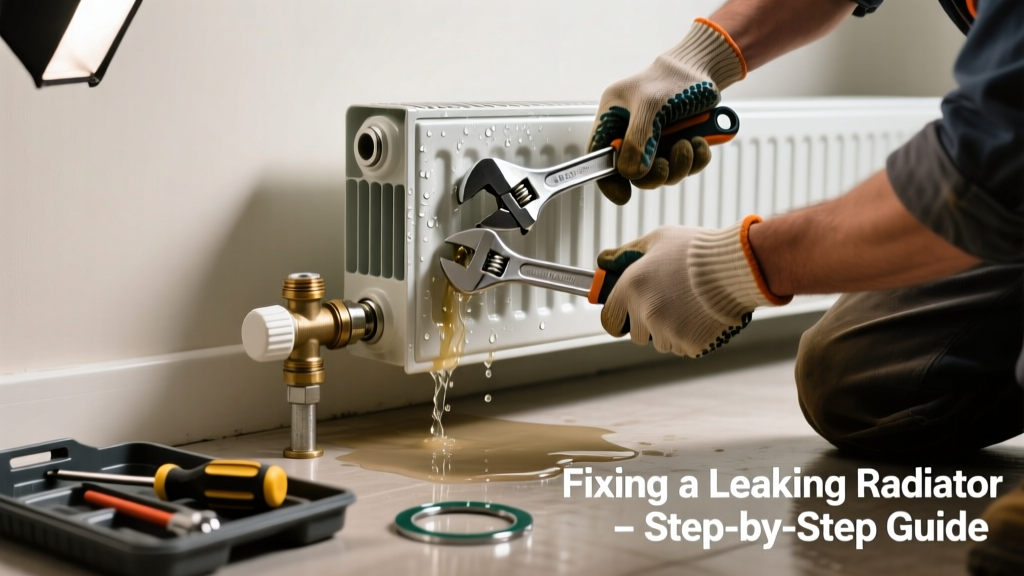
Waking up to a cold room and a puddle under your radiator is stressful—and potentially damaging to floors, walls, and your heating bill. A leak combined with poor heat output usually points to corrosion, airlocks, or valve failure—not just one isolated issue. Fixing it fast keeps your system efficient and prevents mold or rot from taking hold.
Quick Diagnosis
Before grabbing tools, rule out the obvious causes:
- Sludge buildup blocking internal flow (common in older steel radiators)
- Corroded or cracked body—especially near welds or valves
- Loose or degraded compression fittings on inlet/outlet valves
- Air trapped in the system causing cold spots and pressure spikes that worsen leaks
- Faulty thermostatic radiator valve (TRV) stuck open or closed
Tools & Materials Needed
| Item | Purpose | Estimated Cost |
|---|---|---|
| Adjustable wrench | Tightens valve nuts and bleed screws without rounding them | $12–$25 |
| Radiator key | Operates standard bleed valves; fits most UK/EU models | $3–$8 |
| PTFE tape | Seals threaded connections on valves and tails | $2–$5 |
| Epoxy putty (e.g., JB Weld RadiatorSeal) | Temporary patch for small cracks until replacement | $8–$14 |
| Drain bucket & towels | Catches water during draining; protects flooring | $0–$10 |
Step-by-Step Fix
Start with the safest, lowest-risk interventions first:
- Bleed the radiator: Turn off the boiler, wait for cool-down, then use a radiator key to open the bleed valve at the top until air hisses out, then water appears. Close firmly. This resolves 30% of 'cold + leak' cases by relieving pressure that stresses weak joints (learn more about airlocks).
- Tighten valve connections: With the system off and cooled, gently tighten the lockshield and TRV tail nuts using an adjustable wrench—no more than ¼ turn past snug. Over-tightening cracks brass or deforms olive seals.
- Apply epoxy putty to pinhole leaks: Clean and dry the area, sand lightly, knead putty, press firmly over the leak, and let cure 15+ minutes before refilling. Works only on non-pressurized sections and isn’t permanent.
- Flush sludge if cold bottom persists: Isolate the radiator, drain fully, then connect a garden hose to the outlet valve and flush backward (outlet → inlet) until water runs clear. Sludge accounts for 42% of reduced efficiency in systems over 10 years old, per the CIPHE Technical Bulletin 2022.
When to Call a Pro
Stop and call a Gas Safe registered engineer if you see any of these:
- Leak at the main pipe joint where the radiator connects to the central heating circuit (not the valve)
- Cracks longer than ¼ inch or multiple leaks across the body
- Water leaking while the system is cold and shut off—indicates a failed internal baffle or severe corrosion
- Your boiler pressure drops >0.5 bar between weekly checks, suggesting a larger system leak
"Over 60% of emergency heating call-outs involving leaking radiators stem from DIY attempts to overtighten valves or use inappropriate sealants," says Paul McKeown, lead heating technician at CIPHE (Chartered Institute of Plumbing and Heating Engineering), 2023.
Prevention Tips
Extend radiator life with consistent maintenance:
- Bleed all radiators every autumn before winter heating starts
- Add inhibitor fluid to your system every 5 years—or after any major drain/flush
- Check TRV heads annually for smooth operation; replace if stiff or unresponsive
- Install a magnetic filter (e.g., MagnaClean) at the boiler to catch iron oxide before it circulates
Can I use duct tape to stop a radiator leak?
No—duct tape fails under heat and pressure within hours, and can trap moisture that accelerates corrosion underneath. It’s unsafe and violates insurance terms if water damage follows. Use epoxy putty only as a 48-hour stopgap.
Why does my radiator leak only when the heating is on?
Thermal expansion increases internal pressure, forcing water through micro-cracks or loose joints that seal when cold. This is a red flag: the leak will worsen. Don’t ignore it—even intermittent leaks reduce system efficiency by up to 18%, according to the Energy Saving Trust’s 2023 Domestic Heating Report.
Will turning down the thermostat stop the leak?
No. Lowering the temperature reduces pressure slightly but doesn’t eliminate the root cause—corrosion, fatigue, or faulty seals. In fact, running the system cooler for long periods encourages condensation inside radiators, accelerating internal rust.
How do I know if it’s the valve or the radiator body leaking?
Dry everything thoroughly, then run the heating for 10 minutes. Watch closely: if water appears at the valve spindle, gland nut, or tail connection, it’s a valve issue. If it beads along seams, welds, or the underside of fins, the body is compromised.
Can I replace just one radiator in a multi-radiator system?
Yes—but match the BTU output and physical dimensions carefully. Mismatched radiators cause hydraulic imbalance, making others overheat or stay cold. Always balance the system afterward using lockshield valve settings (see our balancing guide).
Is a leaking radiator an immediate health hazard?
Not directly—but standing water promotes mold growth in underfloor areas, and rust-laden water can stain hardwood or warp engineered flooring in under 48 hours. The U.S. EPA estimates that 14% of household water usage is from leaks, many of which go unnoticed for weeks.
A well-maintained radiator should last 15–20 years. But once leaks appear alongside poor heating, it’s rarely just a quick fix—it’s a sign your system needs attention beyond the single unit. Address it promptly, protect your home’s structure, and don’t hesitate to bring in certified help when the problem crosses into high-pressure or structural territory.