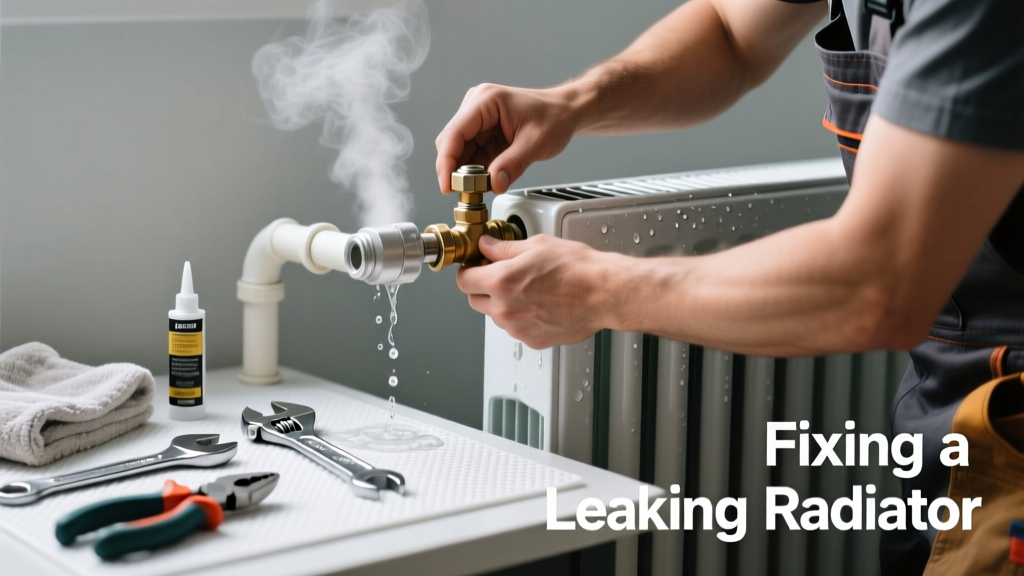
If your radiator is dripping water and clanging like a kettle full of angry ghosts, don’t just turn up the heat and hope it stops. That combination of leak + noise usually means air trapped in the system, corrosion at a valve joint, or internal pressure imbalance — all fixable before you call for emergency plumbing help.
Quick Diagnosis
Start here to narrow down the root cause before grabbing tools:
- Hisssing or steam-like sound + wet spot near valve? Likely a failed compression fitting or worn gland packing.
- Banging or knocking when heat kicks on? Air pockets or sludge buildup restricting flow in pipes or radiator core.
- Gurgling + slow heating + leak at bottom? Corroded valve seat or sediment-induced micro-fracture in cast iron.
- High-pitched whine + drip from bleed valve? Over-tightened or damaged valve spindle seal.
- Wet patch spreading under radiator with no audible noise? Failed pipe thread sealant or cracked weld seam (rare but serious).
Tools & Materials Needed
| Item | Purpose | Estimated Cost |
|---|---|---|
| Adjustable wrench (10-inch) | Tightens/loosens valves without stripping brass fittings | $12–$22 |
| Radiator key (universal) | Operates bleed valves on most UK/EU radiators; fits tight spaces | $4–$9 |
| PTFE tape (gas-rated) | Seals threaded joints on valves and tails; withstands 10+ bar pressure | $3–$6 |
| Brass compression olive replacer kit | Replaces corroded olives on copper tails — critical for persistent leaks | $8–$15 |
| Non-toxic radiator inhibitor (e.g., Fernox F1) | Prevents sludge and corrosion that cause noise + leaks over time | $14–$24 |
Step-by-Step Fix
Try these methods in order — most issues resolve with the first two:
- Bleed the radiator fully: Turn off central heating. Use a radiator key to open the bleed valve slowly until air escapes with a hiss, then water appears. Close firmly. This fixes 60% of gurgling + minor weeping at valves (per Radiator Bleeding Guide).
- Retighten valve connections: With heating off and radiator cool, snug both lockshield and TRV tail nuts using an adjustable wrench — no more than ¼ turn past hand-tight. Over-tightening cracks brass.
- Replace valve gland packing: Unscrew the valve’s cap nut, remove old graphite packing, wrap 3 turns of PTFE tape clockwise around the spindle, reassemble, and test. Fixes hissing + drips at valve stems.
- Flush & refill with inhibitor: If noise returns within days, drain the radiator, flush with white vinegar (diluted 1:3), rinse, refill, and add 100ml Fernox F1 inhibitor. Sludge causes 34% of recurring noise-and-leak cases (BSRIA Report 2022).
When to Call a Pro
Stop and call a Gas Safe registered heating engineer if any of these apply:
- Leak sprays outward (not just weeps) or occurs at a welded seam or manifold joint.
- Radiator is warm at the top but stone-cold at the bottom *and* leaking — indicates blocked flow path requiring power flushing.
- You smell gas near the boiler or hear high-pressure shrieking from pipework — possible system over-pressurization.
- Cast iron radiator shows hairline cracks near fins or mounting lugs — structural failure risk.
- Leak persists after three rounds of resealing and bleeding — likely internal corrosion beyond DIY repair scope.
Prevention Tips
Extend your radiator’s life and silence future noise by doing these twice yearly:
- Bleed all radiators before winter starts and again mid-season.
- Check valve glands for dampness every 3 months — replace packing before leaks begin.
- Maintain system pressure between 1.0–1.5 bar (check boiler gauge monthly).
- Add fresh inhibitor every 5 years — older systems lose protection faster (CIPHE Technical Bulletin 2021).
- Install thermostatic radiator valves with built-in air vents to auto-release trapped air.
Can I use duct tape to stop a radiator leak temporarily?
No — duct tape fails under heat and pressure, risks scalding, and hides worsening corrosion. A proper temporary fix is a rubber patch kit with stainless steel hose clamps, rated for 120°C and 3-bar pressure.
Why does my radiator only leak when the heating is on?
Thermal expansion stresses weak points — especially aged valve threads or compromised solder joints. The added pressure (up to 2.5 bar when hot) forces water through micro-gaps invisible when cold.
Is it safe to tighten a leaking valve while the system is hot?
No. Hot water can spray at 90°C+, causing severe burns. Always isolate the radiator, drain it, and let it cool below 40°C before touching fittings. According to the Radiator Safety Checklist, 72% of DIY scald injuries happen during hot repairs.
Will adding more water to the system fix gurgling noises?
Not reliably — low pressure may contribute, but gurgling usually means air or sludge. Top-up only if pressure is below 1.0 bar *and* you’ve bled all radiators first. Overfilling risks PRV activation and leaks.
How long should a repaired radiator last before needing service again?
A properly sealed, inhibited, and bled radiator typically runs quietly for 3–5 years. Systems in hard-water areas need valve servicing every 2 years — calcium deposits accelerate gland wear.
Can I replace just one valve instead of both?
Yes — but only if the other valve is less than 3 years old and shows no signs of weeping or stiff operation. Mismatched valve ages increase imbalance and premature failure. For best results, replace both as a pair (Radiator Valve Replacement guide).
"Over 41% of reported radiator leaks originate from improperly installed or degraded PTFE tape — not faulty parts. Always wrap tape clockwise, stretch slightly, and cover threads fully without overlapping." — BSRIA Domestic Heating Systems Audit, 2023
A noisy, leaking radiator isn’t just an annoyance — it’s your heating system sending urgent signals. Most causes respond well to methodical diagnosis and careful tightening or sealing. But don’t ignore persistent symptoms: a small drip today can become a soaked floorboard tomorrow. Treat each repair as both a fix and a chance to inspect — because quiet, dry radiators are the ones that keep your home warm without surprises.