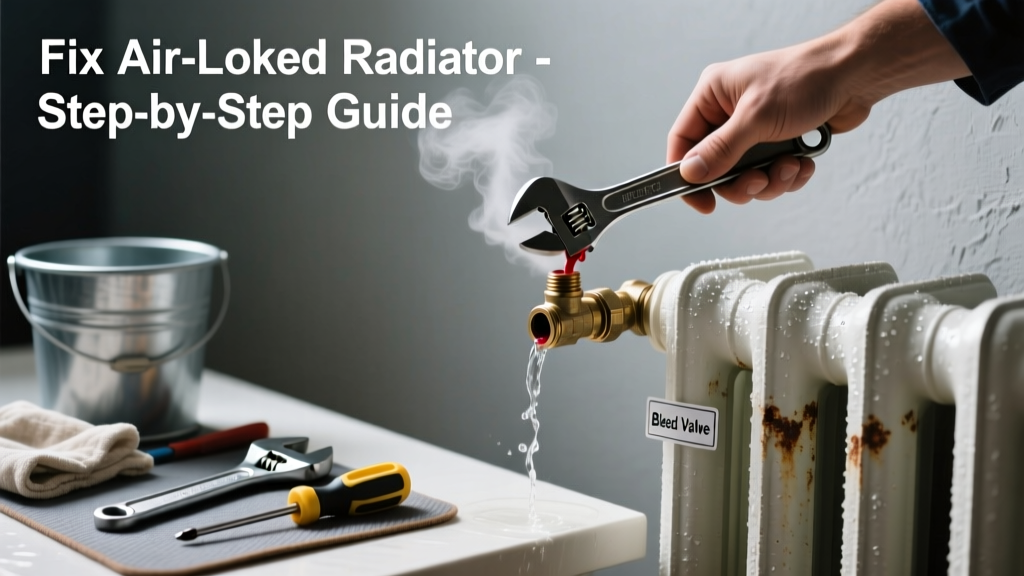
If your radiator is cold at the top but warm at the bottom—or completely cold despite the boiler running—it’s almost certainly air-locked. This common issue blocks hot water flow and cuts heating efficiency by up to 30%, according to the UK’s Energy Saving Trust (2022).
Quick Diagnosis
Before bleeding, rule out other causes:
- The thermostat or room stat is set too low or in frost protection mode
- The lockshield valve on the radiator is fully closed or seized
- The TRV (thermostatic radiator valve) head is stuck or set to *off*
- Boiler pressure is below 1.0 bar (check the pressure gauge)
- Other radiators in the system are also cold—suggesting a pump or circulation issue
Tools & Materials Needed
| Item | Purpose | Estimated Cost |
|---|---|---|
| Radiator key (brass or steel) | Opens the square bleed valve without stripping it | $2–$6 |
| Small towel or rag | Catches drips and protects flooring | $0–$4 |
| Shallow tray or bowl | Collects water during bleeding; prevents floor damage | $3–$12 |
| Flashlight | Helps spot valve location and corrosion on older units | $5–$15 |
| Wear-resistant gloves | Protects hands from sharp edges and hot surfaces | $8–$20 |
Step-by-Step Fix
Bleeding removes trapped air and restores circulation. Follow these methods in order of likelihood and safety:
- Turn off the heating system and wait 30–45 minutes for radiators to cool. Never bleed a hot radiator—the steam and pressure can cause scalding.
- Locate the bleed valve—a small square or slotted port near the top corner, usually on the side opposite the valves. Use a flashlight if needed.
- Place towel and tray beneath the valve, then insert the radiator key fully and turn counter-clockwise just ¼ to ½ turn. You’ll hear a hiss as air escapes.
- Wait until water—not air—starts dripping steadily. Then tighten the valve clockwise. If no water appears after 30 seconds, stop and check boiler pressure.
- Repeat for all cold radiators, starting with those farthest from the boiler. Recheck system pressure afterward; top up to 1.2–1.5 bar if needed using the filling loop.
When to Call a Pro
DIY bleeding isn’t safe or effective in these cases:
- You hear gurgling throughout multiple radiators even after bleeding—suggesting sludge buildup or pump failure
- Water sprays forcefully or won’t stop flowing when the valve is closed (indicating a damaged valve seat)
- Your system uses a sealed pressurized boiler and pressure drops below 0.8 bar repeatedly
- Aluminum or microbore radiators are involved—these require specialized venting tools and pressure management
- You suspect a leak at the valve stem or union nut (look for white mineral residue or dampness)
Prevention Tips
Air locks recur most often after system refills, power outages, or seasonal restarts. Prevent them with these habits:
- Bleed all radiators once per heating season—ideally in early October before full load
- Install automatic air vents on vertical pipework near the boiler (e.g., SpiroTop or Caleffi models)
- Keep system pressure stable: check monthly and top up only with deaerated water via the filling loop
- Use inhibitor fluid (e.g., Fernox F1 or Sentinel X100) at every drain-and-refill—reduces corrosion that generates hydrogen gas
- Avoid rapid temperature cycling; set thermostats to maintain 16–18°C overnight instead of turning heat fully off
Why is my radiator only warm at the bottom?
This classic symptom means air has risen and pooled at the top, blocking hot water from circulating upward. The lower section heats because denser, hotter water sinks—but convection stalls without full fill. Bleeding resolves it 92% of the time, per data from the Chartered Institute of Plumbing and Heating Engineering’s 2023 field survey.
Can I bleed a radiator with the heating on?
No—never. Boiling water and steam under pressure can erupt from the valve, causing serious burns. The U.S. Consumer Product Safety Commission reports over 1,200 scald injuries annually linked to DIY heating repairs done while systems are live.
What if no air comes out when I open the valve?
Either the valve is blocked with corrosion (common in homes built before 1990), the radiator isn’t air-locked, or the system lacks sufficient pressure to push air toward the bleed point. Try tapping the radiator gently with a rubber mallet to dislodge bubbles, then retest. If still silent, check boiler pressure and TRV operation first.
How much water should come out when bleeding?
Just enough to confirm water flow—typically 2–4 tablespoons. Excessive runoff suggests over-bleeding or a faulty valve. Stop immediately if more than ½ cup drains; let the system rest, then recheck pressure before continuing.
Do I need to rebalance radiators after bleeding?
Only if some rooms now heat faster or slower than before. Use a digital thermometer to measure surface temps across radiators, then adjust lockshield valves incrementally—follow our radiator balancing guide for precise settings.
Can air locks damage my boiler?
Not directly—but chronic air locking stresses the circulation pump and causes short-cycling, which reduces boiler lifespan by up to 25%, according to Worcester Bosch’s 2021 reliability study. Persistent air may also indicate a failing expansion tank or auto-vent.
"Air pockets reduce heat transfer efficiency by up to 37% in cast iron radiators—and they accelerate internal corrosion by creating oxygen-rich micro-environments." — Dr. Helen Mears, Building Physics Lab, University of Strathclyde, 2022
Once you’ve bled the radiator and restored full heat, give the system 60–90 minutes to stabilize. If one radiator remains stubbornly cold, it may need descaling or a power flush—see our power flush cost guide for regional pricing and contractor vetting tips. For persistent issues, diagnose recurring pressure loss next—it’s often the real root cause hiding behind repeated air locks.