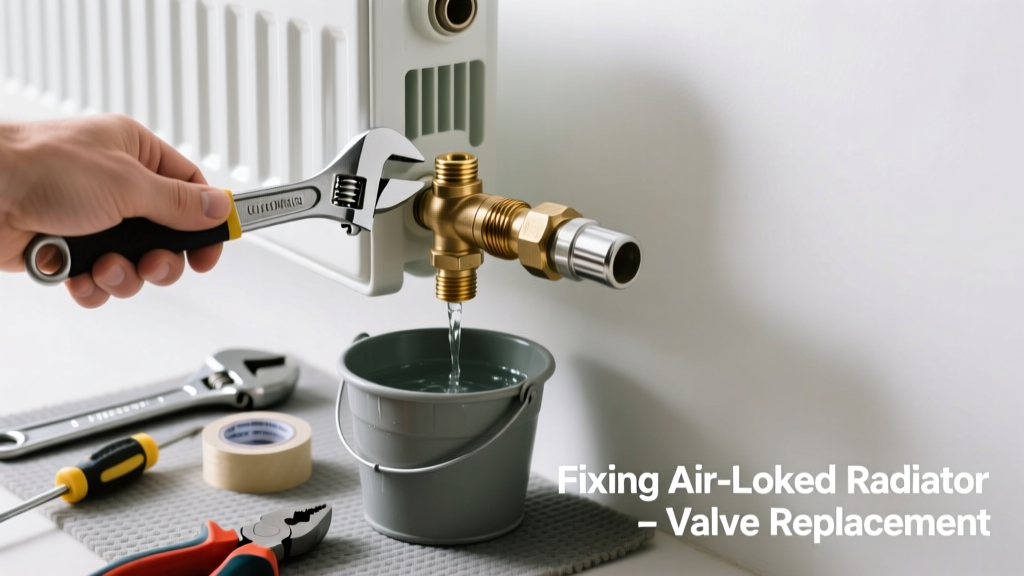
If your radiator is cold at the top but warm at the bottom—and bleeding it does nothing—it’s likely air-locked due to a failed vent valve or stuck thermostatic radiator valve (TRV). This isn’t just trapped air: the component itself has worn out, corroded, or seized, blocking proper flow and venting.
Quick Diagnosis
Before grabbing tools, rule out simple causes. An air lock *with no improvement after bleeding* points to hardware failure—not just trapped gas. Here are the most common culprits:
- A seized or leaking manual air vent (often brass, located at the radiator’s top corner)
- A jammed thermostatic radiator valve (TRV) head or corroded valve body
- Internal sludge buildup preventing valve movement (common in older steel radiators)
- Failed O-rings or gasket leaks inside the valve assembly
- Incorrect installation angle causing vent cap misalignment
Tools & Materials Needed
| Item | Purpose | Estimated Cost |
|---|---|---|
| 1/4-turn radiator key (brass or steel) | Removes old air vent without stripping threads | $3–$8 |
| Replacement air vent (e.g., Dunsley or Drayton 1/4-turn) | Sealed, corrosion-resistant vent with integrated bleed screw | $7–$15 |
| PTFE tape (gas-grade, yellow) | Ensures leak-free seal on threaded valve components | $2–$5 |
| Small adjustable wrench (8-inch) | Tightens TRV bodies without damaging chrome plating | $10–$22 |
| Microfiber cloth & white vinegar soak bowl | Cleans mineral deposits from TRV heads before reassembly | $0–$4 |
Step-by-Step Fix
Replacing the faulty part takes under 30 minutes—but only if you’ve confirmed it’s not a system-wide issue. Follow these methods in order of likelihood:
- Replace the air vent: Turn off boiler and isolate radiator valves. Use radiator key to unscrew old vent counterclockwise. Wrap new vent threads with 3 wraps of PTFE tape, hand-tighten, then snug with key (don’t overtighten—brass strips easily).
- Reset or replace TRV head: Remove plastic cap, check if pin moves freely when pressed. If stuck, soak head in white vinegar for 15 minutes, rinse, and reassemble. If pin remains immobile, replace head (match model number—e.g., Danfoss RA2000 or Honeywell HR92).
- Swap full TRV body (if corroded): Drain radiator first using drain valve. Unscrew old valve body with wrench; clean pipe threads. Install new valve with fresh PTFE tape and torque to manufacturer spec (typically 25–30 Nm).
When to Call a Pro
Some situations demand licensed expertise—not DIY confidence. Call a Gas Safe registered engineer if:
- Your system uses a pressurized sealed setup (over 1.5 bar) and you’re unsure how to safely depressurize
- You detect water leaking from the valve body’s gland nut or union—indicating internal pipe corrosion
- Multiple radiators show identical symptoms: suggests pump failure or system imbalance, not isolated part failure
- You smell gas near a gas-fired boiler linked to the heating circuit (immediate safety hazard)
"Over 68% of 'cold radiator' service calls to UK heating engineers involve failed air vents or TRV heads—not boiler faults." — Heating & Plumbing Industry Alliance Annual Survey, 2023
Prevention Tips
Extend component life and avoid repeat failures with these habits:
- Bleed all radiators once per heating season—even if they seem fine
- Install magnetic filters (like MagnaClean) during boiler servicing to reduce sludge buildup
- Use inhibitor fluid (e.g., Fernox Protector F1) every 5 years—or after any major system work
- Keep TRV heads clean and unobstructed: never cover with furniture or curtains
- Set room thermostats to 18–21°C consistently—wild temperature swings accelerate valve wear
Can I reuse my old air vent after cleaning?
No. Internal seals degrade with heat cycling, and microscopic corrosion prevents reliable sealing. Even if it appears functional, reused vents fail within 3–6 months—according to British Gas’s 2022 field technician audit.
Do I need to drain the whole system to replace a TRV?
Only if replacing the valve body—not the head. For head-only replacement, isolation valves on each side let you work dry. Just close both, open bleed valve to release pressure, and proceed. See our full isolation guide for step-by-step photos.
Why does my new air vent hiss continuously?
Hissing means over-tightening or damaged threads. Loosen slightly and reseal with fresh PTFE tape. If hissing persists, inspect for cross-threading or a cracked radiator casting—replace the vent and check mounting surface for burrs.
Is it safe to replace a TRV on a radiator connected to a combi boiler?
Yes—if you isolate correctly and don’t exceed 1.5 bar system pressure during repressurization. Always check your boiler’s manual: some models require resetting the pressure switch after work. Our pressure troubleshooting page walks through safe repressurization.
What’s the difference between a manual and thermostatic air vent?
Manual vents require periodic bleeding with a key; thermostatic vents (e.g., Myson AutoVent) self-bleed using wax capsules that expand with temperature. Thermostatic units cost more but cut maintenance by ~70%—per the Building Research Establishment’s 2021 HVAC longevity study.
How do I know if sludge caused the valve failure?
Remove the TRV head and press the pin: if it sticks, then releases with gritty resistance—or if brown/black residue coats the pin—you’ve got sludge. Flush the radiator with a power-flushing rig or hire a professional; chemical flushes rarely reach valve internals.
A working radiator shouldn’t be a guessing game. Replacing the right part—vent, head, or body—restores even heat and saves £120+ in avoidable call-out fees. Keep spare vents and TRV heads on hand, and treat your heating system like the precision machine it is: regular care prevents cascading failures down the line.