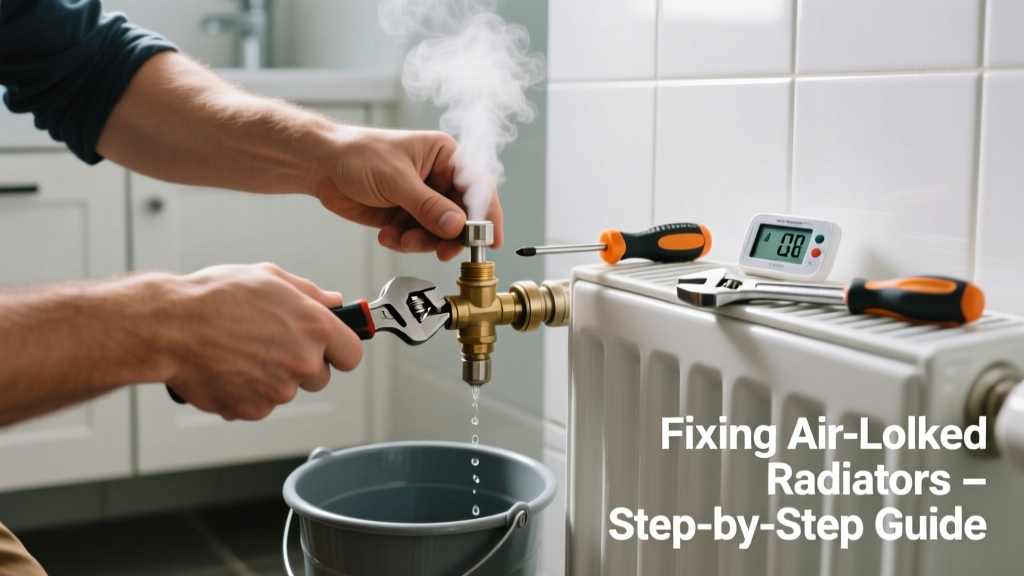
If your radiator is making clunking, gurgling, or hissing noises—and parts of it stay cold while others heat up—it’s almost certainly air-locked. This common issue disrupts water flow, reduces efficiency, and can strain your boiler over time. The good news? It’s usually a 10-minute fix with basic tools.
Quick Diagnosis
Before bleeding, confirm the noise isn’t from another source. Air locking typically presents with these telltale signs:
- Cold spots (especially at the top) while the bottom heats normally
- Gurgling or bubbling sounds when the system kicks on
- Tapping or knocking as pipes expand/contract around trapped air
- One or more radiators noticeably cooler than others on the same circuit
- Noise that worsens after recent system maintenance or refilling
Tools & Materials Needed
| Item | Purpose | Estimated Cost |
|---|---|---|
| Radiator key (brass or steel) | Opens the square bleed valve without stripping it | $3–$8 |
| Small towel or rag | Catches drips and protects flooring | $0–$5 |
| Shallow container (e.g., yogurt cup) | Collects water during bleeding—prevents stains | $0–$2 |
| Flashlight | Helps spot valve location and corrosion on older units | $5–$15 |
| Adjustable wrench (optional) | Loosens stubborn or corroded valves if key slips | $12–$25 |
Step-by-Step Fix
Follow this sequence for safe, effective bleeding—even on older cast-iron or modern aluminum radiators:
- Turn off your heating system and wait 30–45 minutes for the radiator to cool completely. Never bleed a hot radiator—steam and scalding water are real risks.
- Locate the bleed valve—a small square nut near the top corner (usually opposite the inlet pipe). Use your flashlight if needed; older valves may be painted over or corroded.
- Place towel and container beneath the valve, then insert the radiator key fully and turn counterclockwise just ¼ to ½ turn. You’ll hear a hiss as air escapes.
- Hold the key steady until water—not air—starts dripping steadily (about 10–20 seconds). Then tighten clockwise until snug—but don’t force it.
- Check system pressure after bleeding all affected radiators. If your boiler’s pressure drops below 1 bar (14 psi), use the filling loop to restore to 1.0–1.5 bar per the manufacturer’s specs.
When to Call a Pro
DIY bleeding stops working—or becomes unsafe—in these scenarios:
- You bleed the radiator but cold spots return within 24 hours (indicates a leak or faulty auto-bleed valve)
- Water sprays forcefully instead of dripping—suggests excessive system pressure or a ruptured internal seal
- Your combi boiler displays an error code (e.g., F22, E110) after bleeding
- You detect a sulfur or rotten-egg smell—possible gas leak near boiler connections, not air lock
- The radiator is part of a sealed system with no visible bleed valve (common in underfloor heating zones or newer flats)
Prevention Tips
Air enters your system through micro-leaks, frequent top-ups, or improper shutdown procedures. Reduce recurrence with these habits:
- Bleed all radiators once each fall before winter heating starts
- Use only de-aerated water when topping up—tap water introduces dissolved air that later separates
- Install a magnetic filter (like the MagnaClean) on your boiler’s return line to capture sludge and reduce corrosion-induced leaks
- Keep system pressure stable: fluctuations above 2.5 bar or below 0.8 bar accelerate air ingress, according to the Boiler Pressure Too High guide
- After any plumbing work, run the system at low temperature for 30 minutes before full operation to allow trapped air to rise naturally
Why does my radiator hiss after bleeding?
Hissing immediately after bleeding is normal—it’s residual steam or air escaping from the valve seat. But persistent hissing (beyond 2–3 minutes) signals either an over-tightened valve damaging the washer or a failing valve core. Replace the valve if hissing continues after reseating it gently. As HVAC technician Marco Ruiz notes in Heating Systems Maintenance Handbook (2022): “A hissing bleed valve is rarely about air—it’s almost always a mechanical failure waiting to flood your floor.”
Can I bleed a radiator without a key?
You can try a flathead screwdriver on older radiators with slotted valves—but it’s risky. Most modern valves require a 4–5mm square key to avoid rounding off the head. Forcing a screwdriver often strips the valve, requiring replacement ($25–$60 plus labor). Keep a spare key in your utility drawer—it’s cheaper than a plumber’s call-out fee.
What if no air comes out when I open the valve?
No hiss means either the valve is blocked with paint or limescale, the radiator isn’t air-locked, or the system pressure is too low to push air upward. Try cleaning the valve with vinegar-soaked cotton swabs first. If still silent, check boiler pressure and inspect nearby radiators—they may be hogging flow due to imbalanced circuit resistance. See our guide on radiator not heating even when bleeding for balancing steps.
How often should I bleed radiators?
Once per heating season is standard. But if you live in a hard-water area (like London or Manchester), bleed every 3 months—the U.K. Water Regulations Advisory Scheme (WRAS, 2023) reports calcium deposits increase valve seizure risk by 40% in such regions. Homes with frequent pressure drops or visible pipe corrosion need quarterly checks.
Will bleeding fix a radiator that’s completely cold?
Only if the coldness is due to trapped air. A fully cold radiator could indicate a stuck thermostatic valve, closed lockshield valve, or blocked pipework. Test by opening both valves fully and checking flow temperature at the inlet pipe—if it’s hot but the radiator stays cold, the issue is internal blockage or sludge, not air. Our radiator cold at bottom hot at top article covers sludge-flushing methods.
Can air locking damage my boiler?
Yes—repeated air locks cause short-cycling, where the boiler fires and shuts off rapidly trying to reach temperature. According to the Energy Saving Trust’s 2023 Heating Efficiency Report, this increases fuel use by up to 12% and accelerates heat exchanger wear. Chronic air ingress also promotes oxygen corrosion inside sealed systems, reducing boiler lifespan by 3–5 years.
Air locks are annoying—but rarely catastrophic. With the right key and 10 minutes, most homeowners restore quiet, even heat across their system. Just remember: if water sprays, pressure drops repeatedly, or noise returns within days, don’t ignore it. That’s not air—it’s a symptom pointing deeper into your heating system’s health.