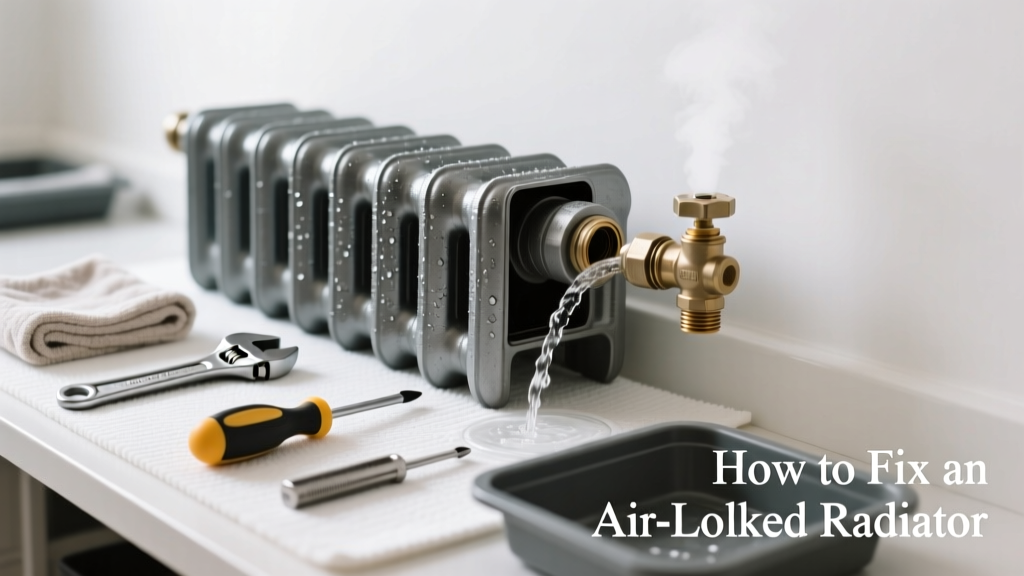
If your radiator is cold at the top but warm at the bottom—or completely stone cold despite the boiler running—you’re almost certainly dealing with an air lock. This common issue blocks hot water flow and cuts heating efficiency by up to 30%, according to the UK’s Energy Saving Trust 2022 report.
Quick Diagnosis
Before you grab tools, confirm it’s truly air—not a faulty valve, sludge buildup, or low system pressure. Here are the most telling signs:
- Cold or cool upper section of the radiator while the bottom stays warm
- Gurgling, hissing, or knocking noises when the heating kicks on
- Only one radiator out of several is affected (especially upstairs units)
- Recent work on the heating system—like bleeding another radiator or refilling the system
Tools & Materials Needed
| Item | Purpose | Estimated Cost |
|---|---|---|
| Radiator key (brass or steel) | Opens the bleed valve without stripping it; fits most UK/EU valves | $2–$6 |
| Small towel or cloth | Catches drips and protects flooring during bleeding | $0–$3 |
| Shallow tray or bowl | Collects water and prevents mess—especially useful on carpet or wood | $1–$5 |
| System pressure gauge (optional) | Verifies boiler pressure remains 1–1.5 bar after bleeding | $12–$25 |
Step-by-Step Fix
Most air locks clear with simple manual bleeding—but stubborn cases need extra steps. Try these in order:
- Bleed the radiator: Turn off the heating, locate the square bleed valve (usually top corner), place towel + tray beneath, insert key, and turn counterclockwise ½–1 turn until air hisses out. Stop when water flows steadily.
- Check adjacent radiators: If only one radiator stays cold, bleed all radiators on the same loop—starting from the one nearest the boiler and working outward.
- Power flush (if recurring): For persistent air locks, sludge may be trapping air pockets. A professional power flush removes debris and restores laminar flow—this isn’t a DIY job, but knowing when it’s needed helps avoid long-term damage.
When to Call a Pro
DIY bleeding works 90% of the time—but skip the wrench if you see any of these:
- Boiler pressure drops below 0.8 bar immediately after bleeding (indicates a leak or expansion tank failure)
- No air or water comes out after turning the valve fully—valve may be seized or broken
- Multiple radiators stay cold after full system bleeding (points to pump failure or major air ingress)
- You smell gas near the boiler or hear loud banging that doesn’t stop after bleeding
"Over 42% of emergency heating call-outs in winter involve misdiagnosed air locks—but 68% of those could’ve been prevented with proper system balancing and annual maintenance." — Gas Safe Register Annual Report, 2023
Prevention Tips
Air locks happen less often when your system stays balanced and pressurized. Follow these habits:
- Bleed radiators once per heating season—even if they seem fine
- Top up boiler pressure to 1.2–1.5 bar before winter starts (check your boiler pressure too low guide)
- Install an automatic air vent on the main circulation pipe if your system lacks one
- After any plumbing work, run the heating for 15 minutes, then re-bleed all radiators
Why does my radiator gurgle after bleeding?
Gurgling post-bleed usually means residual air is still migrating through the system. Let the heating run for 20–30 minutes, then check again. If it persists beyond two cycles, inspect the pump’s operation or consult a radiator not heating uniformly troubleshooting guide.
Can I bleed a radiator with the heating on?
No—never bleed a hot radiator. The valve can eject scalding water under pressure, risking burns or damage. Always switch off the boiler and wait 10–15 minutes for temperatures to drop. Modern combi boilers may also shut down unexpectedly if pressure fluctuates mid-cycle.
What if water won’t stop flowing when I bleed?
Continuous water flow means the valve is open too far or the valve core is damaged. Gently tighten clockwise until flow stops. If it keeps leaking, wrap the valve with PTFE tape and re-seat it—or replace the valve entirely using a radiator valve leaking repair method.
Do thermostatic radiator valves (TRVs) cause air locks?
TRVs themselves don’t cause air locks—but if set to “0” or fully closed during summer, trapped air has no escape path. Before winter, ensure all TRVs are opened at least halfway to allow circulation during system priming.
How often should I check my radiator valves?
Inspect valves visually every 6 months: look for corrosion, stiff movement, or weeping around the spindle. Clean with white vinegar soak if mineral deposits are visible. Replace rubber washers every 3–4 years—especially in hard water areas where calcium buildup accelerates wear.
Is it normal for one radiator to need bleeding more than others?
Yes—especially top-floor or end-of-loop radiators. They’re furthest from the pump and most prone to air accumulation. If one unit needs bleeding monthly, check for undersized pipework or a weak circulator pump; refer to our heating system balancing guide for flow adjustments.
Air locks are annoying but rarely catastrophic—if caught early. Most homeowners resolve them in under 15 minutes with basic tools and a little patience. Just remember: consistent maintenance beats crisis fixes every time. And if your radiators keep losing heat despite regular bleeding, it’s not just air—it’s a signal your system’s trying to tell you something bigger’s going on.