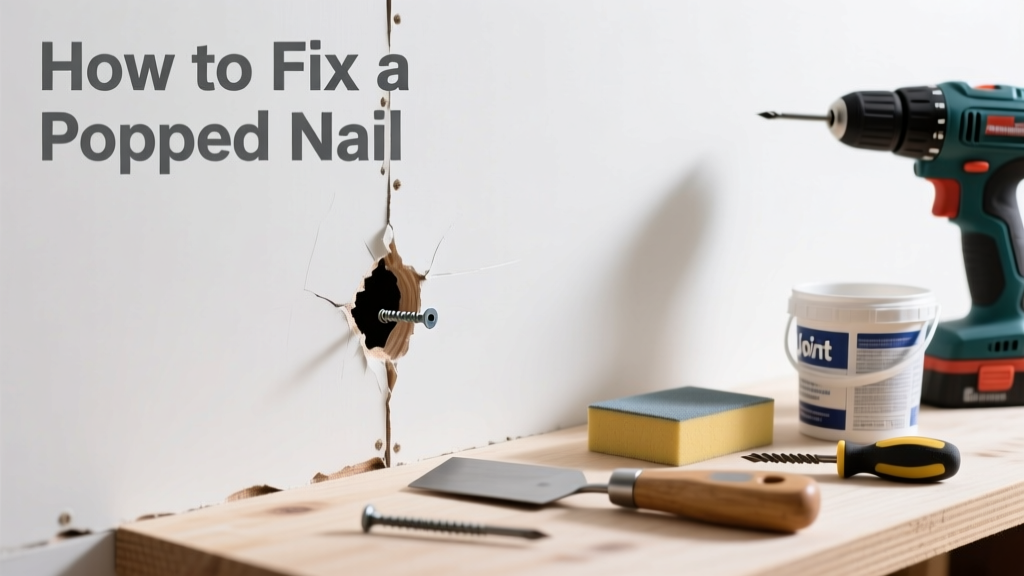
A popped nail—where the nail head pushes out from drywall or wood framing—is more than just an eyesore. It’s often the first visible sign of shifting structure, moisture damage, or poor installation. Left unaddressed, it can worsen into cracks, sagging, or even compromised wall integrity.
Quick Diagnosis
Popped nails rarely appear in isolation. They’re symptoms—not causes. Here are the most common underlying triggers:
- Seasonal wood shrinkage (especially in stud framing during winter heating)
- House settling, particularly in newer builds (<5 years old)
- Overdriven or undersized nails used during drywall installation
- Moisture exposure causing substrate swelling or rusting of fasteners
- Insufficient fastener spacing—more than 12 inches apart on ceilings or 16 inches on walls
Tools & Materials Needed
| Item | Purpose | Estimated Cost |
|---|---|---|
| 12-gauge drywall screws (1-1/4") | Replace nails with stronger, less-prone-to-popping fasteners | $4–$8 |
| Drill/driver with Phillips bit | Drive screws without stripping heads or cracking drywall | $25–$120 |
| Hammer and nail set | Re-seat existing nail (temporary fix) or countersink new ones | $6–$12 |
| Joint compound & 6" taping knife | Fill dimples and feather repairs smoothly | $10–$18 |
| Sanding sponge (120-grit) | Smooth dried compound without gouging paper | $3–$7 |
Step-by-Step Fix
There are three reliable approaches—choose based on severity, location, and whether you're repairing drywall or wood framing:
- Re-Screw Method (Best for drywall): Drive a drywall screw 1–2 inches above or below the popped nail, sinking it just below the surface. Remove the old nail with pliers or a cat’s paw. Patch both holes with joint compound.
- Nail-Set + Compound Method (Quick cosmetic fix): Tap the popped nail back flush using a nail set and hammer. Add a second screw nearby for reinforcement. Apply compound over both points.
- Framing Anchor Method (For ceiling pops near joists): Locate the joist with a stud finder, then drive two screws—one on each side of the pop—to re-secure drywall to framing. This prevents recurrence better than single-point fixes.
When to Call a Pro
Not every popped nail is DIY-safe. Call a licensed contractor or structural engineer if you notice:
- Multiple pops aligned in a straight line across a ceiling or wall—often signals truss uplift or beam deflection
- Pops accompanied by sagging drywall, sloping floors, or doors that stick consistently
- More than five pops in one room within six months—suggests ongoing movement beyond normal settling
- Pops near windows, corners, or load-bearing walls where hidden framing issues may exist
According to the Insurance Institute for Business & Home Safety's 2023 report, 68% of homes with clustered drywall pops showed measurable foundation movement within 18 months—making early professional assessment critical.
Prevention Tips
Preventing future pops starts at installation—but even retrofits help:
- Use drywall screws instead of nails for all new installations (screws resist withdrawal 3× better than nails)
- Maintain indoor humidity between 30–50% year-round to minimize wood-frame expansion/contraction
- Space fasteners no more than 12" apart on ceilings and 16" on walls per ASTM C840 standards
- Apply construction adhesive along top and bottom plates before hanging drywall—it reduces reliance on fasteners alone
Can I just hammer the nail back in?
Yes—but only as a temporary measure. Hammering without adding a screw invites recurrence within weeks. The nail’s grip is already compromised, and drywall paper tears easily around the original hole. Always follow up with a screw within 2 inches.
Do I need to patch if I use a screw?
Yes. Even properly countersunk screws leave a slight depression. Skip patching, and you’ll see a visible dimple after painting. Use setting-type joint compound for faster drying and harder finish.
Why do ceiling nails pop more than wall nails?
Ceiling drywall fights gravity constantly. Nails rely on friction and lateral grip—which degrades faster overhead due to vibration, thermal cycling, and subtle joist deflection. That’s why building codes require screws (not nails) for ceiling drywall in all 50 states.
Can moisture cause popped nails?
Absolutely. Moisture swells wood framing, then shrinks it as it dries—repeated cycles fatigue fastener hold. The U.S. EPA estimates that 14% of household water usage is from leaks, many hidden behind walls or under floors. Check for musty smells or discoloration near pops.
Is it safe to ignore one small popped nail?
One isolated pop in an older home is usually low-risk—but monitor it. Mark it with a pencil dot and check monthly. If it reappears after repair, or if adjacent nails begin popping, investigate framing or moisture sources immediately.
What’s the fastest way to make a popped nail disappear before guests arrive?
Tap it flush, apply quick-setting 20-minute joint compound with a 4" knife, let dry 20 minutes, lightly sand, and spot-prime. It won’t last long-term, but it buys you 3–4 days before repainting. For lasting results, commit to the screw-and-sand method.
Fixing a popped nail isn’t just about cosmetics—it’s your first chance to catch subtle shifts before they become costly. A well-executed repair reinforces the wall, improves durability, and gives you insight into your home’s behavior. Pair this fix with routine checks in spring and fall, and you’ll stay ahead of most framing-related issues. For deeper concerns, explore our guide on drywall cracks or sticking doors, both common companions to popped nails.