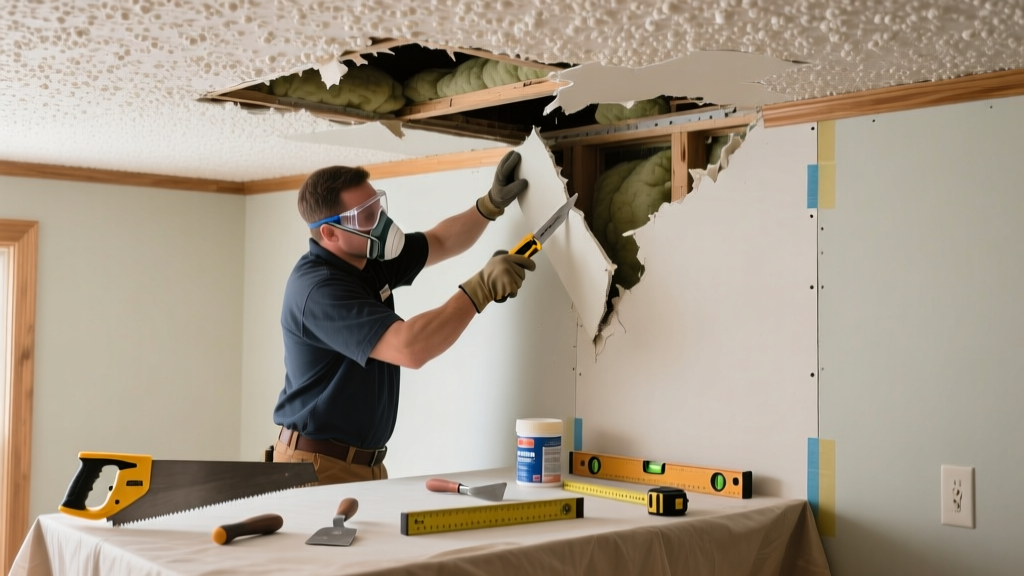
If your popcorn ceiling has a water-stained, cracked, or crumbling patch — especially after a leak or impact — you don’t need to tear down the whole ceiling. Targeted replacement saves time, money, and avoids unnecessary dust and disruption. But cutting corners here risks asbestos exposure, poor texture matches, or structural compromise.
Quick Diagnosis
Before grabbing tools, identify what’s really wrong. Not all damage is surface-deep — and some causes demand immediate professional attention.
- Water stains with sagging or soft spots: Likely moisture trapped behind drywall or insulation
- Cracked or flaking texture with no moisture: Often age-related adhesion failure or physical impact
- Large areas (over 4 sq ft) with powdery residue or crumbling edges: May indicate asbestos-laden texture (pre-1980 homes)
- Discolored patches with musty odor: Hidden mold growth behind the ceiling layer
Tools & Materials Needed
| Item | Purpose | Estimated Cost |
|---|---|---|
| HEPA-rated respirator (N100 or P100) | Blocks airborne particles, critical if asbestos is suspected | $25–$45 |
| Popcorn ceiling texture spray kit | Matches original texture; includes adhesive base and lightweight aggregate | $18–$32 |
| 12-inch drywall taping knife | Smooths joint compound and blends edges into existing texture | $12–$22 |
| Asbestos test kit (e.g., UL Environment certified) | Lab-verified analysis required before disturbing pre-1980 texture | $25–$40 |
| Drop cloths + painter’s plastic (6-mil) | Contains dust and debris; prevents contamination of HVAC and floors | $15–$28 |
Step-by-Step Fix
Follow these methods in order — skipping steps increases risk of visible seams or re-cracking.
- Test for asbestos first. Use an EPA-recognized lab kit (like TestAssure, 2023 certified) on a 1-inch square sample from the damaged area’s edge. Wait for results before proceeding.
- Cut out the damaged section cleanly. Score a 6"–12" square around the damage using a utility knife and straightedge. Remove only the textured layer — not the drywall — unless substrate is compromised.
- Apply joint compound and feather edges. Use setting-type (hot) mud for faster cure and less shrinkage. Taper edges 12–18 inches beyond cut zone with a wide knife.
- Spray texture to match. Shake spray can vigorously for 90 seconds. Hold 18–24 inches from surface. Apply two light passes — let first dry 20 minutes before second. Practice on cardboard first.
- Prime and paint. Use stain-blocking primer (e.g., Zinsser Bulls Eye 1-2-3) over patched area, then match ceiling paint sheen (flat or eggshell) with a microfiber roller.
When to Call a Pro
DIY works for isolated patches under 3 sq ft — but stop and call a licensed contractor if any of these apply:
- The ceiling shows sagging across more than one joist span (indicating structural or moisture issues)
- Asbestos test returns positive — removal requires certified abatement crews per EPA RRP Rule (2023 update)
- You discover wet insulation or black mold behind the drywall during inspection
- Your home was built before 1978 and you’re uncomfortable interpreting lab reports or containment protocols
Prevention Tips
Popcorn ceilings fail most often due to moisture, vibration, or aging binders. Extend life by addressing root causes now:
- Install exhaust fans in bathrooms and kitchens — the U.S. EPA estimates 14% of household water usage is from leaks that go unnoticed until ceiling damage appears
- Seal attic bypasses (recessed lights, duct joints) to prevent warm, moist air from condensing above the ceiling
- Avoid hanging heavy items directly from popcorn-textured drywall — use joist anchors instead
- Inspect attic ventilation annually; blocked soffit vents cause trapped moisture that migrates downward
Can I scrape off old popcorn texture myself?
Yes — but only after confirming it’s asbestos-free. Even then, scraping creates massive dust. The National Institute for Occupational Safety and Health (NIOSH) warns that uncontrolled dry-scraping can generate airborne particles exceeding OSHA limits by 10x. Always wet-spray first and wear full PPE.
How long does popcorn texture take to dry between coats?
Most aerosol sprays dry to the touch in 15–20 minutes, but require 24 hours before priming. Setting-type joint compounds cure chemically — 90-minute hot mud sets fully in 90 minutes, while 45-minute mud needs at least 2 hours before sanding or texturing.
Will new texture match my 1970s ceiling exactly?
Close matches are possible, but exact replication is rare. Original formulations used different binders and aggregate sizes. For best results, buy a spray kit labeled "heavy" or "coarse" and practice on scrap drywall. If mismatch persists, consider full ceiling removal and smooth finish — many homeowners find it more cost-effective long-term.
Do I need to repaint the entire ceiling after patching?
No — but you must prime the patch and feather the paint blend. Use a 3/8-inch microfiber roller and apply paint in overlapping W-patterns, extending 2 feet beyond the patch. Skip this step and you’ll see a visible halo effect under angled light.
What’s the safest way to dispose of removed popcorn material?
Double-bag in 6-mil plastic, label “suspected asbestos” if untested, and contact your municipal hazardous waste program. In states like California and New York, even non-asbestos popcorn debris must be disposed of at approved landfills — not curbside. According to the EPA’s 2023 Asbestos NESHAP guidelines, improper disposal carries fines up to $25,000 per violation.
Can I use joint compound instead of popcorn spray?
You can, but it won’t replicate the acoustic or visual properties. Joint compound alone creates a smooth or knockdown look — not popcorn. To mimic texture, mix drywall mud with perlite or vermiculite (1:1 ratio), then apply with a hopper gun or stiff brush. Many pros recommend skipping DIY texture entirely and opting for modern alternatives like orange peel or skip-trowel.
"Over 70% of popcorn ceiling repairs fail within 18 months because homeowners skip the moisture diagnosis step — they fix the symptom, not the source." — Mike Delaney, Certified Master Remodeler (NAHB, 2022)
Replacing just the damaged part of your popcorn ceiling is doable — if you respect the material’s history, test for hazards, and match both technique and timing. Rushing the texture application or ignoring attic ventilation will bring back the same problem in months. Take your time, protect your lungs, and treat the ceiling like the layered system it is — not just a decorative surface.