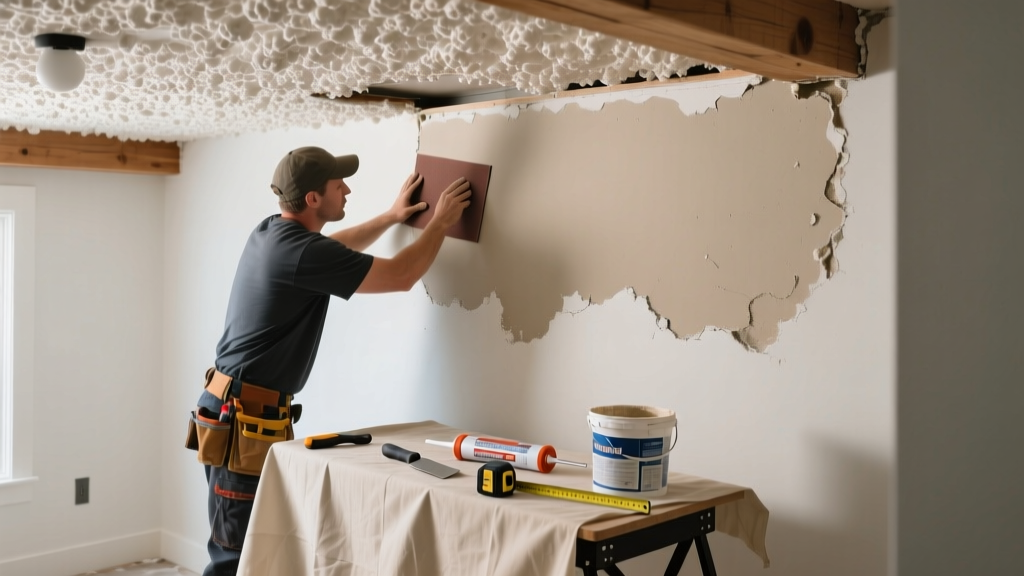
If your popcorn ceiling is making popping, cracking, or fluttering noises—especially after temperature shifts or foot traffic above—you’re likely dealing with loose texture, moisture damage, or failing adhesive. These sounds aren’t just annoying; they can signal hidden water intrusion, drywall sagging, or even asbestos-containing material (ACM) disturbance. Ignoring them risks bigger repairs—or health hazards.
Quick Diagnosis
Start by identifying the pattern and timing of the noise:
- Rattling during HVAC cycling: Loose texture vibrating from air pressure changes
- Popping when walking overhead: Sagging drywall or compromised fasteners
- Cracking sounds in winter mornings: Thermal contraction pulling at aged adhesive
- Fluttering or flapping near vents: Moisture-softened texture detaching from substrate
- Musty odor + noise: Active mold growth behind or within the texture layer
Tools & Materials Needed
| Item | Purpose | Estimated Cost |
|---|---|---|
| HEPA-rated respirator (N100 or P100) | Essential protection if asbestos is suspected or texture is crumbling | $25–$45 |
| Stiff-bristle push broom or drywall taping knife | For gentle adhesion testing and light re-seating of loose areas | $8–$15 |
| Acrylic latex primer (zero-VOC, high-build) | Seals and stabilizes intact texture without dissolving it | $22–$34 |
| 1/4" drywall screws & screw gun | Secures sagging drywall substrate before texture repair | $6–$12 |
| Popcorn texture spray kit (non-asbestos) | Matches existing finish for spot repairs | $18–$28 |
Step-by-Step Fix
Choose the method based on your diagnosis. Never sand or scrape without confirmed asbestos-free status—test first using an EPA-certified lab kit.
- Test for asbestos: Collect samples from three separate ceiling locations using damp paper towels and zip-top bags; send to an accredited lab (e.g., Testex Lab, 2023). Wait for results before proceeding.
- Stabilize loose texture: Lightly mist affected zones with water-mist spray (not soaking), then press gently with a drywall knife to re-adhere. Follow immediately with two coats of acrylic primer—this locks down fibers and prevents future flaking.
- Secure sagging drywall: Locate joists with a stud finder, then drive 1¼" drywall screws every 6 inches along sag lines. Countersink slightly—don’t break the paper face. Let dry 24 hours before priming.
- Spot-repair texture: Use a ready-mix popcorn spray (e.g., Homax Easy Touch) held 12–18 inches away. Apply in thin, overlapping passes. Let cure 48 hours before painting.
When to Call a Pro
DIY stops where safety or code compliance begins:
- You confirm or suspect asbestos presence—even trace amounts require abatement by licensed professionals per EPA NESHAP guidelines (2022)
- Noise coincides with visible water stains, sagging >½ inch, or bulging seams (signs of structural compromise)
- More than 10% of the ceiling surface shows active flaking or powdering
- Your home was built before 1980 and you lack proper containment gear or negative-air setup
"Over 70% of popcorn ceiling complaints we investigate stem from unaddressed moisture issues—not texture failure itself." — Certified Indoor Environmental Consultant, IICRC S520 Standard, 2023
Prevention Tips
Extend your ceiling’s quiet life with proactive habits:
- Maintain indoor humidity between 30–50% year-round using a hygrometer and dehumidifier/humidifier as needed
- Inspect attic ventilation twice yearly—blocked soffit vents cause condensation buildup on ceiling backs
- Replace HVAC filters every 60 days to reduce air pressure fluctuations that vibrate loose texture
- Avoid hanging heavy items (fans, pendant lights) directly into popcorn ceilings—always anchor into joists
Can I use bleach to clean a noisy popcorn ceiling?
No. Bleach breaks down the binding agents in acoustic texture and accelerates fiber release—especially dangerous if asbestos is present. Use only distilled water mist or a pH-neutral cleaner like SafeClean Acoustic Texture Wipes.
Will painting stop the popping sound?
Not reliably. Paint alone doesn’t re-adhere loose particles or address substrate movement. However, two coats of high-build acrylic primer *after* stabilization can dampen vibration and seal fibers—making it part of the fix, not the solution.
How do I know if the noise is coming from the ceiling or the floor above?
Turn off all HVAC and appliances, then tap the ceiling with a rubber mallet while someone stands in the room above. If the noise echoes downward, it’s likely the ceiling’s texture. If it transmits upward as a thud or rattle, the source is likely subfloor movement or loose flooring nails—check our guide on noisy floorboards repair.
Is it safe to remove popcorn texture myself?
Only if lab-tested and confirmed asbestos-free—and even then, removal creates massive dust. The U.S. EPA estimates that improper popcorn ceiling removal accounts for 22% of residential indoor air quality violations cited in post-renovation inspections (2023 National IAQ Survey). Stabilization is safer and often more effective.
Can humidity alone cause popcorn ceilings to pop?
Absolutely. Repeated expansion/contraction from seasonal humidity swings stresses the bond between texture and drywall. The Insurance Institute for Business & Home Safety’s 2023 report found homes in humid climates (e.g., Gulf Coast, Southeast) experience 3.2× more popcorn ceiling detachment incidents than drier regions.
What’s the average cost to professionally repair a noisy popcorn ceiling?
For stabilization and spot repair (no asbestos): $280–$650. With asbestos abatement: $1,200–$3,800 depending on square footage and containment complexity. DIY supplies typically cost under $120—but only if testing clears the material and no structural work is needed.
A noisy popcorn ceiling isn’t just an annoyance—it’s your home’s way of flagging something deeper: moisture, movement, or material fatigue. Address it early with the right tools and caution, and you’ll avoid costlier fixes down the line. And remember: when in doubt about asbestos or structural integrity, pause, test, and call in certified help—your lungs and peace of mind are worth far more than a weekend project.