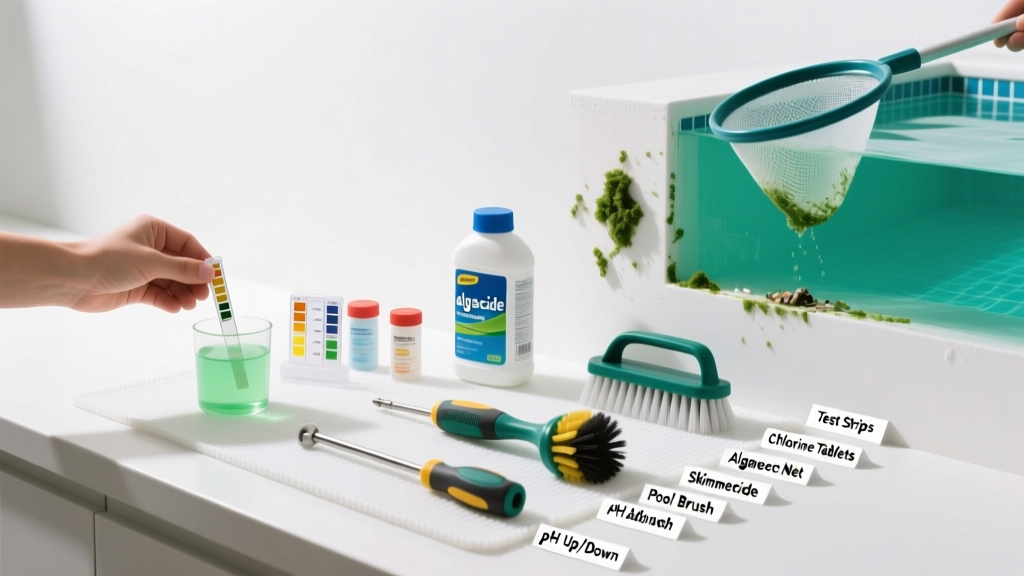
Waking up to a neon-green pool isn’t just unsightly—it’s a red flag that algae has taken hold, chlorine is depleted, or circulation has failed. Left untreated, green water can clog filters, corrode equipment, and create slippery, unsafe surfaces. The good news? Most cases resolve in 48–72 hours with the right approach.
Quick Diagnosis
Green water almost always points to one or more of these issues:
- Low or zero free chlorine (under 1 ppm)
- High phosphate levels (above 0.2 ppm) feeding algae
- Poor filtration—clogged filter, broken pump, or run time under 6–8 hours daily
- pH imbalance (outside 7.2–7.6), reducing chlorine effectiveness
- Stagnant water from extended pump shutdown or heavy rain dilution
Tools & Materials Needed
| Item | Purpose | Estimated Cost |
|---|---|---|
| Test kit (liquid DPD, not strips) | Accurately measures free chlorine, total chlorine, pH, alkalinity, and cyanuric acid | $25–$45 |
| Pool shock (calcium hypochlorite or sodium dichlor) | Rapidly raises free chlorine to kill algae; avoid stabilized shock if CYA > 50 ppm | $12–$28 |
| Algaecide (polyquat 60%) | Breaks down algae cell walls; use after shocking, never before | $14–$22 |
| Pool brush (stainless steel for concrete, nylon for vinyl) | Scrapes algae off walls and floor before it embeds | $18–$32 |
| Filter cleaner (for DE or cartridge filters) | Removes organic gunk that reduces flow and traps dead algae | $10–$19 |
Step-by-Step Fix
- Test and record all levels: Use a liquid test kit to check free chlorine, pH, total alkalinity, calcium hardness, and cyanuric acid (CYA). Note exact numbers—you’ll need them to dose correctly.
- Brush thoroughly: Scrub all surfaces—including steps, corners, and behind ladders—with a stiff brush. Algae clings tight; brushing suspends it so chlorine can kill it.
- Shock at night: Add non-stabilized shock (e.g., cal-hypo) at 10x your normal dose—typically 2–3 lbs per 10,000 gallons if free chlorine is near zero. Run the pump continuously for 24 hours.
- Add algaecide next morning: Once free chlorine drops below 5 ppm (usually 12–18 hours post-shock), add polyquat 60% algaecide at label rate. Never mix with shock directly.
- Clean or backwash daily: For sand filters, backwash when pressure rises 8–10 psi above clean baseline. For cartridge or DE, clean every 24–48 hours until water clears.
When to Call a Pro
DIY fails—and risks escalate—when you encounter any of these:
- Water remains cloudy green after 72 hours of proper shocking and brushing
- Your test shows CYA over 100 ppm (chlorine won’t work; requires partial drain)
- Pump runs but no water returns to pool (possible impeller blockage or air lock)
- Visible black or mustard algae patches (more resistant strains needing specialized treatment)
- Electrical issues like tripped GFCI outlets, buzzing sounds, or wet motor housing
According to the National Swimming Pool Foundation’s 2022 Operations Manual, “Persistent green water despite correct chlorination often indicates underlying filtration failure or structural leaks—not just chemical imbalance.”
Prevention Tips
- Run your pump 8–10 hours daily year-round—even in winter—to maintain turnover
- Test water 2–3 times weekly during swim season; keep free chlorine between 2–4 ppm
- Brush walls and floor weekly to disrupt early algae spores
- Use a phosphate remover quarterly if your source water tests above 0.1 ppm phosphates
- Keep skimmer baskets empty and filter pressure monitored—clean when pressure rises 8 psi
Can I use household bleach instead of pool shock?
Yes—but only unscented, plain sodium hypochlorite (8.25% chlorine) with no thickeners or additives. Use 1 gallon per 10,000 gallons to raise free chlorine by ~5 ppm. Test first: high CYA or low pH can cause rapid chlorine loss. Bleach lacks stabilizer, so retest every 4–6 hours.
Why did my pool turn green overnight?
Overnight greening usually means chlorine dropped to zero due to heavy bather load, intense sun exposure (if CYA is too low), or accidental overdosing of reducer like sodium thiosulfate. It can also follow heavy rain that diluted sanitizer and introduced airborne algae spores.
Is green pool water dangerous to swim in?
Not immediately toxic, but it’s a breeding ground for bacteria like Pseudomonas and E. coli. The CDC reports that 30% of public pool inspections find inadequate disinfection linked to recreational water illnesses—and green water signals that failure. Keep kids and pets out until free chlorine holds at 2+ ppm for 24 hours.
Do I need to drain the pool to fix green water?
Rarely. Draining is only necessary if cyanuric acid exceeds 100 ppm or if metal stains (from copper pipes or algaecide) have set in. Partial drains (⅓ to ½) combined with refilling and rebalancing are safer than full drains, which risk liner shrinkage or concrete cracking.
Can I vacuum green water to waste?
Only if your filter type allows it. Sand filters have a "waste" setting; cartridge and DE do not. Vacuuming to waste bypasses the filter, removing algae-laden water—but it wastes 1,000+ gallons per hour. Use only as a last resort when filter pressure spikes uncontrollably or water stays milky after 48 hours of cleaning.
How long does it take for green pool water to clear after shocking?
With consistent brushing, proper dosing, and 24/7 pump operation, most residential pools clear in 24–48 hours. If algae is stubborn (e.g., mustard or black), expect 5–7 days. Cloudiness may persist an extra day or two as dead algae passes through the filter—keep brushing and cleaning cartridges daily.
Green pool water isn’t a sign of failure—it’s feedback. Treat it methodically, track your numbers, and adjust your routine based on what your water tells you. For ongoing help, see our guides on how to lower pool pH, how to clean a pool filter, and what ideal chlorine levels look like. Consistency beats crisis every time.