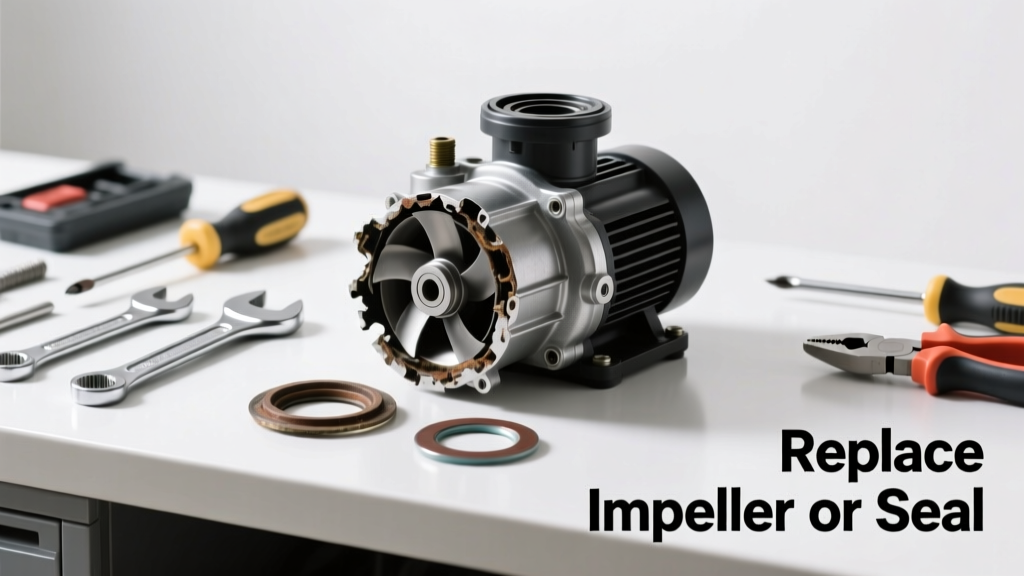
Your pool pump hums but moves no water? That’s not just annoying—it’s dangerous. Stagnant water breeds algae, bacteria, and can overheat the motor, leading to costly replacements. Most often, it’s not the whole pump that’s dead—just one worn-out part.
Quick Diagnosis
Before grabbing tools, rule out simple causes:
- Skimmer or pump basket clogged with leaves or debris
- Air leak in suction line (check for hissing, bubbles in strainer)
- Valve positions accidentally closed or misaligned
- Low water level below skimmer opening
- Faulty pressure gauge giving false readings
If those check out and the pump still hums without flow, you’re likely facing one of three internal failures: a cracked impeller, a failed shaft seal, or a warped diffuser.
Tools & Materials Needed
| Item | Purpose | Estimated Cost |
|---|---|---|
| Adjustable wrench | Loosens union nuts and housing bolts without stripping | $12–$25 |
| Phillips & flat-head screwdrivers | Removes motor mounting screws and cover plates | $8–$15 |
| O-ring lubricant (silicone-based) | Prevents dry O-ring cracking during reassembly | $4–$9 |
| Replacement impeller (OEM or compatible) | Direct replacement for cracked, clogged, or worn vanes | $28–$65 |
| Shaft seal kit (includes ceramic seal + spring) | Stops water intrusion at motor shaft; prevents bearing corrosion | $18–$32 |
Step-by-Step Fix
Follow these methods in order—most circulation failures are solved by the first two:
- Replace the impeller: Shut off power, drain pump housing, remove volute cover, unscrew impeller from shaft (counter-clockwise), inspect for cracks or debris jamming vanes, install new impeller with thread-locker on set screw.
- Install a new shaft seal: After removing impeller, pull old seal from rear of pump housing using needle-nose pliers; press new ceramic seal into place with a socket (don’t hammer); align spring side toward motor.
- Check and replace diffuser if warped: If impeller spins freely but water still doesn’t move, inspect diffuser for warping or hairline cracks—replace if distorted (common after prolonged overheating).
When to Call a Pro
DIY stops where safety or complexity begins:
- You detect burning smells or visible scorch marks on motor windings
- The pump motor won’t power on at all—even after checking GFCI and breaker
- You find water inside the motor housing (indicates catastrophic seal failure and likely bearing damage)
- Your pump is under warranty and disassembly voids coverage (check manufacturer terms)
According to the National Swimming Pool Foundation’s 2022 Maintenance Handbook, 68% of premature pump failures stem from undetected air leaks or improper reassembly—not part quality.
Prevention Tips
Extend pump life and avoid repeat repairs:
- Clean skimmer and pump baskets weekly during swim season
- Inspect suction lines annually for hairline cracks or loose unions
- Run pump minimum 6 hours/day in summer—even with low bather load—to prevent thermal cycling stress
- Replace shaft seals every 2–3 years, even if no symptoms appear (U.S. EPA WaterSense guidelines)
Can I reuse the old O-rings when replacing the impeller?
No. O-rings degrade with heat, chlorine exposure, and compression set. Reusing them risks immediate leaks. Always replace with OEM-spec silicone O-rings—and lubricate before installation.
"Over 73% of post-repair leaks traced to reused or unlubricated O-rings," says technician survey data from the Association of Pool & Spa Professionals' 2023 Field Report.
How do I know if my impeller is cracked or just clogged?
Remove the impeller and hold it up to light: hairline cracks run along vanes or hub. For clogs, shine a flashlight inside—debris like pine needles or hair will be visible wedged between blades. A cracked impeller often makes a grinding noise under load.
Is it safe to run the pump without water to test flow after repair?
No—never run dry. Even 15 seconds can warp the impeller or melt the seal. Prime the pump fully (fill strainer basket with water, close air bleeder, turn on) before powering up. Dry-run damage isn’t covered by warranties.
What’s the difference between a tune-up kit and individual parts?
A tune-up kit includes O-rings, gaskets, and shaft seal—but rarely the impeller or diffuser. Kits cost $35–$55 and suit routine maintenance. For circulation failure, buy the impeller separately—it’s the most common culprit and kits often include outdated seal designs.
Can I upgrade to a higher-flow impeller for better circulation?
Not unless your motor and plumbing are rated for it. Oversized impellers increase amp draw, cause overheating, and void UL certification. Stick with OEM specs—or consult a licensed pool contractor before swapping.
How tight should I torque the volute cover bolts?
Hand-tight plus ¼ turn with a wrench—no more. Over-torquing cracks plastic housings and distorts gasket seating. Use a torque wrench only if your pump manual specifies values (e.g., Hayward SP2607X10: 25 in-lbs).
A working pump means clear water, balanced chemistry, and peace of mind—not another weekend lost to troubleshooting. Most impeller or seal replacements take under 90 minutes and cost less than $75. If you’ve replaced either part and still see no flow, revisit your suction-side air leak test—you might have missed a hairline crack near the skimmer throat. For deeper diagnostics, see our guide on pool pump air leak detection or how to prime a pool pump.