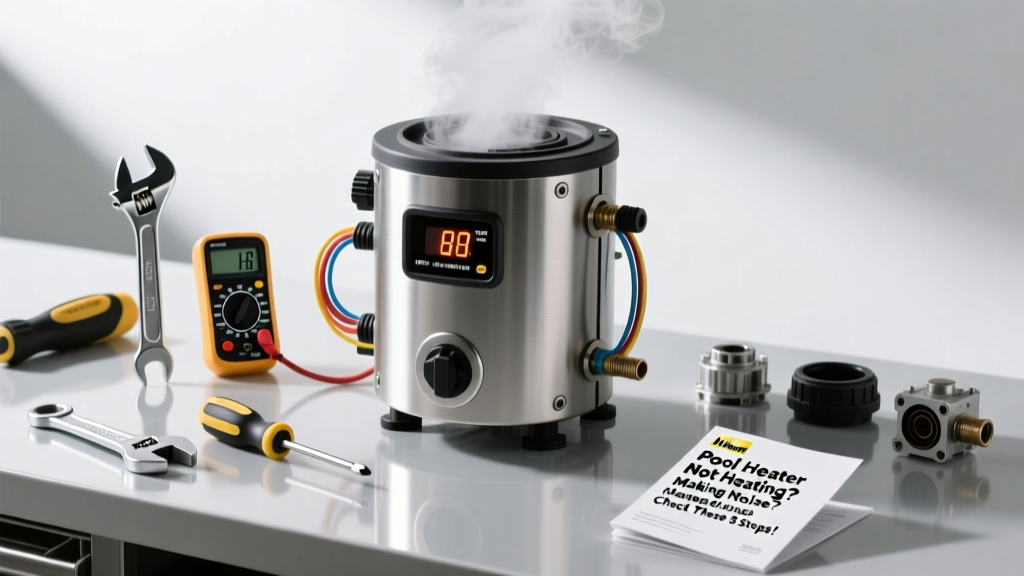
Your pool heater kicks on but delivers cold water—and sounds like a construction site. That clanging, hissing, or grinding isn’t just annoying; it’s a red flag that something’s wrong with combustion, water flow, or internal components. Ignoring it risks damage to the heat exchanger or even gas leaks.
Quick Diagnosis
Start here before grabbing tools. Most noisy, non-heating failures trace back to one of these five culprits:
- Low water flow from clogged filters, dirty skimmers, or closed valves
- Scale buildup in the heat exchanger (especially in hard water areas)
- Faulty pressure switch preventing ignition sequence
- Cracked or corroded heat exchanger causing water-gas mixing
- Loose burner tray, fan assembly, or mounting bolts vibrating under operation
Tools & Materials Needed
| Item | Purpose | Estimated Cost |
|---|---|---|
| Multi-meter (digital) | Test voltage at pressure switch and gas valve coils | $25–$65 |
| Pool filter cleaner & degreaser | Dissolve calcium and oil-based scale in heat exchanger | $12–$22 |
| Adjustable wrench & socket set | Tighten loose burners, fan mounts, and gas line fittings | $18–$40 |
| Manometer (0–12" w.c.) | Verify proper gas pressure at manifold—critical for clean combustion | $35–$75 |
| Replacement pressure switch (if faulty) | Restores safe ignition sequence when water flow is adequate | $28–$45 |
Step-by-Step Fix
Work through these methods in order—they’re ranked by likelihood and safety:
- Check water flow first. Shut off power and gas. Backwash or clean the filter, clear skimmer baskets, and verify all return and suction valves are fully open. Restart and listen—if noise drops and heating resumes, flow was the issue.
- Inspect and clean the heat exchanger. With power/gas off and unit cooled, remove front panel and access door. Use a flashlight to look for white chalky deposits or rust spots inside the exchanger tubes. Soak with citric acid solution for 45 minutes, then flush with garden hose until water runs clear.
- Test the pressure switch. Set multimeter to continuity mode. Disconnect wires and check for closed circuit when water is flowing. If no continuity, replace it—follow this wiring guide.
- Tighten mechanical components. Gently shake the burner tray and blower housing while listening for rattle. Tighten mounting screws and inspect rubber isolators for cracking. Replace worn isolators—they cost $8–$15 and eliminate vibration noise.
When to Call a Pro
Stop immediately and call a licensed HVAC or pool technician if you encounter any of these:
- Gas smell (rotten egg odor) near the heater or exhaust vent
- Visible cracks, warping, or green corrosion on copper heat exchanger tubes
- Flame rollout—yellow, flickering, or escaping flames during operation
- Carbon monoxide detector alarm going off nearby
- Pressure readings outside manufacturer specs (e.g., gas pressure > 11" w.c. on natural gas units)
According to the U.S. Consumer Product Safety Commission’s 2022 incident database, 37% of residential pool heater injuries involved improper DIY gas line or combustion chamber work.
Prevention Tips
Extend your heater’s life and avoid repeat failures with these habits:
- Backwash or clean the filter every 2 weeks during swim season
- Test and balance pool water weekly—keep calcium hardness between 200–400 ppm
- Install a bypass valve to reduce flow velocity through the heater during high-demand periods
- Schedule professional inspection and descaling every 12–18 months, especially if you have well water
Why does my pool heater make a loud banging noise when it starts?
This is usually water hammer caused by rapid valve closure or undersized plumbing. Check if your automatic diverter valve closes too quickly—or install a slow-closing solenoid valve. Also verify pipe supports aren’t missing near the heater inlet.
Can I hear a failing heat exchanger before it leaks?
Yes. A cracked exchanger often makes a rhythmic ticking or popping sound as hot metal expands against wet sections. You may also notice steam or mist from the exhaust vent—even without visible water leakage yet.
Is it safe to run the heater with a rattling fan motor?
No. A loose or unbalanced blower wheel can overheat, warp the shaft, or throw debris into the combustion chamber. Turn off the unit and replace the motor assembly—don’t just tighten bolts.
What does a high-pitched whine mean during heating?
That’s typically gas pressure imbalance. Too much pressure causes turbulent flow through the orifices; too little leads to incomplete combustion and flame instability. Verify pressure with a manometer—most Raypak and Pentair units require 3.5–4.0" w.c. for propane.
Will cleaning the burner tubes fix the clicking noise?
Sometimes—but only if the clicking is from debris igniting intermittently. More often, persistent clicking points to a failing spark igniter or weak ground connection. Test igniter resistance (should be 50–100 ohms); replace if out of spec.
How long should a pool heater last after fixing noise issues?
A properly maintained heater lasts 8–12 years. But if noise returned within 3 months of cleaning or repair, suspect underlying water chemistry problems or undersized plumbing—both accelerate wear. Review your water balance logs for trends.
A noisy, non-heating pool heater isn’t just inconvenient—it’s a sign your system is stressed. Addressing low-flow conditions and scale early prevents $1,200+ heat exchanger replacements. Most fixes take under two hours with basic tools, and catching vibration issues before metal fatigue sets in saves major headaches down the line.