Your pool water looks cloudy, the pressure gauge reads 10+ PSI above normal, and the pump is straining — you’ve got a clogged filter. Left unaddressed, this strains your pump, reduces circulation, and invites algae blooms. The good news? Most clogs are quick fixes if caught early.
Quick Diagnosis
Before grabbing tools, confirm it’s actually the filter — not the pump basket or skimmer. Common causes include:
- Accumulated debris (leaves, hair, sunscreen residue)
- Calcium or mineral scale buildup (especially in hard water areas)
- Algae or bacterial biofilm coating the media
- Folded or damaged filter cartridge or DE grids
- Incorrect filter media amount or type
Tools & Materials Needed
| Item | Purpose | Estimated Cost |
|---|---|---|
| Filter wrench or strap wrench | Loosens stubborn filter tank lid without stripping threads | $8–$15 |
| Filter cleaner (non-acidic or pH-balanced) | Dissolves organic gunk without damaging pleats or grids | $12–$24 |
| Garden hose with spray nozzle | High-pressure rinse for cartridges or DE grids | $10–$22 |
| White vinegar (5% acetic acid) | Removes light calcium deposits when soaked overnight | $3–$6 |
| Replacement filter cartridge or DE powder | Required if media is torn, brittle, or over 3 years old | $35–$120 |
Step-by-Step Fix
Follow these methods in order — start with the least invasive:
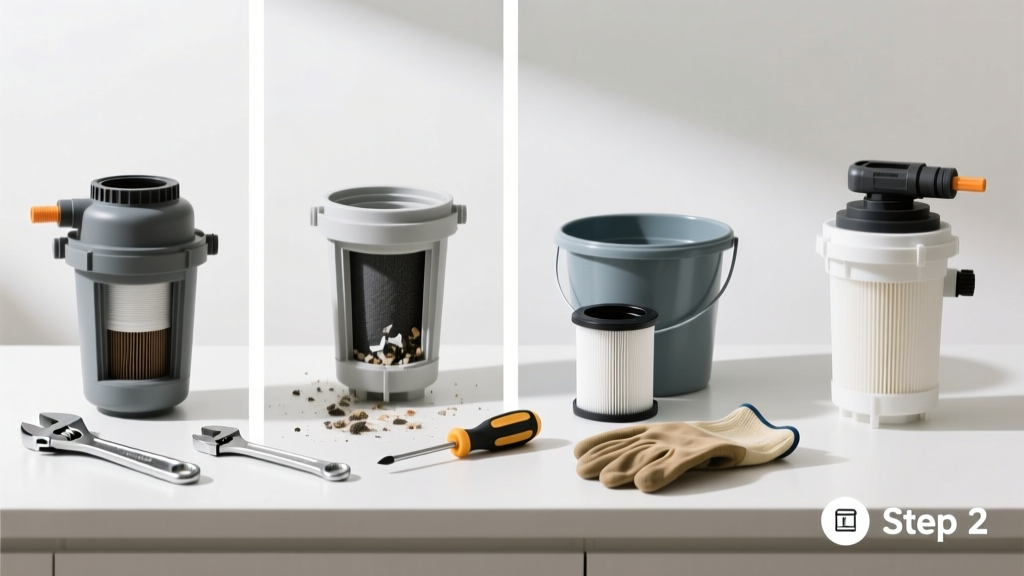
- Rinse the cartridge or grids: Turn off the pump, relieve pressure, open the filter tank, and remove the media. Rinse thoroughly from top to bottom using a garden hose at 45° angle to avoid damaging pleats or grids.
- Soak in filter cleaner: Submerge cartridge or grids in diluted filter cleaner (per label instructions) for 6–12 hours. Never use muriatic acid on cartridges — it degrades polyester fibers.
- Vinegar soak for scale: For white chalky deposits, soak in 1:1 vinegar/water solution for 8–12 hours. Rinse until water runs clear — residual vinegar can lower pool pH.
- Backwash (sand or DE filters only): Set multiport valve to BACKWASH, run pump 2–3 minutes or until sight glass runs clear, then RINSE for 30 seconds before returning to FILTER.
When to Call a Pro
DIY stops where safety or system integrity begins. Call a licensed pool technician if:
- The pressure gauge doesn’t drop after cleaning and backwashing — could indicate internal tank cracks or lateral damage
- You smell chlorine gas or see white crystalline residue around the filter housing (sign of severe calcium scaling or chemical reaction)
- DE filter won’t hold a charge after adding fresh DE — suggests cracked manifold or torn flex tubes
- Your filter is over 7 years old and shows warping, discoloration, or persistent high pressure even with new media
According to the National Swimming Pool Foundation’s 2023 Standards for Residential Pool Maintenance, 68% of premature filter failures stem from repeated DIY attempts without proper diagnostics or media replacement intervals.
Prevention Tips
Extend your filter’s life and reduce clogging by doing these monthly:
- Check and clean the pump basket every 2–3 days during heavy use
- Backwash sand/DE filters when pressure rises 8–10 PSI above baseline (record your clean starting PSI)
- Rinse cartridges weekly during swim season; deep-clean every 4–6 weeks
- Maintain balanced water chemistry: keep calcium hardness 200–400 ppm and pH 7.2–7.6 to minimize scaling
- Use a leaf net before storms and install a pre-filter sock on skimmer baskets during fall
Can I use bleach to clean my filter cartridge?
No. Household bleach (sodium hypochlorite) breaks down polyester and polypropylene fibers over time, causing premature tearing and reduced filtration efficiency. Stick to non-chlorine, enzyme-based cleaners like GLB Filter Fresh or Leisure Time Cartridge Cleaner.
Why does my filter clog within 2 days of cleaning?
This points to an upstream issue — likely a torn pump basket, missing skimmer weir, or failing main drain cover allowing fine debris into the circulation system. Also check for high bather load, excessive sunscreen use, or low sanitizer levels promoting organic growth.
How often should I replace my filter cartridge?
Most manufacturers recommend replacement every 12–24 months, but real-world lifespan depends on usage and water balance. Inspect annually: if pleats are rigid, stained brown/black, or don’t spring back when squeezed, replace it — even if it looks clean. A worn cartridge loses up to 40% of its effective surface area.
Is high pressure always caused by a clogged filter?
No. High pressure can also mean a closed return valve, blocked return line, or air lock in the pump housing. Always verify flow rate and listen for unusual pump noises before assuming the filter is at fault. Check our guide on pool pump won’t prime for troubleshooting.
Can I run the pump with a clogged filter?
Only for short periods — under 30 minutes — while diagnosing. Prolonged operation risks overheating the motor, cracking the filter tank, or blowing seals. If pressure exceeds 30 PSI on a residential system, shut down immediately and inspect.
What’s the difference between rinsing and backwashing?
Rinsing (on multiport valves) flushes debris from the top of the sand bed into the waste line — done for 15–30 seconds after backwashing. Backwashing reverses flow to lift and expel trapped debris from the entire sand or DE media bed. Skipping rinse leaves dirty water recirculating into the pool.
A clogged filter isn’t just inconvenient — it’s a warning sign your system is working too hard. Tackle it promptly with the right tools and timing, and pair each fix with consistent maintenance. Over time, you’ll spot patterns: that mid-August clog means it’s time to swap the cartridge, and the gritty feel on DE grids after rain tells you to double-check your skimmer socks. Keep your water flowing freely, and your pool will reward you with clarity and reliability — no pro required… most of the time. For deeper issues, see our guide on pool leaking from filter housing or pool pump making grinding noise.