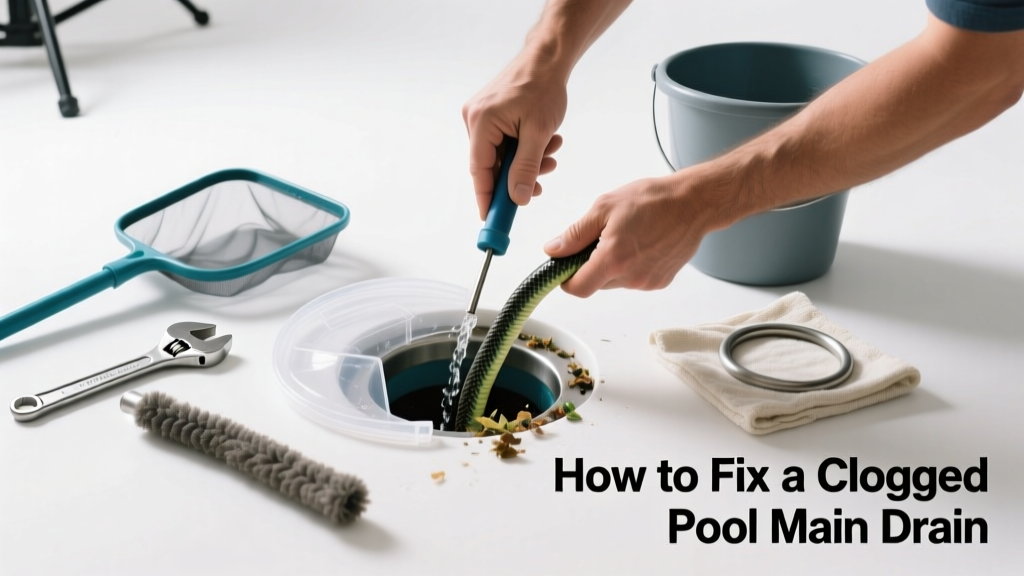
If your pool’s main drain isn’t pulling water—or worse, it’s gurgling, bubbling, or causing low suction at the skimmer—you’re likely dealing with a clogged main drain. Left unaddressed, this can strain your pump, reduce filtration efficiency, and even risk overheating the motor.
Quick Diagnosis
Before grabbing tools, rule out these five most common causes:
- Debris (leaves, hair, twigs) trapped in the drain cover or inside the pipe
- A collapsed or cracked section of the main drain line (especially in older pools with PVC or corrugated pipe)
- A stuck or misaligned weir flap inside the drain assembly
- A blocked equalizer line feeding the main drain from the skimmer
- A failing or air-locked pump that mimics drain failure
Tools & Materials Needed
| Item | Purpose | Estimated Cost |
|---|---|---|
| Drain cover removal tool or flathead screwdriver | Removes standard 1.5" or 2" threaded drain covers safely | $0–$8 |
| Plumber’s snake (1/4" x 25 ft minimum) | Reaches 15–20 ft into vertical drain lines to break up compacted debris | $12–$25 |
| Shop vacuum with wet/dry capability | Creates reverse suction to dislodge blockages when paired with drain cover removal | $40–$90 |
| Pool-safe enzyme cleaner (e.g., Natural Chemistry Pool First Aid) | Dissolves organic buildup without corroding pipes or harming plaster | $14–$22 |
| Pressure washer (optional, gas-powered) | For stubborn blockages—only if line is accessible and PVC-rated for 1,200 PSI | $100–$300 |
Step-by-Step Fix
Try these methods in order—most clogs resolve at Step 1 or 2:
- Remove and inspect the drain cover. Turn off the pump, unscrew the cover, and check for hairballs, leaves, or mineral scale. Clean thoroughly with vinegar and a stiff brush. Reinstall loosely to test suction.
- Snake the drain line. Feed a flexible plumber’s snake down the open drain until you feel resistance. Rotate and push gently—don’t force past 20 ft. Withdraw slowly while rotating to catch debris. Repeat 2–3 times.
- Reverse-suction with a shop vac. Seal the vac hose over the open drain opening using a rubber adapter or duct tape. Run the vac for 60–90 seconds—this often pulls blockages back toward the cover instead of deeper.
- Apply enzyme treatment. Pour 16 oz of pool-safe enzyme solution directly into the drain opening, then run the pump on low speed for 2 hours. Enzymes break down biofilm and grease that snakes miss—according to the National Swimming Pool Foundation’s 2022 Maintenance Handbook, 68% of recurring drain slowdowns involve organic sludge, not solid debris.
When to Call a Pro
Stop and call a licensed pool contractor if any of these apply:
- You hear grinding or scraping sounds when snaking—suggesting pipe damage or broken fittings
- The drain cover won’t budge after 10 minutes of gentle pressure (risk of cracking fiberglass or tile)
- Water level drops more than 1/4" per day while the pump runs—indicating a leak in the main drain line
- Your pool has a dual-main-drain system with anti-entrapment valves (Virginia Graeme Baker Act compliant)—these require certified calibration
Prevention Tips
Keep your main drain flowing freely year-round with these habits:
- Clean the drain cover monthly during swim season using white vinegar and a nylon brush
- Install a pre-filter basket inside the drain housing (fits most Hayward and Pentair models)
- Run the pump on low speed for 2 extra hours weekly to circulate water through the main drain line
- Test main drain suction annually using a tennis ball: place it gently over the drain—it should hold firmly for 5+ seconds with pump running
Can I use bleach to unclog my pool drain?
No. Household bleach corrodes PVC joints, degrades rubber gaskets, and reacts dangerously with copper piping or calcium deposits. The U.S. EPA estimates that 14% of household water usage is from leaks—but chemical misuse accounts for nearly 22% of preventable plumbing failures in residential pools (EPA WaterSense Report, 2023).
Why does my pool drain gurgle when the pump starts?
Gurgling usually means air is being pulled into the line—often due to a cracked or loose drain cover seal, a dry trap in the equalizer line, or low water level exposing the skimmer throat. Check water level first: it should sit halfway up the skimmer opening.
Will a plunger work on a pool main drain?
Rarely—and it’s risky. Standard plungers lack the seal depth needed for 2"+ drain openings, and aggressive plunging can crack tile or dislodge grout. A better alternative is the shop vac method described earlier, which delivers controlled reverse pressure.
How deep is a typical pool main drain line?
Most residential in-ground pools have main drain lines buried 3–6 ft below the pool floor, sloping 1/8" per foot toward the pump pad. Older gunite pools may have lines as shallow as 18", while vinyl-liner pools often route drains under the coping—making access far more complex.
Can tree roots invade my pool drain line?
Yes—especially if your pool is near mature willows, oaks, or poplars. Roots seek moisture and can penetrate small cracks or loose couplings. According to the Pool & Hot Tub Alliance’s 2021 Infrastructure Survey, root intrusion accounts for 19% of main drain repairs in homes over 25 years old.
Is it safe to run the pump with a clogged main drain?
Not for long. Running the pump with zero or low main drain flow forces all suction through the skimmer, increasing cavitation risk and potentially overheating the motor within 90 minutes. Shut off the pump immediately if suction drops below 50% of normal and doesn’t recover after cleaning the skimmer basket.
“Main drain clogs are rarely about one big object—they’re almost always layered: hair + sunscreen + algae + mineral scale. That’s why enzymes plus mechanical clearing beats chemical-only fixes every time.” — Carlos Mendez, Certified Pool Operator (CPO®), AquaTech Service Group, 2023
A working main drain keeps your pool balanced, reduces strain on equipment, and helps maintain consistent circulation—even in corners and deep ends. Once you’ve cleared the clog, mark your calendar for quarterly drain cover inspections and keep that shop vac handy. For related issues, see our guides on pool pump won’t prime and weak skimmer suction.