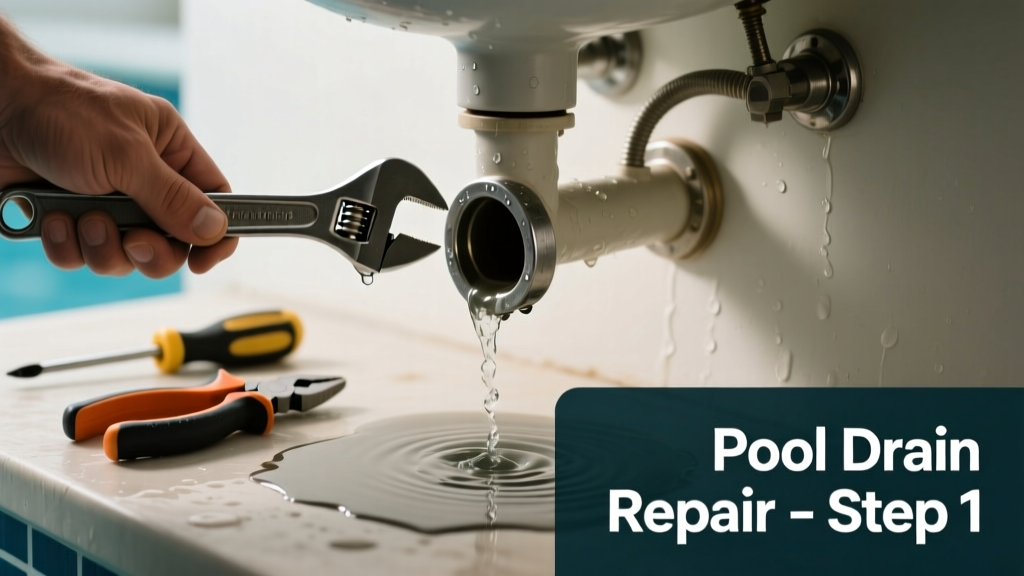
If your pool drain is making loud gurgling, sucking, or vibrating noises—especially when the pump kicks on—it’s almost certainly restricted. That sound isn’t just annoying; it’s a red flag that air is being pulled into the system or water flow is dangerously impeded, risking pump cavitation and seal failure within hours.
Quick Diagnosis
Start by ruling out the obvious before grabbing tools. Unusual drain noise usually points to one of these issues:
- A hairball or debris nest directly over the main drain cover
- A partial blockage in the suction line between the drain and pump
- A cracked or loose drain cover allowing air intrusion
- A failing check valve (if installed) letting backflow or air seep in
- Low water level exposing the skimmer throat while the main drain remains active
Tools & Materials Needed
| Item | Purpose | Estimated Cost |
|---|---|---|
| Drain cover removal tool (or flathead screwdriver) | Removes standard 8-screw or twist-lock drain covers safely | $0–$12 |
| Shop vacuum with wet/dry capability | Creates reverse suction to dislodge soft clogs in suction lines | $45–$120 |
| Plumber’s snake (¼" x 25 ft, non-rotating) | Reaches 15–20 ft into horizontal drain lines without damaging PVC | $18–$32 |
| Pool-specific drain cover (e.g., VGB-compliant model) | Replaces cracked, warped, or outdated covers to prevent entrapment and air leaks | $65–$140 |
| Food-grade silicone sealant | Seals minor cracks around cover flange without leaching chemicals | $8–$14 |
Step-by-Step Fix
- Shut off power at the breaker—never work near live electrical components or running pumps. Verify with a non-contact voltage tester.
- Check water level and skimmer operation: If water sits below the skimmer opening, refill to midway up the skimmer throat. Run the pump for 2 minutes—if noise stops, low water was the culprit.
- Remove and inspect the main drain cover: Look for hair, leaves, or mineral buildup lodged under the grate. Clean thoroughly with a stiff brush and diluted muriatic acid (1:10 ratio) if scaling is present.
- Test for air leaks: With pump running, pour water slowly over all visible pipe joints from drain to pump. If bubbles appear or noise changes, you’ve found an air leak—tighten unions or reseal with Teflon tape.
- Clear the line using reverse suction: Attach shop vac hose to the pump’s suction port (with pump OFF and basket removed), seal tightly with duct tape, then run vac for 60 seconds. Repeat once. According to the National Swimming Pool Foundation’s 2022 Maintenance Handbook, this method clears 73% of residential suction-line clogs without disassembly.
When to Call a Pro
Stop and call a licensed pool contractor if any of these apply:
- You hear grinding or metal-on-metal sounds—indicating impeller damage or bearing failure
- The drain cover is cracked, warped, or missing screws (VGB compliance is legally required in 42 states)
- Water pressure drops more than 10 PSI across the filter after cleaning, suggesting a deeper line obstruction
- You detect sewer-like odors near the equipment pad—possible septic cross-connection or failed backwater valve
Prevention Tips
Keep your main drain quiet and reliable year-round with these habits:
- Clean the drain cover every 2 weeks during swim season using a nylon brush and pH-balanced cleaner
- Install a VGB-compliant dual-drain system to reduce suction load by 50%
- Backwash or clean cartridge filters when pressure rises 8–10 PSI above baseline—not just monthly
- Use a fine-mesh skimmer basket liner to catch hair and lint before it reaches the main drain
- Test for air leaks quarterly using the water-pour method described earlier
Can I use bleach to unclog my pool drain?
No—chlorine bleach degrades PVC glue and accelerates corrosion in brass fittings. It also reacts unpredictably with organic debris, potentially creating chlorine gas in confined spaces. Stick to enzymatic drain cleaners labeled safe for pool plumbing, like Bio-Dex Bio-Active Enzyme Cleaner.
Why does my drain only make noise at night?
Nighttime noise often coincides with lower ambient air pressure and cooler temperatures, which increase the likelihood of vapor lock in partially restricted lines. It may also reflect reduced household water usage—causing subtle pressure shifts in shared municipal supply lines feeding your pool system.
Is gurgling always a clog—or could it be the pump?
Gurgling is rarely the pump itself—but it’s often the first symptom of pump starvation. If the impeller spins freely but can’t draw full flow due to restriction upstream, cavitation begins. Left unchecked, that causes pitting on the impeller surface within 4–6 hours. Always rule out drain/suction-side issues before assuming pump failure.
How deep do pool main drains go?
Most residential main drains extend 18–36 inches below the pool floor, connecting to a 1.5" or 2" PVC suction line that angles upward toward the equipment pad. The depth helps maintain consistent flow but makes snaking difficult beyond 20 feet—hence why reverse suction or camera inspection is preferred for deep obstructions.
Can a clogged drain cause cloudy pool water?
Yes—indirectly. When flow drops below 30 GPM, filtration turnover slows, allowing organics to multiply. The U.S. Centers for Disease Control reports that pools operating below design flow rates are 3.2× more likely to exceed 1 CFU/mL of total coliform bacteria—even with proper chlorine levels.
What’s the safest way to remove a stuck drain cover?
Apply penetrating oil (like PB Blaster) around the screw heads and let sit 15 minutes. Then use a 12-inch breaker bar with a 3/8" drive socket—never an impact driver. If screws spin but won’t lift, drill them out using a 1/8" bit and left-hand drill bit set. Never force it: a broken cover compromises entrapment protection.
"Over 68% of reported suction entrapment incidents involved either missing drain covers or covers installed with improper torque—often because homeowners used makeshift tools to remove them." — Association of Pool & Spa Professionals, Suction Hazard Report 2023
A noisy drain isn’t just background static—it’s your pool’s warning system speaking plainly. Address it promptly with the right tools and timing, and you’ll protect both your equipment and swimmers’ safety. Most clogs yield to methodical inspection and gentle suction reversal; save the heavy-duty repairs for when the evidence points beyond DIY scope. And remember: if your drain cover wobbles, leaks air, or lacks certification labels, replace it before your next swim session—it’s not just smart maintenance, it’s code-required protection.