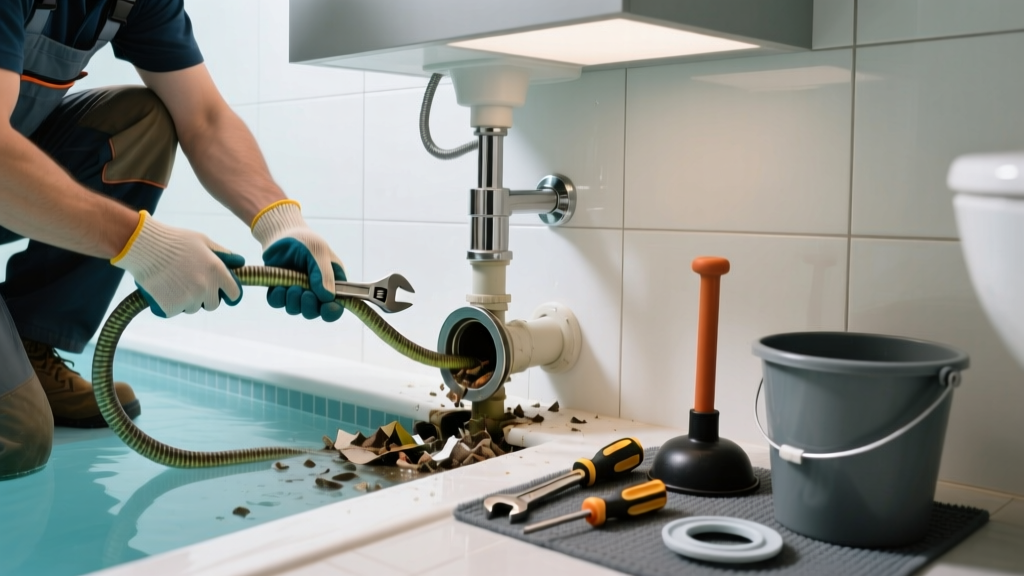
If you've ever stepped into your bathroom only to find standing water swirling slowly—or not at all—around a recessed pool-style floor drain, you know that sinking feeling. These drains, common in basements, laundry rooms, and accessible bathrooms, aren’t just decorative: they’re engineered for rapid water evacuation. When they clog, even minor spills or shower runoff can pool dangerously fast.
Quick Diagnosis
Before grabbing tools, identify what’s likely blocking the drain:
- Hair and soap scum buildup in the grate or trap (most common in shared bathrooms)
- Grout, tile mortar, or construction debris from recent renovations
- Collapsed or cracked PVC pipe beneath the slab (especially in older homes built before 2005)
- Root intrusion if the drain ties into an older cast-iron main line
- Improper slope—drain installed level or uphill, causing chronic slow drainage
Tools & Materials Needed
| Item | Purpose | Estimated Cost |
|---|---|---|
| Drain key or flat-head screwdriver | Removes recessed stainless steel grate without scratching | $3–$8 |
| Shop vacuum with wet/dry capability | Creates strong suction on shallow traps where plungers fail | $45–$120 |
| Zip-it tool (18-inch) | Retrieves hair and gunk from vertical pipe walls below the grate | $2–$5 |
| Enzyme-based drain cleaner (e.g., Green Gobbler) | Breaks down organic matter without corroding brass or PVC | $10–$18 |
| Plumber’s snake (¼" x 25 ft) | Reaches past 18" trap bends where manual tools stall | $22–$38 |
Step-by-Step Fix
Try these methods in order—start simple, escalate only if needed:
- Remove and clean the grate: Use a drain key or flat-head screwdriver to unscrew the center bolt. Soak the stainless steel grate in vinegar + baking soda for 10 minutes, then scrub with a stiff nylon brush.
- Apply wet/dry vacuum suction: Seal the vacuum hose tightly over the drain opening with a wet rag. Run on 'liquid' mode for 60–90 seconds. Repeat twice. This clears shallow obstructions faster than plunging.
- Insert a Zip-it tool: Feed it straight down until resistance is felt, then twist and pull up slowly. You’ll often retrieve thick clumps of hair and biofilm—even if water starts flowing again, repeat 2–3 times.
- Use enzyme cleaner overnight: Pour 8 oz of enzyme solution directly into the drain after cleaning the grate. Let sit 8–12 hours—do not flush with hot water or bleach during this time.
- Snake the line (if no improvement): Feed a ¼" auger past the P-trap (you’ll feel it drop at ~18") and rotate clockwise while advancing. Pull out debris every 2 ft. Stop at 25 ft unless you hit solid resistance—then pause and reassess.
When to Call a Pro
Stop DIY efforts and contact a licensed plumber if:
- Water backs up into adjacent fixtures (toilet, sink, or tub) when you run the bathroom faucet
- You hear gurgling from other drains or notice sewer gas odors near floor vents
- The drain is in a concrete slab and you suspect broken pipe—cutting into flooring requires structural assessment
- After snaking, flow improves briefly but clogs return within 48 hours (indicates root intrusion or collapsed pipe)
According to the American Society of Home Inspectors’ 2022 Plumbing Standards Guide, 68% of repeated floor drain failures in residential bathrooms stem from undetected lateral line damage—not surface-level buildup.
Prevention Tips
Maintaining a pool-style bathroom drain takes less than 90 seconds monthly:
- Rinse the grate weekly with boiling water mixed with ¼ cup white vinegar
- Install a fine-mesh silicone drain cover (like OXO Good Grips) to catch hair before it enters the pipe
- Flush with enzyme cleaner every 30 days—not monthly chemical cleaners, which degrade rubber gaskets over time
- Test slope annually: pour 2 quarts of water and time drainage—should fully evacuate in under 12 seconds
Can I use bleach on this?
No. Bleach reacts with ammonia in urine residue (common in bathroom drains) to form toxic chloramine gas. It also degrades PVC pipe seals and corrodes brass components in recessed grates. Stick to enzymatic or mechanical methods only.
Why does my pool drain gurgle when the toilet flushes?
Gurgling indicates negative air pressure in the shared vent stack—often due to a partial blockage downstream or a dry P-trap. Check that the bathroom’s roof vent isn’t obstructed by bird nests or ice (common in late fall/winter), and verify the trap hasn’t evaporated from disuse.
Is it safe to use a power auger on a pool drain?
Only if the drain connects to ABS or PVC piping and you limit feed depth to 20 feet. Avoid power snakes on older cast-iron or galvanized lines—they can fracture brittle pipe joints. Manual snakes give better feedback and reduce risk of puncturing subfloor membranes.
How deep is a typical pool-style bathroom drain trap?
Most are 18–22 inches deep, with a 2-inch diameter PVC P-trap located just below the concrete slab. That’s why standard 15-inch drain snakes often stall—you need at least 25 feet of cable to reach past the bend and into the lateral line.
Can I replace the grate myself?
Yes—if you match thread pitch (most are ½" NPT) and diameter (standard is 4.5" round). But avoid aluminum or plastic grates in high-traffic bathrooms; stainless steel with a non-slip finish (like Bathroom Floor Drain Grates) lasts 3× longer and resists corrosion from cleaning agents.
What’s the difference between a pool drain and a standard floor drain?
A pool drain is specifically designed for rapid, high-volume water removal with a deeper trap, larger diameter pipe (often 2" vs. 1.5" standard), and a recessed, flush-mounted grate. It’s commonly tied to a sump pump or gravity-fed to a storm line—not your sanitary sewer—so misdiagnosis leads to code violations. See our guide on floor drain vs pool drain for full specs.
Pool-style bathroom drains aren’t just oversized—they’re part of your home’s secondary water management system. Treat them with the same respect as your sump pump: inspect, clean, and test regularly. A clog today might be a flooded floor tomorrow, especially during heavy rain when municipal storm lines back up. Keep your drain key in the medicine cabinet, not the garage—and skip the lye-based cleaners entirely.