A slow-draining or completely blocked pool main drain isn’t just annoying—it’s a safety hazard. Reduced suction can cause entrapment risks, and standing water promotes algae growth and equipment strain. Most clogs are simple to clear if caught early and handled correctly.
Quick Diagnosis
Before grabbing tools, identify the likely culprit. Main drain clogs rarely happen in isolation—symptoms point to specific causes:
- Debris buildup (leaves, hair, lint) inside the drain cover or pipe entrance
- A collapsed or cracked PVC line—especially in older inground pools (pre-2005)
- A stuck or warped drain cover creating a partial vacuum seal
- Calcium scale accumulation in hard-water areas (common in Arizona, Texas, and Florida pools)
- Improperly sized or missing anti-vortex drain covers allowing air lock
Tools & Materials Needed
| Item | Purpose | Estimated Cost |
|---|---|---|
| Drain cover removal tool (or flathead screwdriver) | Safe, non-marring removal of threaded or pop-up drain covers | $8–$15 |
| Plumber’s snake (¼" x 25 ft minimum) | Reaches 10–15 ft into vertical main drain lines to break up organic clogs | $22–$38 |
| Vacuum hose + shop vac (wet/dry) | Creates reverse suction to dislodge debris lodged near the sump | $45–$120 |
| Calcium dissolver (e.g., Bio-Dex ScaleFree) | Dissolves mineral deposits without damaging PVC or stainless steel components | $19–$29 |
| Replacement drain cover (ASME/ANSI-compliant) | Mandatory upgrade if current cover is warped, cracked, or lacks anti-entrapment design | $42–$85 |
Step-by-Step Fix
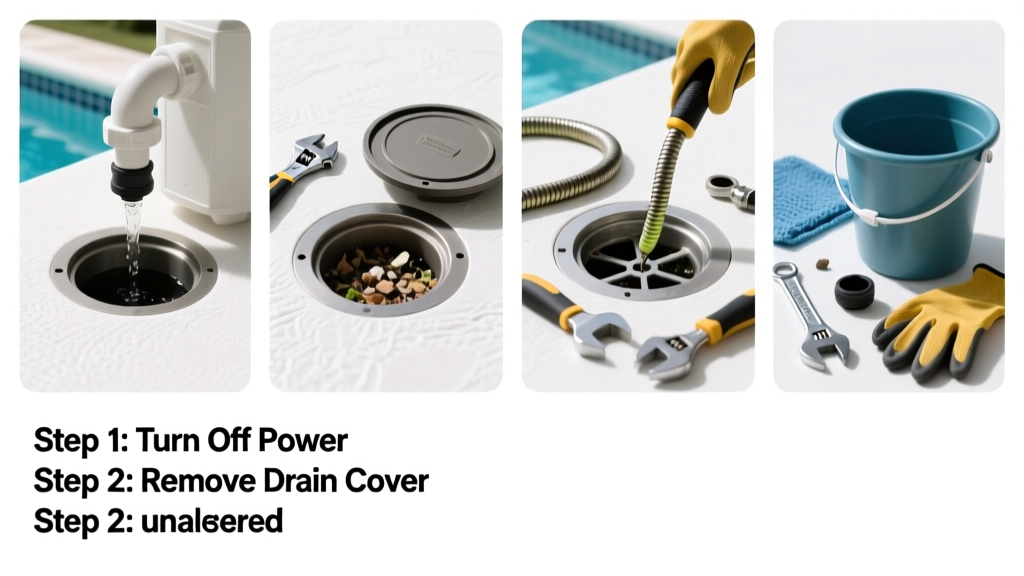
Work methodically—and always shut off the pump at the breaker before touching any drain component. Never attempt suction-side work while the system is running.
- Inspect and remove the drain cover: Use the removal tool to unscrew or pry the cover. Check for cracks, warping, or visible debris jammed under the grate. Rinse thoroughly with a garden hose.
- Snake the drain line: Feed the plumber’s snake down the opening slowly—stop at resistance. Rotate clockwise while applying gentle pressure. Pull out debris; repeat until you feel 12+ inches of free movement.
- Reverse-suction flush: Attach a rigid vacuum hose to your wet/dry vac’s exhaust port (not intake). Seal the hose tightly over the drain opening and run for 60–90 seconds. This pushes air and water backward through the line to dislodge stubborn gunk.
- Treat mineral buildup: If scale is visible (white chalky crust), pour 1 cup of calcium dissolver into the drain opening. Let sit 2 hours, then flush with 5 gallons of water from a bucket poured rapidly down the drain.
- Reinstall with new gasket: Replace the old rubber gasket—even if intact. Hand-tighten only; overtightening stresses PVC and voids ASME compliance.
When to Call a Pro
Some clogs aren’t about debris—they’re structural or code-related. Stop and call a licensed pool contractor if:
- The drain line doesn’t respond to snaking after three attempts with 25+ ft of cable
- You hear gurgling or see bubbling at nearby cleanouts or skimmers—signaling a collapsed or separated pipe section
- Your pool has a single-main-drain configuration (banned in all new builds since 2008 per Virginia Graeme Baker Act)
- Water level drops more than ½ inch per day *after* clog removal—suggesting a leak behind the drain assembly
"Over 62% of reported suction entrapment incidents between 2015–2022 involved either missing drain covers or improper retrofitting—never assume an old cover is safe." — APSP/NSPF Pool Operator Handbook, 2022 Edition
Prevention Tips
Preventative maintenance cuts clog frequency by nearly 70%, according to the National Swimming Pool Foundation’s 2023 Maintenance Benchmark Report. Focus on these habits:
- Clean the main drain cover every 2 weeks during swim season using a soft brush and diluted vinegar solution
- Install a pre-filter basket (like the Hayward SP1091L) inside the pump pot to catch hair and fibers before they reach the drain line
- Run the pump 8–10 hours daily—stagnant water increases organic buildup in low-flow zones like the main drain
- Test calcium hardness monthly; keep it between 200–400 ppm to reduce scaling risk
Can I use bleach to unclog my pool drain?
No. Household bleach (sodium hypochlorite) does not dissolve organic clogs like hair or leaves—and it aggressively degrades PVC glue joints and rubber gaskets. It also creates toxic chlorine gas if mixed with other cleaners. Stick to mechanical removal or enzyme-based drain treatments.
Why does my pool drain gurgle when the pump turns on?
Gurgling indicates air entering the suction line—usually due to a loose drain cover, cracked pipe seal, or low water level exposing the skimmer weir. If the gurgle persists after checking those, suspect a hairline crack in the main drain conduit below the pool shell.
Is it safe to use a power auger on a pool drain line?
No. Power augers spin too fast and generate torque that can fracture PVC couplings or shear off internal pipe fittings. Stick to hand-cranked snakes rated for pool use (like the Waterway Drain Snake Kit) with flexible, non-marring tips.
How do I know if my drain cover meets current safety standards?
Look for embossed markings: "ASME/ANSI A112.19.8–2021" or "VGB 2008 Compliant." Covers installed before 2009 are almost certainly outdated. You can cross-check your model number against the pool drain cover replacement guide for verified compliant options.
Can a clogged main drain damage my pool pump?
Yes—prolonged restricted flow causes cavitation, overheating the motor and eroding impeller vanes. The U.S. Department of Energy estimates that 18% of premature pump failures stem from chronic suction-side restrictions. Always verify full flow before restarting the system.
What’s the difference between a main drain clog and a skimmer clog?
Main drain clogs reduce bottom-to-top circulation and often cause sluggish floor cleaning; skimmer clogs primarily affect surface debris removal and may trigger air locks in the pump basket. Test by closing the skimmer valve—if flow improves, the issue is upstream of the skimmer—not the main drain.
Fixing a clogged pool drain isn’t glamorous, but it’s one of the most impactful maintenance tasks you can do for safety and efficiency. When done right, it restores proper circulation, extends pump life, and keeps swimmers protected. Keep your drain cover checklist handy, test flow monthly, and don’t ignore that first sign of sluggish drainage—it only gets harder to fix the longer you wait. For related help, see our pool pump won’t prime troubleshooting guide and how to clean pool skimmer baskets.