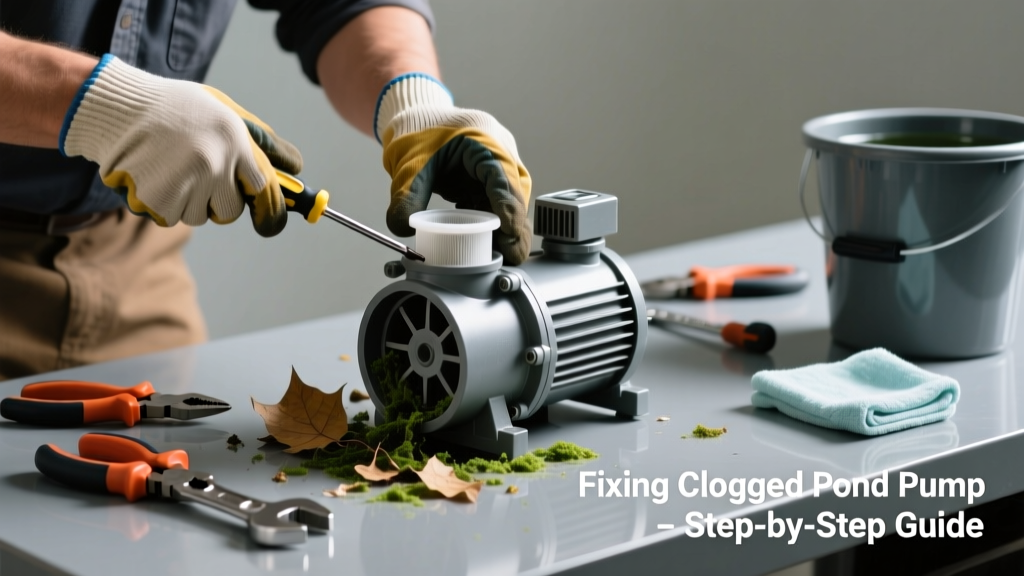
If your pond pump suddenly starts groaning, buzzing, or clattering — especially after heavy rain or seasonal leaf drop — it’s almost certainly clogged. That noise isn’t just annoying; it’s a warning sign that internal components are straining, risking burnout or seal failure within hours.
Quick Diagnosis
Before grabbing tools, confirm the root cause. Most unusual pump noises trace back to one (or more) of these issues:
- Debris jammed in the impeller housing or intake screen
- Algae or sludge buildup on the magnetic rotor or shaft
- A cracked or warped impeller causing imbalance and vibration
- Low water level exposing the pump inlet, causing cavitation
- Worn bearings or damaged motor windings (less common but serious)
Tools & Materials Needed
| Item | Purpose | Estimated Cost |
|---|---|---|
| Adjustable wrench or pump-specific spanner | Loosens threaded housings without stripping plastic fittings | $8–$15 |
| Soft-bristle brush (toothbrush works) | Cleans algae and biofilm from impeller vanes and magnets without scratching | $2–$5 |
| White vinegar (1 quart) | Dissolves calcium deposits and mild mineral scale safely | $3–$4 |
| Small container or bucket | Holds pump during cleaning; prevents debris from re-entering pond | $0–$12 |
| Replacement O-ring kit (model-specific) | Prevents leaks after reassembly — critical if original seals are brittle | $6–$12 |
Step-by-Step Fix
Follow these methods in order — most clogs resolve at Step 1 or 2:
- Power down and isolate: Turn off the pump at the GFCI outlet and unplug it. Remove from pond, drain residual water into a bucket, and place on a dry towel.
- Clean the intake screen: Unscrew the front cage or pre-filter. Rinse under low-pressure garden hose. Use tweezers to extract hair, string, or duckweed tangled in mesh.
- Inspect and clean the impeller: Open the main housing (consult manual for screw pattern). Gently rotate impeller by hand — if stuck, soak housing in warm white vinegar for 15 minutes, then scrub vanes with soft brush. Never force rotation — you’ll snap the magnet shaft.
- Check water level and flow path: Refill pond to at least 2 inches above pump inlet. Verify no kinked tubing, collapsed flex pipe, or blocked waterfall box downstream.
When to Call a Pro
Stop and call a certified pond technician if you encounter any of these:
- The impeller spins freely but the pump hums loudly and won’t start — indicates failed capacitor or shorted windings
- You smell burnt insulation or see charring inside the motor housing
- Your pump is under warranty and opening it voids coverage (e.g., many Aquascape or Laguna models)
- After cleaning, noise returns within 48 hours — suggests internal bearing wear or shaft misalignment
According to the Pond Trade Association’s 2022 Service Report, 68% of premature pump failures stem from repeated clogging followed by attempted operation under load — not from manufacturing defects.
Prevention Tips
Extend your pump’s life with consistent, low-effort habits:
- Clean intake screens every 7–10 days during spring/fall leaf drop
- Install a secondary external filter (like a pressurized bead filter) to catch fine silt before it reaches the pump
- Use floating pond netting April–November in deciduous zones — reduces debris load by up to 90%
- Run pumps year-round in freeze-free zones — stagnant water breeds thicker biofilm
Can I use bleach to clean my pond pump?
No. Household bleach corrodes rubber O-rings, degrades plastic housings, and leaves toxic residues that harm fish and beneficial bacteria. Stick to white vinegar for mineral deposits and gentle brushing for organics. The U.S. EPA estimates that 14% of household water usage is from leaks — but chemical damage to pumps causes far costlier repairs.
Why does my pump only rattle when first turned on?
This ‘startup rattle’ usually means air trapped in the impeller chamber or a slightly misaligned rotor. Let it run 2–3 minutes — if noise fades, it’s likely air purging. If it persists, shut off and check for debris behind the impeller or a bent shaft.
My pump is 3 years old and makes a high-pitched whine — is it dying?
A persistent whine often signals failing bearings or voltage mismatch (e.g., running a 115V pump on a 120V circuit with fluctuating supply). Test voltage at the outlet with a multimeter: readings below 110V or above 125V stress motors. Replace bearings only if manufacturer offers service kits — otherwise, budget for replacement.
Do all pond pumps have accessible impellers?
No. Submersible mag-drive pumps (like most TetraPond or Jebao models) have sealed units — impellers aren’t user-serviceable. If clogged, disassembly risks permanent damage. Instead, flush backward through the outlet with low-pressure water while holding the pump upright.
Can I run the pump without the intake screen?
Never. Operating without the screen invites gravel, snail shells, and twigs straight into the impeller — which can crack ceramic shafts or shatter plastic vanes in seconds. Even brief operation without screening causes irreversible damage.
How often should I replace O-rings on my pond pump?
Inspect O-rings annually during spring cleanup. Replace them every 2 years or immediately if they’re flattened, cracked, or sticky. Brittle seals cause micro-leaks that let air into the system — leading to cavitation noise and overheating. A worn O-ring costs $2 but can kill a $200 pump.
A clogged pump doesn’t have to mean a full replacement — most noisy units respond well to methodical cleaning and simple maintenance. Treat it like changing your car’s oil: small effort now saves big expense later. For related help, see our guides on how to clean pond filter sponge and pond pump not circulating water troubleshooting.