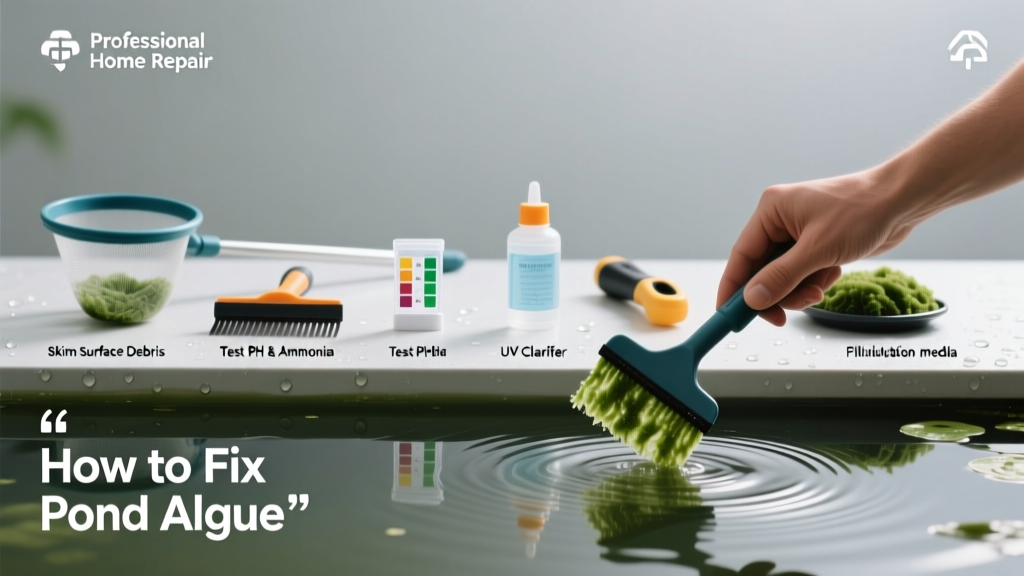
That thick green scum on your pond isn’t just ugly—it’s a sign of imbalance that can suffocate fish, clog filters, and lower oxygen levels fast. Left unchecked, algae blooms escalate within days, especially in warm, nutrient-rich water. The good news? Most cases respond well to targeted, low-cost interventions—if you act before it turns into a sludge layer.
Quick Diagnosis
Algae isn’t one-size-fits-all. Identifying the type and root cause helps you pick the right fix:
- Green water (free-floating planktonic algae): Caused by excess nutrients (fish waste, fertilizer runoff) + too much sun
- String algae (filamentous): Thrives on high nitrates and phosphates, often clinging to rocks or liner edges
- Blue-green algae (cyanobacteria): Toxic, slimy, and often smells like rotten eggs—indicates serious nutrient overload or poor circulation
- Blanketweed: Dense, hair-like mats; common in ponds with slow-moving water and high calcium
Tools & Materials Needed
| Item | Purpose | Estimated Cost |
|---|---|---|
| Algae brush (stainless steel or nylon) | Physically removes string and blanketweed without damaging liner | $12–$28 |
| UV clarifier (25–40W) | Kills free-floating algae cells as water passes through; essential for green water | $85–$220 |
| Barley straw extract or bales | Natural inhibitor that releases hydrogen peroxide compounds as it decomposes | $10–$35 |
| Test kit (nitrates, phosphates, pH) | Pinpoints nutrient imbalances driving algae growth | $22–$45 |
| Pond vacuum (submersible) | Removes decaying organic matter from the bottom—the primary nutrient source | $65–$180 |
Step-by-Step Fix
- Test and assess: Use your test kit to measure nitrates (>40 ppm), phosphates (>0.5 ppm), and pH (ideal: 6.5–8.2). Record readings—you’ll need them to track progress.
- Remove manually: Turn off pumps and filters. Scrub string algae off rocks and liner with an algae brush; scoop out loose clumps with a fine-mesh net. Vacuum sludge from the pond floor—this cuts nutrient supply at the source.
- Add biological control: Introduce beneficial bacteria (e.g., Microbe-Lift PL) to break down organic waste. Dose weekly for 3 weeks, then biweekly. Pair with barley straw bales (1 oz per 100 gallons) placed in mesh bags near flow areas.
- Install UV clarification: Mount a UV clarifier inline *after* the filter (never before). Run continuously for 3–5 days—green water typically clears in 72 hours if flow rate matches unit specs.
- Shade and plant: Cover 60–70% of surface area with floating plants (water lilies, duckweed) or install shade sails. This reduces light penetration—the key trigger for photosynthetic algae.
When to Call a Pro
DIY works for most seasonal algae—but skip the wrench if you see any of these red flags:
- Your pond has recurring blue-green (cyanobacterial) blooms—these produce microcystins linked to liver toxicity in pets and humans (U.S. EPA, 2022)
- You’ve added multiple algaecides over 3 weeks with no improvement, suggesting underlying filtration failure or liner leaks
- Water tests show ammonia >1.0 ppm or dissolved oxygen <5 mg/L—signs of ecosystem collapse requiring emergency aeration and biofilter rebuild
- You suspect chemical contamination from nearby lawn treatments or septic leaching (confirmed via lab water analysis)
"Over 73% of residential pond owners who attempted chemical algaecides without first reducing nutrient load saw algae return within 10 days." — Aquascape Pro Network Field Report, 2023
Prevention Tips
Long-term algae control is about balance—not war. Focus on these proven habits:
- Feed fish only what they consume in 3 minutes—excess food breaks down into nitrates
- Clean skimmer baskets twice weekly during summer; backwash pressurized filters every 10–14 days
- Trim aquatic plants monthly to prevent leaf decay at the bottom
- Install a bottom drain or add a second pump for better circulation—stagnant zones feed algae
- Test water monthly April–October; log results to spot trends before blooms start
Can I use bleach on this?
No—bleach kills beneficial bacteria, harms fish gills, and damages pond liners. Even diluted, it disrupts the nitrogen cycle and often triggers worse algae rebounds. Stick to mechanical removal and UV treatment instead.
Will copper sulfate work?
Copper sulfate can suppress some algae but is highly toxic to invertebrates (snails, shrimp), sensitive koi varieties, and aquatic plants. It also accumulates in sediment, causing long-term toxicity. The U.S. EPA restricts its use in ornamental ponds without certified applicator oversight (EPA Pesticide Fact Sheet, 2021).
Do pond vacuums remove good bacteria?
Only if used directly on biofilter media or submerged plant roots. When vacuuming the pond floor, you’re targeting anaerobic sludge—not the aerobic bacteria colonizing filter sponges or gravel. Always avoid sucking up filter chambers or plant beds.
How long until I see results?
Green water clears in 3–7 days with proper UV use. String algae takes 2–4 weeks to fully recede after manual removal + barley straw dosing. Persistent blanketweed may require installing a bead filter or upgrading pump flow—see our guide on pond filtration upgrades.
Is algae ever beneficial?
In moderation—yes. A thin film on rocks supports micro-invertebrates that fish eat, and phytoplankton contributes to dissolved oxygen during daylight. But visible blooms indicate imbalance. Think of algae like mold: harmless spores are everywhere, but visible growth means conditions are wrong.
Can I use vinegar to clean the liner?
Diluted white vinegar (1:10 with water) safely removes mineral deposits and mild biofilm *during full drain and dry-out*. Never add vinegar to standing water—it crashes pH and stresses fish. For routine cleaning, stick to a soft brush and pond-safe enzyme cleaners like BioFilm Remover.
A healthy pond isn’t sterile—it’s balanced. Fixing algae isn’t about erasing it completely, but restoring the natural checks and balances that keep it in check. Monitor closely for the first month after treatment, adjust feeding and shading as needed, and remember: consistency beats intensity every time.