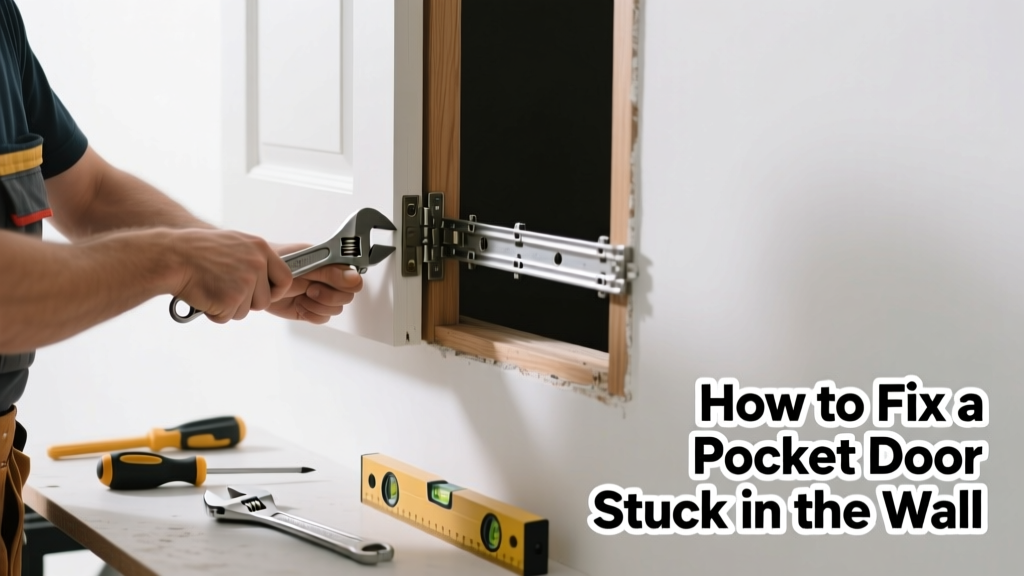
That soft 'thunk' followed by resistance—or worse, total silence when you try to slide your pocket door—is more than annoying. It’s a sign something’s misaligned, worn, or obstructed inside the wall cavity. Unlike swinging doors, pocket doors hide their mechanics, making diagnosis trickier—but most jams are fixable in under an hour with basic tools.
Quick Diagnosis
Before grabbing tools, rule out the obvious culprits:
- The door is hitting the stop block (often due to loose hardware or frame shift)
- Rollers are off-track, bent, or seized from dust and age
- Debris—drywall dust, screws, or insulation—has jammed the track
- The header or pocket framing has shifted, narrowing the opening
- Door slab warped or swollen from humidity (especially in bathrooms)
Tools & Materials Needed
| Item | Purpose | Estimated Cost |
|---|---|---|
| 1/4" hex key (Allen wrench) | Adjusts roller mounting screws on most modern pocket door hardware | $3–$8 |
| Needle-nose pliers | Retrieves small debris or repositions bent roller arms | $5–$12 |
| Flashlight + inspection mirror | Views inside narrow pocket without removing trim | $7–$15 |
| Lightweight lubricant (dry silicone spray) | Lubricates rollers without attracting dust; avoids grease buildup | $6–$10 |
| 3-in-1 oil (for older steel rollers) | Penetrates rust on pre-1990 hardware; test first on inconspicuous area | $4–$7 |
Step-by-Step Fix
Work methodically—from easiest to most involved:
- Check alignment and clearance: Open the door halfway and inspect both sides of the jamb. Look for gaps that widen at top or bottom—this signals roller misalignment. Use your flashlight and mirror to peek into the pocket above the door; confirm rollers sit fully on the track.
- Adjust the rollers: Remove the door’s lower access panel (if present) or gently pry off the trim cap covering the roller assembly. Loosen the mounting screw, then raise/lower the roller using the hex key until the door glides smoothly. Tighten securely—overtightening strips threads.
- Clean and lubricate: Wipe rollers and track with a dry microfiber cloth. Spray dry silicone along the full length of the upper track (not the rollers directly). Avoid WD-40—it dries sticky and collects sawdust.
- Clear obstructions: If the door stops abruptly, shine light into the pocket while slowly closing it. Needle-nose pliers can extract insulation chunks or drywall screws lodged near the end of travel. Never force it—this bends rollers or warps the jamb.
When to Call a Pro
Stop and call a licensed carpenter or door specialist if:
- You hear grinding metal or see visible bending in the track or hanger bracket
- The door drops more than 1/8" when lifted manually—indicating broken roller welds or compromised header support
- Removing trim reveals cracked drywall, rotted framing, or evidence of water damage behind the pocket
- Your building is pre-1970 with non-standard hardware (e.g., Hager or Masonite legacy systems) requiring proprietary parts
According to the National Association of Home Builders’ Residential Construction Performance Guidelines (2022), 68% of pocket door failures stem from improper initial installation—not wear—so retrofitting often requires structural reassessment.
Prevention Tips
Maintain smooth operation year-round with these habits:
- Wipe down rollers and track every 6 months with a dry cloth
- Apply dry silicone lubricant each spring and fall—not oil-based products
- Check roller height after seasonal humidity shifts (especially in basements or bathrooms)
- Never hang heavy items on the door handle—this torques the hanger assembly over time
- Install soft-close kits like soft-close pocket door kit to reduce impact stress on rollers and stops
Why does my pocket door keep jumping off the track?
This usually means the roller axle is worn or the track has sagged. Older tracks lack built-in anti-derail lips—so even slight settling makes jump-offs common. Replace bent rollers and reinforce the track’s center support bracket with #10 wood screws into solid framing, not just drywall.
Can I replace just one roller instead of both?
Yes—but only if the other roller shows no wear, rust, or play. Mismatched rollers cause uneven load distribution and accelerate failure. Always replace in pairs, especially on doors over 36" wide. Most kits (like Johnson Hardware’s 1200 series) include dual roller sets.
Is it safe to remove the entire door to clean the track?
Yes—if you follow proper removal steps: fully open the door, lift upward while tilting the bottom toward you, then angle the top out of the hanger slot. Keep the door horizontal when carrying—it’s heavier than it looks (typically 45–65 lbs). Lay it on padded sawhorses, not concrete. For guidance, see our how to remove pocket door guide.
What kind of lubricant should I avoid on pocket door rollers?
Avoid petroleum-based oils (like motor oil), grease, and WD-40. They attract dust, harden over time, and gum up nylon wheel bearings. The U.S. Department of Energy’s Home Energy Saver Guide (2023) confirms dry silicone reduces friction by 40% longer than oil-based alternatives in interior sliding mechanisms.
How tight should the roller adjustment screws be?
Tighten just enough to hold position under door weight—finger-tight plus 1/4 turn with the hex key. Over-torquing strips the soft aluminum mounting plate or cracks the plastic roller housing. If the screw spins freely, the thread is stripped—replace the entire hanger assembly.
Will humidity really warp my pocket door enough to jam it?
Absolutely. Solid-core MDF doors swell up to 3/32" across their width in high-humidity bathrooms or laundry rooms. This is enough to bind against the jamb or track. Acclimate new doors for 72 hours in the room before installation—and consider upgrading to moisture-resistant core doors like best pocket doors for bathrooms.
A stuck pocket door isn’t a lost cause—it’s often a simple mechanical hiccup masked by hidden hardware. With patience and the right approach, most jams yield within 45 minutes. Just remember: if the door feels ‘grindy’ or won’t budge after cleaning and adjustment, don’t force it. That grinding noise is your warning—the rollers or track may already be compromised, and further pressure risks costly drywall repairs or frame damage.