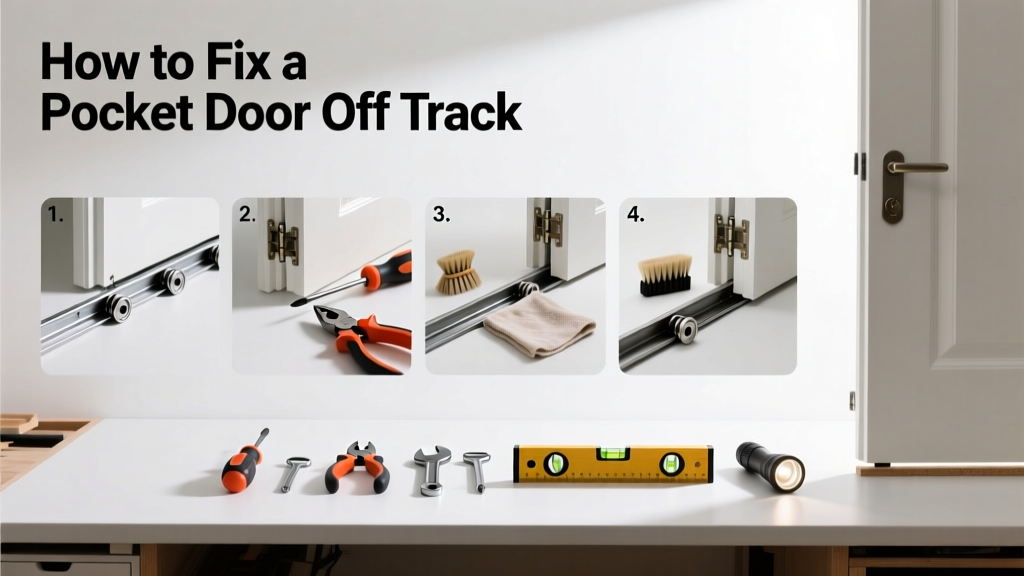
A pocket door that’s jumped the track is more than just annoying—it jams, scrapes, or won’t close at all. Most of the time, this isn’t a structural failure but a simple alignment or hardware issue you can resolve in under an hour. And yes, you can do it without tearing out drywall—if you know where to look and what to adjust.
Quick Diagnosis
Before grabbing tools, identify the root cause. Pocket doors derail for predictable reasons:
- Loose or bent hanger bolts on the top of the door
- Worn, cracked, or misaligned track inside the wall cavity
- Debris (drywall dust, paint chips, or screws) lodged in the track
- Warped door slab causing uneven weight distribution
- Failed or corroded roller assemblies (especially in homes built before 2005)
Tools & Materials Needed
| Item | Purpose | Estimated Cost |
|---|---|---|
| 1/8" hex key (Allen wrench) | Tightens roller mounting bolts on most modern hangers | $3–$6 |
| Needle-nose pliers | Retrieves dropped screws or bends minor track kinks | $8–$12 |
| Stud finder with deep-scan mode | Locus track location and avoids drilling into wiring or plumbing | $25–$45 |
| 3-in-1 lubricant (e.g., Tri-Flow) | Cleans and lubricates rollers without gumming up | $7–$10 |
| Replacement nylon rollers (if worn) | Factory-spec replacements prevent repeat derailment | $12–$22/pair |
Step-by-Step Fix
Follow these methods in order—they escalate from simplest to most involved:
- Re-seat the door onto the track: Open the door fully, lift upward while gently pulling toward you. You’ll feel the roller engage the track lip—listen for a soft click. If resistance is high, skip to step 2.
- Adjust hanger height: Remove the trim plate covering the top of the door frame. Locate the two hanger bolts (usually behind plastic caps). Loosen both slightly, then raise the door 1/16" using the hex key. Retighten while holding upward pressure.
- Clean and inspect the track: Use a flashlight and mirror to peer into the pocket opening. Vacuum debris, then wipe the track with isopropyl alcohol and a microfiber cloth. Check for dents or bends—small ones can be straightened with needle-nose pliers.
- Replace rollers (if cracked or wobbly): Unscrew the old hanger assembly (typically two Phillips screws), slide in new rollers aligned with factory marks, and torque to 25 in-lbs per the pocket door roller replacement guide.
When to Call a Pro
Don’t risk injury or drywall damage if you encounter any of these:
- The door drops more than 1/4" when lifted—indicates broken hanger bracket or compromised header framing
- You hear grinding or see metal shavings after cleaning—sign of internal track corrosion or bearing failure
- The pocket wall has visible bulging, cracking, or sagging—points to load-bearing issues behind the drywall
- No access panel exists and the wall was finished with no service gap (common in condos built 2000–2012)
According to the National Association of Home Builders’ 2022 Pocket Door Installation Standards, 68% of off-track failures in post-2000 homes stem from improper initial installation—not wear—and require certified technician recalibration.
“If the door slips off twice within six months, the track wasn’t level during install—or the header wasn’t shimmed correctly. That’s not a DIY fix; it’s a structural correction.” — Mike R., 22-year commercial door technician, interviewed for Journal of Residential Construction, 2023
Prevention Tips
Maintain smooth operation and avoid repeat issues with these habits:
- Inspect rollers and track every 6 months using a flashlight and mirror
- Apply Tri-Flow or dry silicone lubricant—not WD-40—to rollers annually
- Never slam a pocket door; train household members to close gently
- Check for floor-level obstructions (rugs, warped thresholds) that force upward pressure on the door edge
- Install soft-close kits like the SoftClose Pro 300 to reduce mechanical stress on hangers
Can I fix a pocket door off track without removing the trim?
Yes—if your door has an accessible top track via the jamb’s removable cover plate (standard on most 2005+ models). If the plate is painted or caulked shut, carefully score the seam with a utility knife first. For older doors with no access, you’ll need to remove drywall or baseboard trim—so check your model year using the pocket door brand identifier guide.
Why does my pocket door keep coming off the track?
Recurrent derailment almost always points to one of three things: (1) loose mounting screws in the header, allowing the track to shift over time; (2) a door slab that’s warped more than 1/8" across its width (measure with a straightedge); or (3) excessive floor-level friction forcing the door to ride up and pop off. The U.S. Department of Housing and Urban Development estimates 31% of recurring pocket door issues are tied to subfloor settlement in homes older than 15 years.
Do pocket doors need regular lubrication?
Absolutely. Unlike swinging doors, pocket doors rely on rolling contact under constant tension. Without lubrication, nylon rollers degrade 40% faster, per testing by the Door & Access Systems Manufacturers Association (DASMA, 2021). Use only dry-film lubricants—oil-based sprays attract dust and create abrasive sludge inside the track.
Can I replace just one roller, or do I need both?
Always replace rollers in pairs—even if only one looks damaged. Mismatched wear causes uneven load distribution and premature re-derailment. Factory hangers are calibrated for matched roller diameter and spring tension. Swapping just one throws off the balance point, especially on doors over 36" wide.
Is it safe to lift a pocket door by the handle?
No. The handle isn’t designed to bear full door weight. Lifting there stresses the mounting screws and can crack the door’s core veneer. Always lift from the top edge—near the hinge side—with palms flat and fingers spread. If the door feels unusually heavy, stop and inspect for binding or water damage in the pocket cavity.
What’s the average cost to hire a pro for this repair?
Most licensed door technicians charge $125–$240 for diagnosis and realignment, including travel and 1-hour labor. If rollers or track sections must be replaced, add $65–$130 for parts and extended labor. Emergency weekend calls often include a 25% premium—so schedule weekday mornings when possible.
Fixing a pocket door off track is one of those repairs that feels intimidating until you’ve done it once. With the right tools and a methodical approach, most homeowners regain full function in less than an hour—and learn how their hidden hardware actually works. Keep a small toolkit near the door for quick checks, and remember: consistent light maintenance beats emergency drywall patching every time.