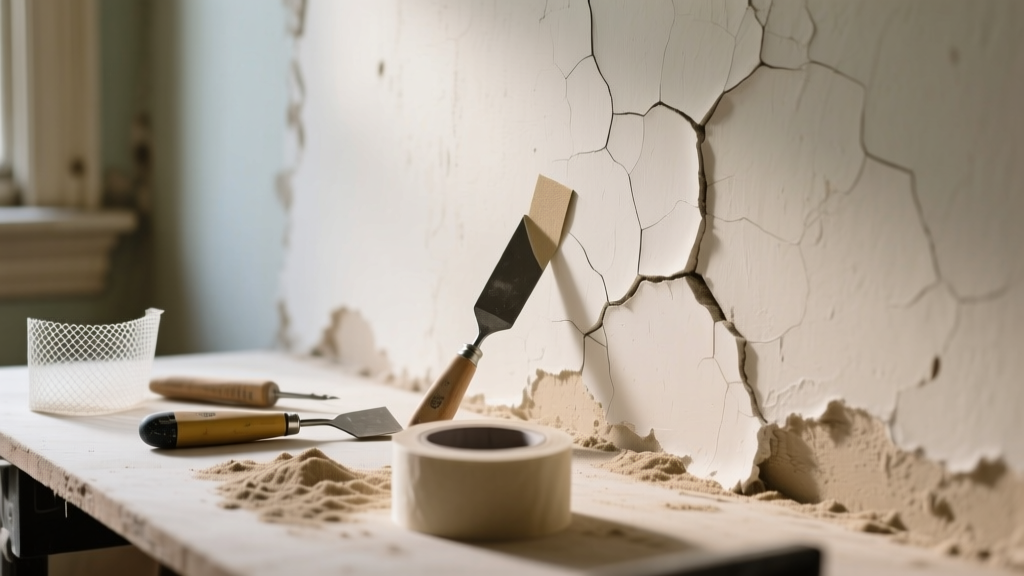
That sharp 'pop' when you walk across the floor—or the low groan behind the living room wall—can’t be ignored. Plaster cracking that makes unusual noise isn’t just cosmetic; it’s often a warning sign of movement, moisture, or aging lath-and-plaster systems. In homes built before 1950, these sounds frequently point to something shifting behind the surface—not just drywall settling.
Quick Diagnosis
Start by ruling out obvious culprits before assuming structural failure. These are the five most common causes of noisy plaster cracks:
- Thermal expansion/contraction of wood lath or framing (especially in attics or exterior walls)
- Moisture intrusion causing plaster to swell and shift against lath
- Loose or failing horsehair or gypsum plaster bonding to wood lath
- Vibration from HVAC ducts, plumbing, or nearby traffic transmitting through framing
- Foundation settlement stressing wall-to-ceiling joints or corner seams
Tools & Materials Needed
| Item | Purpose | Estimated Cost |
|---|---|---|
| Stud finder with deep-scan mode | Locates lath gaps, framing shifts, and voids behind plaster without drilling | $45–$85 |
| Plaster washers & screws (1-1/4" ring shank) | Secures loose plaster to lath without cracking further | $12–$18 |
| Hygrometer + infrared thermometer | Measures humidity gradients and thermal bridging at crack sites | $30–$65 |
| Flexible acrylic-latex patch compound | Stretches with minor movement; avoids re-cracking at repaired joints | $8–$14 |
| Small notched trowel (1/8" notch) | Ensures even adhesive layer under plaster patches | $6–$11 |
Step-by-Step Fix
Address both sound *and* cause—not just appearance. Use these methods in order of severity:
- Sound-dampen first: Apply acoustic caulk (e.g., OSI SC-175) into hairline cracks using a fine-tip nozzle—fill only halfway depth to allow for seasonal movement.
- Re-anchor loose plaster: Drill pilot holes every 6" along the crack’s length, then drive plaster washers until flush. Do *not* overtighten—stop when resistance increases sharply.
- Bridge with mesh tape: Embed fiberglass mesh tape in flexible patch compound over repaired areas, feathering edges 4" beyond crack. Let cure 24 hours before sanding.
- Seal moisture pathways: If hygrometer readings exceed 65% RH near the crack, install a dehumidifier and check for roof leaks or failed flashing within 3 feet of the wall.
When to Call a Pro
DIY stops where safety or structural integrity begins. Call a licensed contractor if you observe any of these:
- Cracks wider than 1/4" that open or close seasonally
- Diagonal cracks running from corners of doors/windows upward toward ceiling
- Crack accompanied by sagging plaster, bulging, or dust falling behind baseboards
- Noise coincides with water running in pipes or furnace cycling on—suggesting load transfer through compromised framing
According to the Insurance Institute for Business & Home Safety's 2023 report, 68% of plaster-related structural failures in pre-1940 homes began as ‘minor noises’ misdiagnosed as harmless settling.
Prevention Tips
Long-term quiet starts with stable conditions. Focus on environmental control—not just patching:
- Maintain indoor relative humidity between 35–55% year-round using a whole-house humidifier/dehumidifier system
- Install vibration-isolation pads under HVAC air handlers and furnace mounts
- Inspect attic ventilation annually—blocked soffit vents raise roof deck temps, stressing upper-floor plaster
- Avoid hanging heavy artwork or shelves directly over known crack zones without checking anchoring into studs
Why does my plaster crack make a tapping sound at night?
Nighttime tapping usually points to thermal contraction: as ambient temps drop after sunset, wood lath shrinks slightly, releasing tension against hardened plaster. This is especially common in north-facing walls with poor insulation. Check for drafts around window jambs—if present, seal with low-expansion window foam and add interior storm panels.
Can I use spackle instead of plaster compound?
No—standard vinyl spackle lacks flexibility and adhesion strength for historic plaster. It will shrink, yellow, and delaminate within months. Use only products labeled “for lath-and-plaster” or “flexible acrylic-latex blend,” like Big Wally’s Plaster Magic or USG All-Purpose Joint Compound mixed with 10% acrylic fortifier.
Is the noise dangerous if there’s no visible crack?
Yes—it can be more concerning. Hidden movement behind intact plaster may indicate lath detachment or stud warping. Tap the wall with a rubber mallet: hollow, drum-like sounds over >12" sections suggest loss of bond. That’s a red flag requiring probe inspection or endoscopic camera review before patching.
How long should I wait before painting over a repaired crack?
Wait at least 72 hours for full cure of flexible compounds in normal humidity (40–60% RH). In basements or high-moisture rooms, extend to 96 hours. Always prime with oil-based or shellac-based primer (e.g., Zinsser B-I-N) before latex paint—this seals the patch and prevents flashing.
Will adding insulation stop the noise?
Not directly—but properly installed dense-pack cellulose or mineral wool in exterior walls reduces temperature swings across the lath, cutting thermal stress by up to 40% (per Building Science Corporation’s 2022 field study). Just avoid spray foam directly against plaster—it traps moisture and accelerates deterioration.
Can foundation settling cause plaster to crack *and* pop?
Absolutely. Even 1/8" of vertical foundation movement can generate enough shear force to break plaster bonds along ceiling-wall junctions. Look for matching stair-step cracks in brick veneer or horizontal cracks in basement block walls. If found, contact a structural engineer—do not attempt cosmetic fixes first.
Noisy plaster isn’t just an annoyance—it’s your home speaking in a language of stress, moisture, and time. Tackle the root cause, not just the symptom, and you’ll buy years of quiet. For deeper issues like uneven floors or door binding, see our guide on foundation settlement signs. And if your home has original horsehair plaster, check out horsehair plaster repair techniques for material-specific best practices.