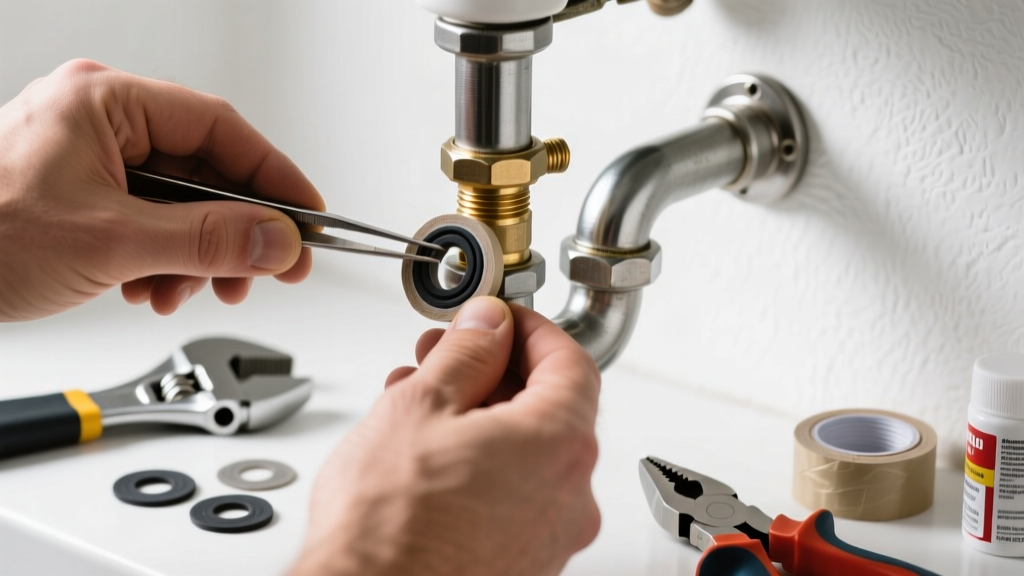
A dripping pipe joint that won’t hold—even after you’ve tightened it, wrapped it with tape, or reapplied sealant—is one of the most frustrating plumbing headaches. It’s not just about the drip; it’s the signal that something deeper is wrong: misalignment, corrosion, or incompatible materials. Ignoring it risks mold growth, warped subflooring, or even a burst pipe under pressure.
Quick Diagnosis
Before grabbing tools, rule out the obvious culprits. Most persistent leaks at joints stem from one (or more) of these:
- Over-tightened compression or flare fittings causing brass deformation or ferrule collapse
- Threaded joints with old, cracked, or improperly applied pipe dope or Teflon tape
- Corroded or pitted threads on galvanized steel or older brass fittings
- Misaligned push-fit or PEX crimp connections—especially if the pipe wasn’t fully seated or the ring was damaged
- Thermal expansion stress in copper lines where anchors are missing or too rigid
Tools & Materials Needed
| Item | Purpose | Estimated Cost |
|---|---|---|
| Adjustable wrench (10-inch) | Provides controlled torque without rounding hex flats or nuts | $12–$25 |
| Thread sealant (RectorSeal #5 or Oatey Great White) | Non-hardening, temperature-stable compound for threaded metal joints | $4–$8 |
| PEX crimp tool & gauge (if applicable) | Ensures proper compression ring placement and verification | $35–$65 |
| Emery cloth (220-grit) | Cleans oxidation and burrs off threads without removing material | $2–$5 |
| Compression sleeve & nut replacement kit | Fresh OEM parts eliminate fatigue-related failure in aging fittings | $6–$14 |
Step-by-Step Fix
Try these methods in order—starting with least invasive and moving toward full replacement:
- Re-seat and re-torque: Shut off water, open nearest faucet to relieve pressure, then loosen the joint completely. Clean threads with emery cloth, reapply fresh thread sealant (not tape), and tighten *only* 1/4 turn past hand-tight—over-torquing cracks brass bodies. Use two wrenches: one to hold the fitting, one to turn the nut.
- Replace the compression ring: For leaky compression joints (common under sinks), the olive or ferrule is often flattened or scored. Slide off the old ring, deburr the pipe end with a file, and install a new, properly sized brass ferrule—never reuse.
- Swap to a push-to-connect fitting: If threading is compromised or you’re working with aged galvanized pipe, cut out the joint and install a SharkBite or similar push-fit coupling. Ensure pipe ends are square, smooth, and free of scratches—these fail fast if debris is trapped.
- Solder a copper sweat joint (if qualified): Only attempt if you own a propane torch, flux, lead-free solder, and have practiced on scrap. Heat the fitting—not the pipe—and feed solder into the joint until it wicks evenly around the circumference. Let cool naturally; no quenching.
When to Call a Pro
DIY crosses into dangerous territory when:
- The leak is behind a wall or ceiling with no access panel—and you suspect hidden corrosion or multiple failed joints
- You’re dealing with cast iron soil stacks, threaded black iron gas lines, or polybutylene piping (banned since 1995 and prone to sudden failure)
- Water pressure exceeds 80 psi (check with a gauge)—high pressure accelerates joint fatigue and voids most DIY repairs
- You smell gas near a suspected gas line joint—evacuate and call your utility immediately
According to the Insurance Institute for Business & Home Safety's 2023 report, 68% of water damage claims linked to plumbing failures involved joints that had been previously 'fixed' with temporary sealants or excessive torque.
Prevention Tips
Stop repeat failures before they start:
- Install water hammer arrestors on washing machine and dishwasher supply lines to reduce shock-induced joint stress
- Use dielectric unions where copper meets galvanized or steel pipe to prevent galvanic corrosion
- Label shut-off valves clearly—and test them quarterly—so you can isolate sections fast during future leaks
- Replace rubber washers and compression rings every 5 years, even if no leak is visible
Can I use duct tape or electrical tape on a leaking pipe joint?
No. These tapes offer zero pressure resistance and degrade rapidly when wet or warm. They may mask a leak briefly but increase risk of catastrophic failure downstream. The U.S. EPA estimates that 14% of household water usage is from undetected leaks—many started as 'temporary' tape fixes.
Why does my PVC joint leak only when the hot water runs?
Thermal expansion stresses poorly glued or unanchored PVC. Hot water softens the cement bond slightly, and if the pipe isn’t secured every 32 inches (per IPC code), movement opens micro-gaps. Re-glue with Schedule 40-rated cement and add a strap hanger near the joint.
Will plumber’s putty stop a leaking threaded joint?
No—it’s designed for low-pressure, non-threaded applications like sink drains and faucet bases. Threaded joints require anaerobic sealants or PTFE tape rated for potable water and pressure (e.g., Gasoila Blue Monster tape for high-temp lines).
How tight is too tight on a compression nut?
If the nut requires more than 1/4 turn past hand-tight with a wrench—or if the pipe rotates instead of the nut—you’ve exceeded safe torque. Brass compression bodies deform permanently beyond 25 ft-lbs, per ASTM F1807 standards.
Can I reuse a PEX crimp ring after removing it?
No. Crimp rings deform plastically during installation. Reusing one creates uneven compression and almost guarantees a slow leak. Always discard and replace with a new ring—costs less than $0.15 each.
Is pipe thread sealant better than Teflon tape for brass fittings?
Yes—for brass-to-brass joints. Tape alone can shred into the threads and restrict flow; sealant fills voids without shedding. RectorSeal #5, tested by NSF International in 2022, maintains integrity up to 10,000 psi and resists vibration fatigue better than tape.
A properly repaired joint shouldn’t just stop dripping—it should last longer than the fixture it serves. If you find yourself re-tightening the same connection twice in six months, it’s not a maintenance issue; it’s a design or material mismatch. Consider upgrading to stainless steel or forged brass components, especially in high-vibration areas like laundry rooms or near sump pumps. And remember: every minute you delay fixing a persistent joint leak adds measurable wear to downstream valves and fixtures—like your shower valve or faucet cartridge. Small joints, big consequences.