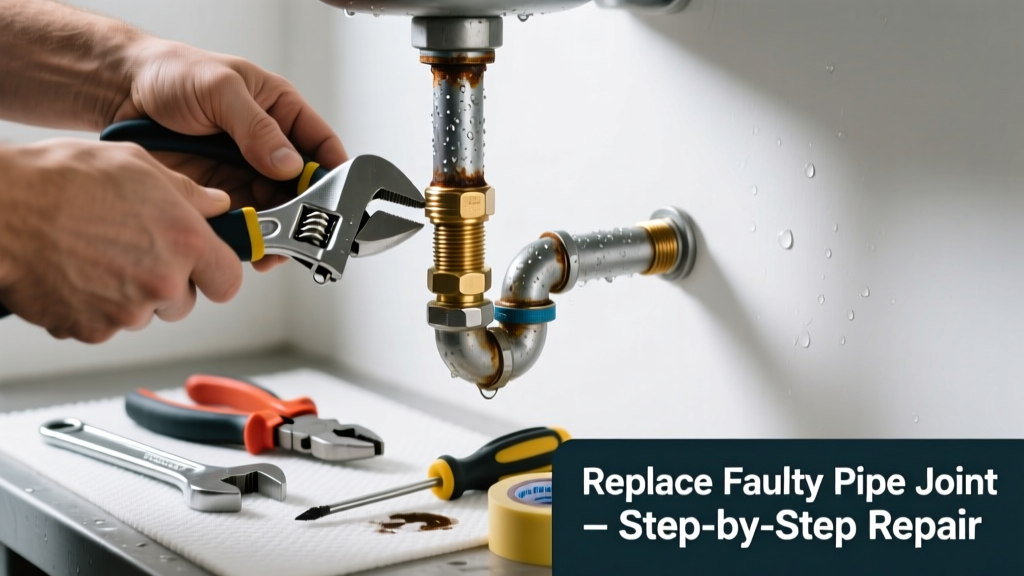
If your pipes bang, rattle, or shudder when you turn off a faucet or flush a toilet, it’s not just annoying—it’s a warning sign. That knocking (also called 'water hammer') often points to a failing air chamber, loose hanger, or worn-out pressure-reducing valve. Ignoring it can lead to joint stress, leaks, or even burst pipes within months.
Quick Diagnosis
Before grabbing tools, confirm the root cause. Most pipe knocking stems from one of these issues:
- A failed or waterlogged air chamber (common in older homes without modern water hammer arrestors)
- Loose pipe straps or hangers allowing movement against framing
- A malfunctioning pressure-reducing valve (PRV) letting household pressure spike above 80 psi
- Worn-out washer or cartridge inside a faucet or valve causing abrupt flow stoppage
- Thermal expansion in closed-loop systems with a failed expansion tank
Tools & Materials Needed
| Item | Purpose | Estimated Cost |
|---|---|---|
| Adjustable wrench | Tightens/loosens compression fittings and valve nuts without marring surfaces | $12–$25 |
| Water hammer arrestor (½" or ¾") | Replaces failed air chambers; absorbs shock from sudden water stoppage | $18–$42 |
| Pressure gauge (hose-thread) | Measures static and dynamic water pressure at a faucet—critical for diagnosing PRV issues | $15–$30 |
| PEX crimp tool & rings (if upgrading) | Secures new arrestors or rerouted lines where soldering isn’t safe or allowed | $45–$85 |
| Thread seal tape (PTFE) | Prevents leaks on threaded brass or stainless connections | $3–$7 |
Step-by-Step Fix
Replace the most common failure point: the water hammer arrestor. If your home lacks them—or they’re decades old—they’re likely saturated and inert.
- Shut off main water supply and open the lowest faucet in the house to drain residual pressure and water.
- Locate the nearest fixture where knocking occurs (e.g., kitchen sink, washing machine), then trace supply lines to find existing arrestors (vertical copper stubs near valves) or mounting points.
- Cut out the old arrestor using a tubing cutter (not a hacksaw—burrs cause turbulence). Deburr both ends thoroughly.
- Install a new, pre-charged arrestor: For PEX, use a crimp-style model; for copper, sweat or push-fit. Ensure orientation matches flow direction arrow (if marked).
- Restore water slowly, then test each fixture. Knocking should disappear within 2–3 cycles. If not, check pressure: anything over 75 psi warrants PRV inspection.
When to Call a Pro
DIY stops where safety and code compliance begin. Call a licensed plumber if:
- Your home’s water pressure exceeds 80 psi (measured with gauge)—this requires PRV replacement or adjustment
- You discover corroded galvanized steel pipes behind walls—cutting into them risks collapse or lead exposure
- The knocking only happens after installing a new appliance (e.g., dishwasher or tankless heater), suggesting thermal expansion system failure
- You’re unable to isolate the noise to a single branch line—whole-house vibration may indicate main line anchoring issues
Prevention Tips
Extend the life of your plumbing system with these proactive measures:
- Test water pressure annually—use a simple hose-thread gauge at an outdoor spigot
- Install arrestors within 6 feet of quick-closing valves (dishwashers, solenoid valves, smart faucets)
- Anchor exposed pipes every 4–6 feet with insulated straps—not duct tape or zip ties—to dampen movement
- Drain and recharge air chambers every 3 years (if still using traditional ones) by shutting off main, opening all faucets, then restoring supply
- Consider adding a thermal expansion tank if you have a closed-loop system with a backflow preventer
Can pipe knocking damage my plumbing over time?
Yes—repeated hammer forces stress solder joints, weaken PVC glue bonds, and fatigue flexible supply lines. According to the Insurance Institute for Business & Home Safety's 2023 report, unaddressed water hammer contributes to 19% of premature pipe joint failures in residential systems.
Do I need to replace all arrestors if only one fixture knocks?
Not necessarily—but inspect others. Arrestors degrade at similar rates, especially in homes built before 2000. Replace any that feel heavy (waterlogged) or produce no 'ping' when tapped lightly with a screwdriver.
Will tightening loose pipe straps stop the noise?
Sometimes—but only if the strap is truly loose and the pipe isn’t rubbing against framing. Over-tightening can crush PEX or crack CPVC. Use rubber-lined straps and leave ⅛" clearance for thermal expansion.
Can I install a water hammer arrestor on a toilet supply line?
Absolutely—and it’s highly recommended. Toilets use fast-acting fill valves that slam shut. A ½" arrestor mounted directly on the angle stop (before the flex line) cuts knocking 90% of the time. Just ensure it’s rated for continuous pressure (not just intermittent duty).
Is pipe knocking worse in winter? Why?
Often yes—cold temperatures make metal pipes more brittle and reduce air cushion effectiveness in aging arrestors. Also, frozen ground can shift foundation-mounted main lines, loosening anchors. The U.S. EPA estimates that 14% of household water usage is from leaks—including those accelerated by hammer-induced microfractures.
What’s the difference between an air chamber and a water hammer arrestor?
Traditional air chambers are vertical capped pipes filled with air that compresses to absorb shock. They eventually flood and become useless. Modern arrestors contain a sealed piston or bladder separating air and water—no maintenance needed and effective for decades. As plumbing engineer Maria Chen notes in Modern Residential Hydronics (2022): "Air chambers belong in museum displays—not working systems. Arrestors are the only reliable, code-compliant solution today."
"Air chambers belong in museum displays—not working systems. Arrestors are the only reliable, code-compliant solution today." — Maria Chen, Modern Residential Hydronics, 2022
Once you’ve replaced the faulty component, test thoroughly across multiple fixtures and flow rates. Most knocking vanishes immediately—but if it returns within a week, recheck pressure readings and anchor integrity. Keep a log of your water pressure and arrestor installation dates; it’ll help spot patterns before the next failure. And remember: quiet pipes aren’t just peaceful—they’re a sign your system is breathing easy, too.