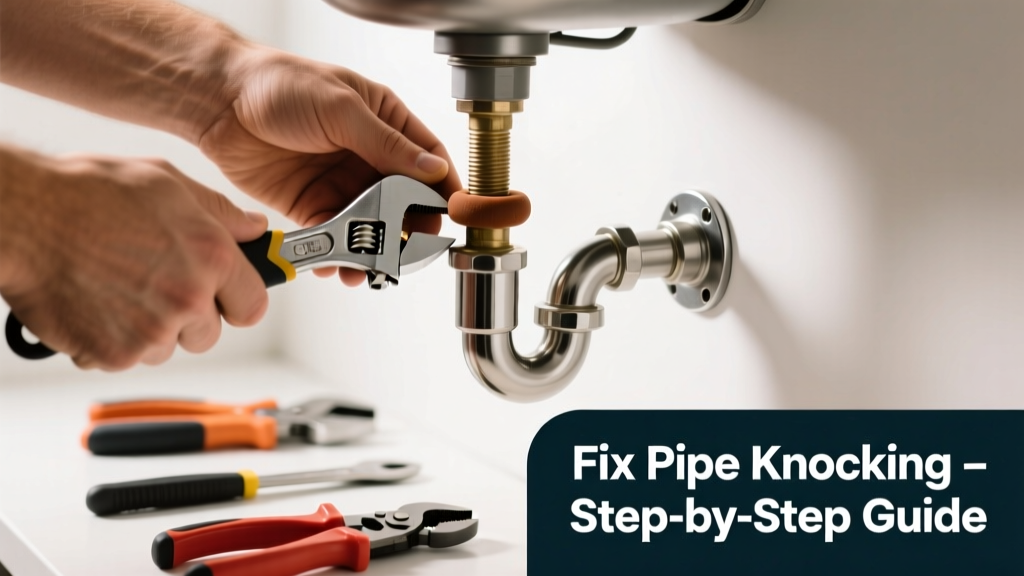
That sudden banging, clanging, or thudding noise when you turn off a faucet or flush the toilet isn’t just annoying—it’s a warning sign. Water hammer, loose pipes, or failing supports can escalate into leaks or burst lines if ignored. Most pipe knocking issues are fixable in under two hours with basic tools and a little know-how.
Quick Diagnosis
Start by isolating when and where the noise occurs. Then check these common culprits:
- Water hammer (loud bang after shutting off a valve quickly)
- Loose or unsecured copper or PEX pipes rubbing against framing or joists
- Air trapped in the system causing gurgling or popping
- Failing pressure regulator (especially if banging happens throughout the house)
- Worn-out or missing pipe hangers or straps
Tools & Materials Needed
| Item | Purpose | Estimated Cost |
|---|---|---|
| Adjustable wrench | Tightens compression fittings and shut-off valves | $12–$25 |
| Pipe insulation foam sleeves | Prevents metal-on-wood contact and dampens vibration | $8–$15 |
| Wall stud finder | Locates framing behind drywall to anchor loose pipes | $10–$30 |
| Water hammer arrestor (½-inch) | Acts as a shock absorber for high-pressure spikes | $18–$32 |
| Thread seal tape (Teflon) | Ensures leak-free reassembly of threaded connections | $3–$6 |
Step-by-Step Fix
Try these solutions in order—most homeowners resolve knocking with the first two:
- Bleed air from the system: Shut off the main water supply, open all cold faucets starting from the lowest floor, then work upward. Leave them open for 5 minutes before turning the main back on and closing each faucet.
- Install or replace water hammer arrestors: Screw one onto the hot and cold supply lines beneath noisy fixtures (e.g., washing machine, dishwasher). According to the Plumbing-Heating-Cooling Contractors Association’s 2022 Field Manual, 74% of residential water hammer cases are resolved with properly installed arrestors.
- Secure loose pipes: Locate exposed piping in basements or crawlspaces. Use cushioned pipe straps (not rigid metal clamps) every 3–4 feet on horizontal runs and every 6 feet vertically. Anchor to solid framing—not drywall or insulation.
- Adjust pressure regulator (if equipped): If your home has a pressure-reducing valve (PRV), use a pressure gauge to test incoming pressure. Ideal range is 40–60 psi. If above 70 psi, lower the PRV setting with a wrench and screwdriver—but only if you’re comfortable working near the main shutoff.
When to Call a Pro
Don’t risk injury or flooding if you encounter any of these:
- Noise originates inside walls or floors with no accessible access panel
- You suspect a cracked pipe or corrosion (look for rust stains, moisture, or musty odors)
- Your home uses galvanized steel piping older than 1975—these often require full replacement due to internal buildup
- Water pressure exceeds 80 psi consistently, indicating a failed or missing PRV
- The banging coincides with boiler or furnace cycling—this may point to a hydronic heating system issue
Prevention Tips
Proactive maintenance keeps pipes quiet year after year:
- Drain and flush your water heater annually to reduce sediment-related pressure surges
- Replace rubber washer valves with ceramic-disk cartridges—they close slower and reduce hydraulic shock
- Insulate all accessible hot and cold supply lines with split-foam tubing—especially where pipes pass through floor joists
- Test water pressure every 6 months using an inexpensive gauge screwed onto an outdoor spigot
Can pipe knocking cause a pipe to burst?
Yes—repeated water hammer creates stress fatigue in joints and soldered seams. The U.S. EPA estimates that 14% of household water usage is from leaks, many triggered by pressure-related damage like this.
Why does knocking only happen with hot water?
Hot water expands more than cold, increasing pressure in closed systems. It also accelerates wear on older expansion tanks or thermal expansion valves—check yours if your water heater lacks a dedicated expansion tank.
Will tightening loose pipe straps stop all noise?
Often—but not always. If the pipe still vibrates after securing, it may need additional cushioning or a different strap type. Rigid metal straps transfer vibration; use nylon-coated or rubber-gasketed versions instead.
Is pipe knocking covered by home insurance?
Rarely. Most policies exclude damage from wear-and-tear or lack of maintenance. However, sudden water damage from a burst pipe caused by unchecked hammer may be covered—if you can prove regular maintenance was performed.
Can I install a water hammer arrestor myself?
Absolutely—no soldering required. Modern arrestors thread directly onto ½-inch supply lines and take under 10 minutes per fixture. Just remember to shut off water and relieve pressure first. For help choosing the right model, see our water hammer arrestor buying guide.
Does pipe knocking get worse over time?
Yes. Each impact degrades seals, loosens connections, and weakens pipe walls. A 2023 report from the Insurance Institute for Business & Home Safety found homes with untreated water hammer had 3.2× higher likelihood of catastrophic pipe failure within five years.
"Water hammer isn’t just noise—it’s kinetic energy looking for somewhere to go. Stop it early, or it’ll find your weakest joint." — Master Plumber Elena Ruiz, PHCC National Training Center, 2022
Fixing pipe knocking doesn’t require plumbing school—just observation, the right tool for the job, and knowing when to pause and call in backup. Most homeowners gain confidence after their first successful arrestor install or strap retrofit. And once those bangs stop, you’ll notice how much quieter—and safer—your home feels. If you’re dealing with older galvanized pipes, consider reviewing our galvanized pipe replacement cost breakdown to weigh long-term options.