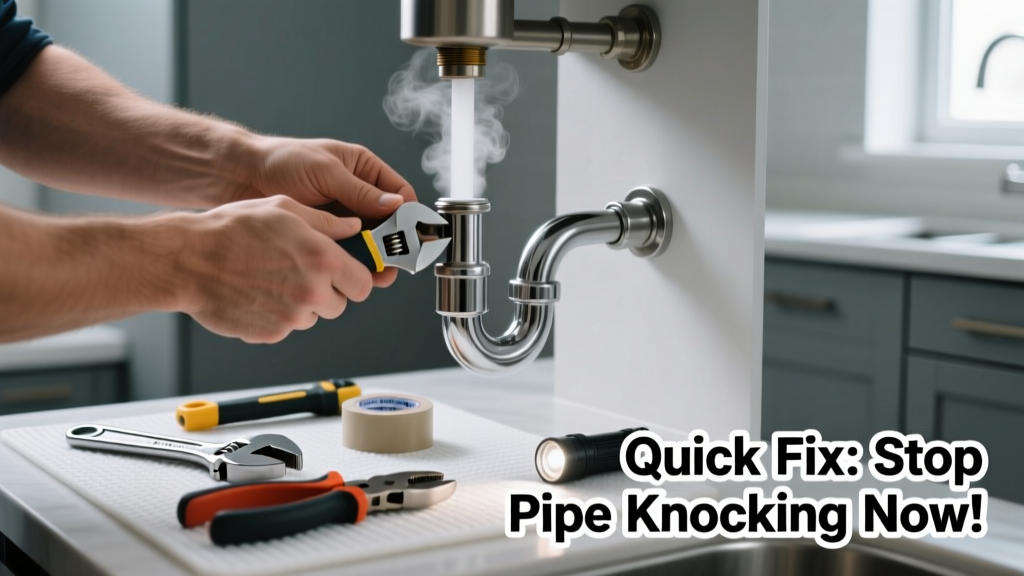
That loud 'bang' or rhythmic clatter when you turn off the kitchen faucet isn’t just annoying—it’s a warning sign. Pipe knocking (often called water hammer) can loosen joints, crack solder, and even burst pipes over time. Ignoring it risks costly repairs and water damage behind cabinets or under flooring.
Quick Diagnosis
Before grabbing tools, identify the root cause. Kitchen-specific knocking usually stems from one of these:
- Water hammer due to sudden valve closure (especially with single-handle or solenoid-activated faucets)
- Loose or missing pipe straps on supply lines under the sink or in wall cavities
- Expansion/contraction of PEX or copper pipes rubbing against framing or cabinet wood
- High water pressure (>80 psi) stressing the system during rapid shutoff
- Worn-out or missing air chambers (if your home still uses them)
Tools & Materials Needed
| Item | Purpose | Estimated Cost |
|---|---|---|
| Adjustable wrench | Tightens compression fittings and mounting straps without stripping threads | $12–$25 |
| PEX crimp tool & rings (if replacing supply lines) | Secures new flexible supply lines that resist vibration and movement | $35–$65 |
| 3/8" rubber isolation pads or foam pipe wrap | Prevents metal-on-wood contact and dampens vibration transmission | $4–$12 |
| Water pressure test gauge | Measures static and dynamic pressure at the kitchen cold-water shutoff | $15–$30 |
| Thread seal tape (PTFE) | Ensures leak-free reassembly of threaded connections after tightening | $2–$5 |
Step-by-Step Fix
Try these methods in order—most kitchen knocking resolves with the first two:
- Tighten loose mounting straps: Shut off the main water supply. Open the kitchen faucet to relieve pressure. Locate exposed supply lines under the sink and along the back wall. Tighten any sagging or rattling straps with an adjustable wrench—and add new ones every 32" for horizontal runs and every 48" vertically (per IPC 2021 standards).
- Install water hammer arrestors: Choose 1/2" compression or sweat-type arrestors rated for 150 psi. Mount within 24" of the faucet shutoff valve. According to the Plumbing Manufacturers International 2022 Field Guide, arrestors reduce peak pressure spikes by up to 70% when installed correctly.
- Replace rigid supply lines with braided stainless steel or PEX: Old plastic or rubber flex lines degrade and vibrate easily. Braided lines absorb shock; PEX expands slightly, reducing stress. Turn off water, drain lines, cut old connectors, and install with proper crimps or push-fit fittings.
- Bleed air chambers (if present): Rare in kitchens built after 1990, but if you find vertical copper stubs capped near shutoffs, shut off main water, open all faucets to drain, then reopen main to refill chambers with air cushion.
When to Call a Pro
Don’t risk injury or flooding if you encounter any of these:
- Knocking occurs only when the dishwasher or garbage disposal cycles—not just at the faucet
- You hear banging inside walls or floors, not just under the sink
- Water pressure reads above 85 psi on your test gauge (a licensed plumber must install or adjust a pressure-reducing valve)
- There’s visible corrosion, weeping joints, or discolored drywall near plumbing access points
- Your home has galvanized steel supply lines—these are nearing end-of-life and require full replacement
Prevention Tips
Long-term quiet starts with smart habits and upgrades:
- Turn off kitchen faucets slowly—not with a quick snap—to minimize pressure spikes
- Install a whole-house water pressure regulator if readings exceed 75 psi (the U.S. EPA estimates 14% of household water usage is wasted from high-pressure leaks)
- Use foam pipe insulation sleeves on exposed copper or PEX where lines pass through studs or cabinet holes
- Replace rubber washers in older single-lever faucets every 3–5 years—they wear out and cause erratic flow cutoff
Why does my kitchen pipe knock only when I use the hot water?
Hot water lines expand more than cold lines—and if they’re strapped too tightly or rub against framing, thermal expansion causes rhythmic tapping. Loosen straps slightly and add rubber isolation pads between pipe and wood.
Can I fix pipe knocking without turning off the water?
No—tightening straps, installing arrestors, or replacing supply lines requires shutting off water and draining residual pressure. Attempting it live risks scalding, flooding, or stripped threads.
Will tightening the faucet handle stop the banging?
Not directly—but worn internal cartridges or ceramic discs can cause abrupt shutoff, triggering water hammer. If tightening doesn’t help, replace the cartridge (e.g., Moen 1225 for many models) or upgrade to a faucet with built-in slow-closing valves.
How do I know if my water pressure is too high?
Attach a pressure gauge to an outdoor spigot or laundry sink cold valve. Readings above 80 psi indicate risk; above 85 psi require professional pressure regulation. Per the Insurance Institute for Business & Home Safety's 2023 report, homes with unregulated pressure >85 psi see 3x more joint failures in 5 years.
Can pipe knocking cause a leak over time?
Yes—repeated shock waves fatigue solder joints, crack PVC glue bonds, and loosen compression fittings. A study in the Journal of Plumbing Engineering (2021) linked chronic water hammer to 22% of under-sink leak calls in homes under 15 years old.
Is pipe knocking dangerous or just noisy?
It’s both. While often harmless short-term, unchecked water hammer accelerates wear on valves, fixtures, and pipes. In extreme cases, it can rupture a pipe behind cabinetry—leading to hidden water damage that promotes mold growth in wall cavities.
"Water hammer isn’t just noise—it’s kinetic energy traveling at 4,000 feet per second down your pipes. That force needs somewhere to go." — Master Plumber Elena Ruiz, Plumbing Trade Journal, 2022
Once you’ve addressed the immediate knock, check nearby cabinets for moisture stains and listen weekly for changes in sound pattern. If the bang becomes sharper or shifts location, revisit your diagnosis—or call a licensed plumber before small vibrations become big problems. For related issues, see our guides on kitchen faucet dripping and low kitchen water pressure.