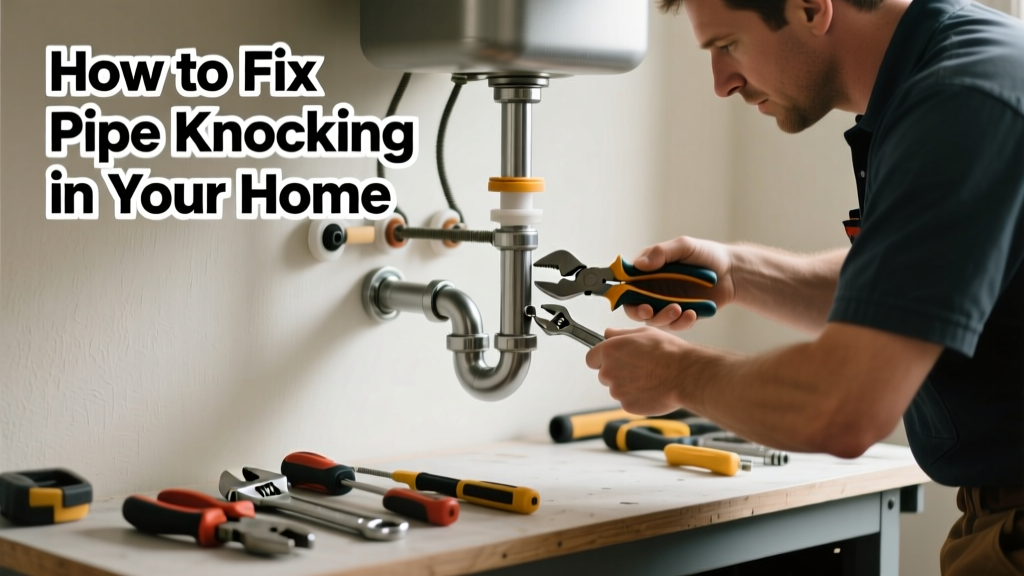
That loud banging or knocking sound when you turn off a faucet? It’s not your pipes screaming—it’s water hammer or loose supports. Left unaddressed, it can crack fittings, damage valves, or even burst pipes over time.
Quick Diagnosis
Pipe knocking rarely has just one cause. Start here to narrow it down:
- Water hammer: Sharp, single bang right after shutting off a valve (especially washing machines or dishwashers)
- Loose pipe clamps or straps: Rattling or rhythmic thumping during water flow
- Thermal expansion: Metallic groaning or ticking as hot water heats copper pipes
- High water pressure (>80 psi): Causes aggressive hammer and vibration across multiple fixtures
- Worn or missing air chambers: Older homes often have failed vertical air cushions behind walls
Tools & Materials Needed
| Item | Purpose | Estimated Cost |
|---|---|---|
| Adjustable wrench | Tightens loose mounting straps and compression nuts | $12–$25 |
| Pipe insulation foam sleeves | Dampens vibration and reduces thermal noise | $8–$15 per 6-ft roll |
| Water pressure gauge | Measures static pressure at an outdoor spigot or laundry valve | $10–$22 |
| Water hammer arrestor (¼" or ¾") | Installs inline to absorb shock from sudden flow stops | $18–$45 |
| Stud finder with metal detection | Locates hidden pipe anchors and wall framing for secure re-mounting | $25–$60 |
Step-by-Step Fix
Try these methods in order—most knocking issues resolve with the first two:
- Check and tighten pipe supports: Locate exposed pipes in basements, crawlspaces, or utility closets. Use your stud finder to trace where pipes contact framing. Tighten loose straps with a wrench; replace corroded or broken ones with nylon-reinforced pipe hangers ($3–$7 each).
- Install or recharge air chambers: Shut off main water, open highest and lowest faucets to drain system. Then reopen main valve slowly—this refills vertical air chambers behind walls. If banging persists, install a new arrestor on the supply line to noisy fixtures (e.g., washing machine inlet).
- Reduce water pressure: Attach a pressure gauge to an outdoor spigot. If reading exceeds 75 psi, install a pressure-reducing valve (PRV) near the main shutoff. The U.S. EPA estimates that 14% of household water usage is from leaks caused by excessive pressure-related stress.
- Add insulation and cushioning: Wrap copper or PEX pipes with closed-cell foam sleeves where they contact joists or studs. Use rubber grommets when drilling holes through framing—never let bare metal rub wood.
When to Call a Pro
DIY stops where safety and code compliance begin:
- You hear knocking only behind finished walls—and can’t access the area without cutting drywall
- Your home has galvanized steel pipes installed before 1970 (risk of lead solder or crumbling interior scale)
- Pressure tests show >100 psi or fluctuating readings (indicates failing PRV or municipal supply issue)
- Knocking coincides with a new water heater installation—likely improper expansion tank sizing or placement
- You’re uncomfortable soldering copper or installing press-fit fittings under pressure
Prevention Tips
Long-term quiet starts with smart habits and upgrades:
- Install water hammer arrestors on all quick-closing appliances (dishwashers, ice makers, solenoid-valve toilets)
- Set water heater temperature to 120°F—reduces thermal expansion stress on pipes
- Flush air chambers every 12–18 months (drain entire system as described above)
- Replace old gate valves with quarter-turn ball valves—they close slower and reduce shock
- Use PEX-A with expansion fittings instead of crimp rings in new runs—less rigid, more forgiving to movement
"In homes with water pressure above 80 psi, water hammer incidents increase by 300% compared to those at 50–60 psi," says the Insurance Institute for Business & Home Safety's 2023 Residential Plumbing Risk Report.
Can pipe knocking damage my plumbing over time?
Yes—repeated hammer force fatigues solder joints, cracks ceramic valve seats, and loosens compression fittings. A 2022 ASSE International study found that unchecked water hammer contributed to 22% of premature shut-off valve failures in residential retrofits.
Why does knocking happen only with hot water?
Hot water expands copper and CPVC pipes, causing them to shift slightly inside wall cavities. When they contact framing or other pipes, the resulting 'tick-tick-tick' is thermal expansion noise—not hammer. Insulating hot lines and adding slip joints helps.
Will tightening the water heater’s temperature and pressure relief valve stop the banging?
No—the T&P valve releases excess pressure but doesn’t regulate flow dynamics. If knocking occurs only after heating cycles, check your expansion tank’s air charge (should be 2–5 psi below your home’s water pressure) or replace it if waterlogged.
Can I install a water hammer arrestor myself on a washing machine?
Absolutely—most models screw directly onto the cold/hot supply hoses using standard ¾" FIP threads. Turn off water, disconnect hose, thread on arrestor, then reconnect. Test by running a full spin cycle. For best results, pair it with a washing machine leak repair kit to prevent future drips.
Do plastic pipes like PVC or PEX knock less than copper?
PEX does—its flexibility absorbs vibration and thermal movement better than rigid copper or PVC. But poorly secured PEX still rattles. Always use manufacturer-approved clamps spaced no more than 32" apart horizontally and 48" vertically.
Is pipe knocking covered by home insurance?
Rarely. Most policies exclude wear-and-tear or maintenance-related damage. However, if hammer causes a sudden pipe burst that floods flooring, the resulting water damage may be covered—provided you can prove you weren’t ignoring repeated banging for months. Document repairs with photos and receipts, and consider adding a plumbing inspection checklist to your annual home maintenance routine.
Fixing pipe knocking isn’t about silencing noise—it’s about protecting your home’s circulatory system. A few hours with a wrench and pressure gauge today prevents thousands in repair bills tomorrow. And if you hear that bang return after three weeks? Go back to step one—you likely missed a strap behind the furnace or under the kitchen sink.