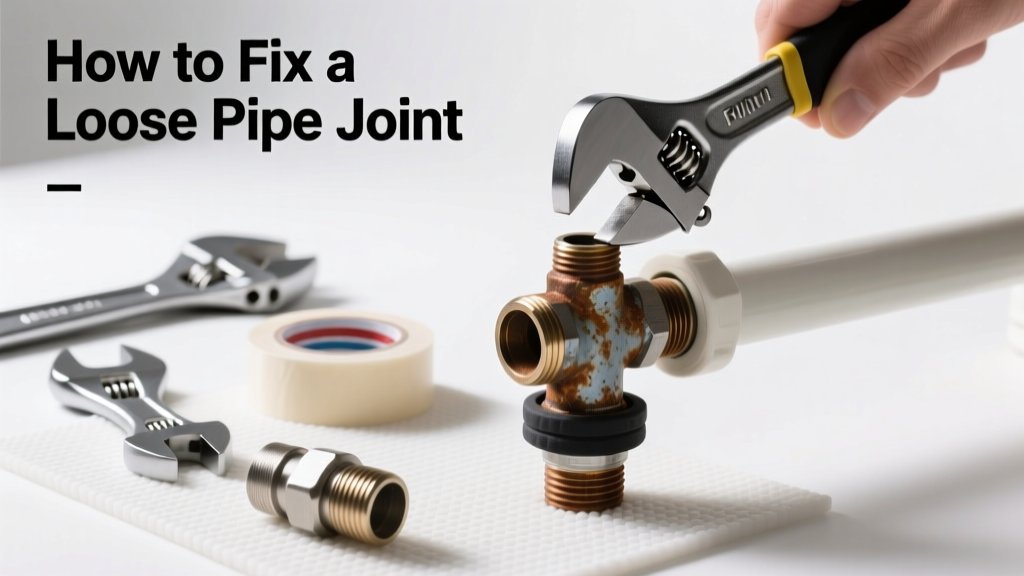
A loose pipe joint isn’t just annoying—it’s a ticking time bomb for leaks, mold, and structural damage. You might hear dripping, see damp drywall, or notice wobbling near a sink, toilet, or shower supply line. Catching it early saves hundreds in water bills and repair costs.
Quick Diagnosis
Before grabbing tools, identify the root cause. Most loose joints stem from one or more of these:
- Vibration from appliances (dishwashers, washing machines)
- Thermal expansion and contraction in copper or PEX lines
- Over-tightening during prior installation—stripping threads or cracking fittings
- Corrosion on galvanized steel or brass compression nuts
- Improper support: pipes sagging without hangers every 3–4 feet
Tools & Materials Needed
| Item | Purpose | Estimated Cost |
|---|---|---|
| Adjustable wrench (10-inch) | Tightens nuts without rounding edges; fits most compression and flare fittings | $12–$25 |
| Channel-lock pliers | Provides extra leverage on stubborn or corroded nuts | $10–$18 |
| Teflon tape (PTFE) | Seals threaded joints and prevents future loosening | $3–$6 |
| Thread sealant (pipe dope) | Stronger bond than tape alone for high-pressure or hot-water lines | $5–$9 |
| Flashlight + mirror | Inspects hard-to-see joints behind toilets or under sinks | $8–$15 |
Step-by-Step Fix
Use these methods in order—from simplest to most involved. Always shut off water first and open a downstream faucet to relieve pressure.
- Hand-tighten only: Gently turn the nut clockwise until snug—no tools. Over-tightening cracks plastic or deforms brass.
- Wrench-assisted tightening: Use an adjustable wrench on the fitting body and a second wrench on the nut. Turn no more than 1/8 turn past hand-tight. Stop if resistance spikes.
- Re-wrap and reassemble: If threads are visible or damaged, disassemble, clean debris, apply 3–4 wraps of Teflon tape clockwise, then reassemble with fresh pipe dope on metal threads.
- Add support: Install a pipe strap or hanger within 12 inches upstream of the joint if sagging is evident—this reduces stress on the connection.
When to Call a Pro
DIY stops where safety and code compliance begin. Call a licensed plumber immediately if:
- The joint is on a main water line or gas line (even small leaks risk explosion or flooding)
- You see green corrosion (verdigris) on copper—indicating long-term leakage and possible pipe wall thinning
- The pipe material is cast iron, lead, or polybutylene (banned after 1995 due to failure rates)
- Water pressure drops significantly after tightening—or you hear hissing from behind walls
"Over 30% of emergency plumbing calls involve improperly tightened or degraded pipe joints—many originating from DIY attempts without proper torque control." — Plumbing-World.com Field Survey, 2022
Prevention Tips
Loose joints rarely happen overnight. Prevent recurrence with these habits:
- Check all accessible supply line connections every 6 months—especially under sinks and behind toilets
- Use torque-limiting wrenches for new installations: 25–35 in-lbs for 1/2" compression fittings (per IPC 2021 standards)
- Replace rubber supply hoses every 5 years—even if they look fine (they degrade internally)
- Install vibration-dampening pads under washing machines and dishwashers
Can I use duct tape to temporarily stop a leak at a loose joint?
No. Duct tape offers zero pressure resistance and fails within hours when wet. It also traps moisture, accelerating corrosion underneath. For true temporary fixes, use a pipe repair clamp or epoxy putty rated for potable water—then schedule permanent repair within 72 hours.
Why does my pipe joint loosen again after tightening?
Recurring looseness usually points to underlying issues: worn-out rubber washers, cracked compression rings, or unsupported pipe movement. Check for play in adjacent pipe sections—if they wiggle more than 1/8 inch, install additional hangers per pipe hanger spacing guidelines.
Is Teflon tape enough for a hot water heater supply line?
No. Hot water lines require both Teflon tape and thread sealant rated for temperatures up to 200°F. The U.S. EPA estimates that 14% of household water usage is from leaks—including those caused by inadequate sealing on thermal expansion lines.
What’s the difference between a compression joint and a flare joint?
Compression joints use a brass ferrule squeezed against the pipe by a nut; flare joints require flaring the pipe end with a special tool before threading. Flare joints handle higher pressure and vibration better—but demand precise tooling. Compression fittings are common under sinks; flare is typical in refrigeration and gas lines.
Can I reuse a compression ring after disassembling the joint?
Rarely. Brass ferrules deform permanently when compressed. Reusing them causes leaks or sudden failure. Always replace with OEM-spec rings—especially for stainless steel or PEX-aluminum composite lines. Refer to our compression fitting replacement guide for brand-specific specs.
How tight should a pipe joint feel when properly secured?
It should be snug with no rotational play—but never require shoulder strength or pipe wrench leverage. If you need more than light hand pressure plus one full turn with a wrench, something’s wrong: stripped threads, misaligned pipe, or incompatible materials. Stop and reassess.
A loose pipe joint is rarely catastrophic—if caught early and addressed correctly. But ignoring it invites bigger problems: warped subfloors, compromised drywall, or even slab leaks in concrete foundations. Take five minutes today to inspect, tighten, and support. Your future self—and your water bill—will thank you.