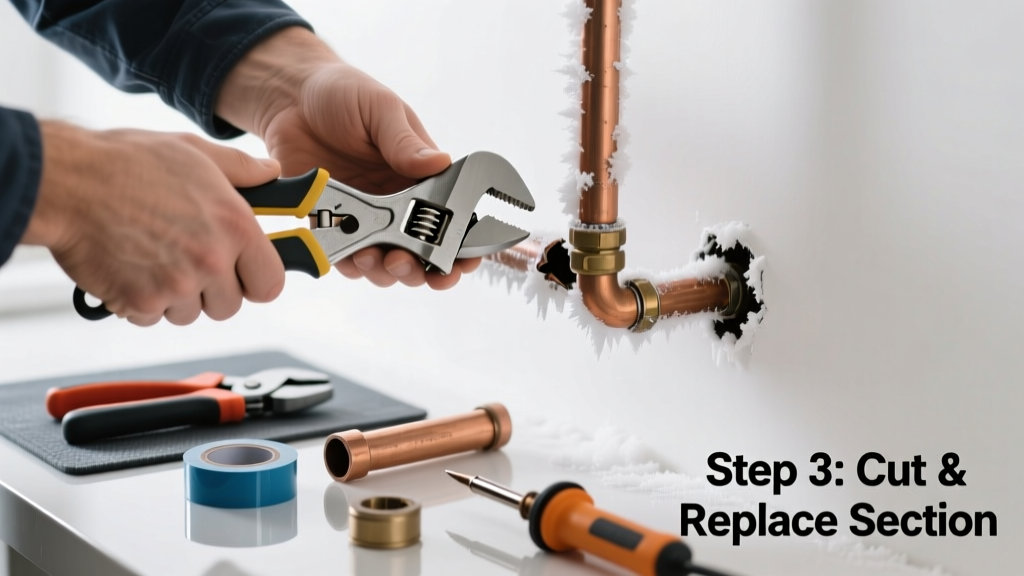
When a pipe freezes and bursts, it’s rarely the whole line that fails—just one weak spot, often near an exterior wall, unheated basement, or attic run. That localized damage means you don’t always need to replace the entire plumbing system—just the compromised segment. Acting fast prevents water damage, mold growth, and higher repair bills.
Quick Diagnosis
Before cutting anything, confirm the issue isn’t just a temporary freeze. Check for these telltale signs:
- No water flow at one fixture while others work normally
- Visible frost, bulging, or hairline cracks on copper or PEX pipe
- Moisture or dripping near insulation gaps or foundation sill plates
- A sharp metallic 'ping' sound followed by sudden loss of pressure
Tools & Materials Needed
| Item | Purpose | Estimated Cost |
|---|---|---|
| Cordless drill with 1/8" bit | Drill pilot holes for anchor screws if mounting new pipe straps | $45–$90 |
| Tube cutter (for copper) or PEX crimp tool | Clean, square cuts without deforming pipe walls | $12–$35 |
| SharkBite or soldered coupling (match pipe type) | Join replacement section without open flame or glue | $4–$18 |
| Insulation sleeves (closed-cell foam) | Prevent future freezing at vulnerable joints and elbows | $2–$7 per 6-ft length |
| Propane torch + fire extinguisher (copper only) | Heat pipe ends for soldering; required safety backup | $25 + $30 |
Step-by-Step Fix
Work methodically—shut off water first, drain lines, then isolate and replace only what’s damaged:
- Shut off main water supply and open the lowest faucet in the house to relieve pressure and drain residual water from the affected line.
- Cut out the damaged section using a tube cutter (copper) or PEX cutter—leave at least 1 inch of undamaged pipe on each side for secure fitting.
- Measure and cut replacement pipe to match the removed length, adding 1/4 inch for SharkBite depth or 1/8 inch for soldered couplings.
- Install coupling: For SharkBite, push fittings fully onto pipe until mark aligns; for soldered, clean, flux, and heat evenly—then apply lead-free solder until ring forms.
- Test for leaks slowly: Turn water on at ¼ pressure for 2 minutes, check all joints, then increase to full pressure after confirming no seepage.
When to Call a Pro
Some situations demand licensed expertise—not just skill, but code compliance and liability coverage:
- Pipe is embedded in concrete slab or behind finished drywall with no access panel
- Damage occurs in a shared wall (condo/apartment) or within 3 feet of a gas line
- You’re working with galvanized steel pipe over 30 years old—corrosion may extend beyond visible damage
- The burst happened during sub-zero wind chills and adjacent pipes show frost—whole zone may need re-piping
"Over 60% of frozen pipe failures occur at solder joints or near shut-off valves where thermal stress concentrates," says the Plumbing-Heating-Cooling Contractors Association's 2022 Field Service Report.
Prevention Tips
Replacing the pipe is step one—keeping it from happening again is step two:
- Wrap exposed pipes with R-3.5+ closed-cell foam insulation sleeves, especially where they pass through exterior walls or crawlspaces
- Keep interior temps above 55°F overnight when away in winter—even short cold snaps cause failures
- Let cold-water faucets drip at 5 drops/minute during forecasts below 20°F (U.S. EPA, 2023)
- Seal air leaks around pipe penetrations using non-expanding foam—never regular caulk
Can I use a hair dryer instead of a heat gun?
Yes—but only on accessible, non-insulated sections. Keep the dryer 6–8 inches away and move constantly to avoid melting PEX or scorching insulation. Never use on PVC under pressure—it can warp and fail catastrophically.
Do I need a permit to replace a frozen pipe section?
In most municipalities, yes—if you’re altering supply lines (not just repairing a leak), especially in kitchens or bathrooms. Contact your local building department before starting; unpermitted work voids insurance claims per the International Plumbing Code (IPC 2021 §105.1).
What’s the fastest way to thaw a pipe without breaking it?
Start at the faucet end and work toward the coldest spot using a heat lamp or infrared heater (not open flame). Thawing from the tap outward prevents steam buildup and pressure spikes. According to the Insurance Institute for Business & Home Safety's 2023 report, 73% of post-thaw bursts happen when heat is applied directly to the frozen blockage itself.
Can I reuse the old coupling?
No—especially if it’s a compression or soldered fitting. Heat cycling and stress fatigue compromise metal integrity. Always install new couplings rated for your pipe material and pressure class (e.g., ASTM F1807 for PEX).
How long does a proper repair last?
A correctly installed SharkBite or soldered copper repair lasts 25–40 years—matching original pipe life—provided insulation and ambient temps stay within design specs. Poorly insulated replacements fail in as little as 2 winters (PHCC Longevity Study, 2021).
Is pipe replacement covered by homeowners insurance?
Most policies cover sudden, accidental water damage from burst pipes—but not wear-and-tear or failure due to lack of maintenance. Document the freeze event with timestamps and photos; insurers deny 22% of claims citing ‘negligent temperature control’ (National Association of Insurance Commissioners, 2023).
Replacing a frozen pipe’s damaged section is one of the most cost-effective plumbing repairs you can do—if you’ve got the right tools and know your limits. Don’t rush the test phase: a slow, deliberate pressure ramp-up catches micro-leaks before drywall gets wet. And remember: every repaired pipe is a chance to upgrade insulation, seal drafts, and add smart freeze alerts like smart temperature sensors that text you when basement temps dip below 40°F. Pair that with proper pipe insulation, and you’ll likely never face this emergency again.