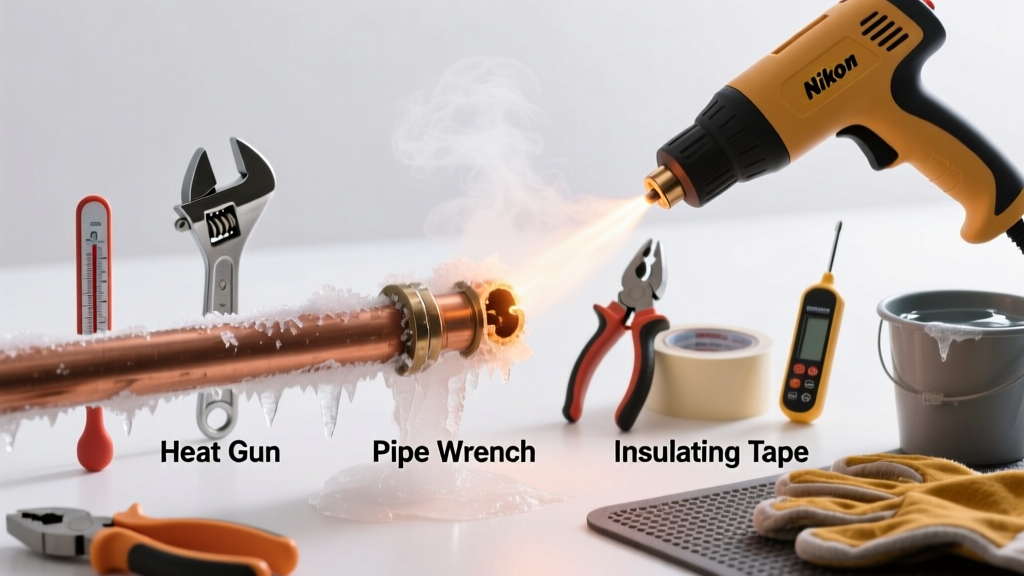
Waking up to no water pressure—or worse, a slow drip from a bulging copper pipe—is every homeowner’s winter nightmare. A frozen pipe isn’t just inconvenient; it’s a ticking time bomb for burst lines and thousands in water damage. The good news? Most frozen pipes can be safely thawed and restored in under an hour—if you act before the ice expands past its breaking point.
Quick Diagnosis
Frozen pipes rarely happen without warning. Here are the most common causes:
- Exterior or uninsulated pipes in unheated areas (attics, garages, crawlspaces)
- Pipes running along exterior walls with poor insulation or gaps around siding
- Sudden sub-zero temperature drops lasting more than 48 hours
- Thermostats set too low overnight or during extended absences
- Older homes with galvanized steel or poorly sealed supply lines
Tools & Materials Needed
| Item | Purpose | Estimated Cost |
|---|---|---|
| Heat lamp or infrared heat gun | Provides focused, even heat without scorching pipe surfaces | $45–$120 |
| Electric heating tape (UL-listed) | Wraps around pipes for controlled, safe thawing and future prevention | $22–$38 |
| Infrared thermometer | Confirms pipe surface temp is rising—and not overheating—before ice melts | $18–$40 |
| Insulating foam pipe sleeves (R-3.7) | Prevents re-freezing during thaw and insulates long-term | $1.25–$2.75 per 6-ft section |
| Shop towel or thick cotton rag | Protects pipe finish and absorbs condensation during thawing | $3–$8 |
Step-by-Step Fix
Start only if the pipe is accessible, visible, and shows no cracks or bulges. Never use open flame—propane torches have caused over 1,200 home fires annually since 2020 (NFPA Fire Analysis Report, 2023). Use one of these three methods:
- Low-heat wrap method: Turn off water at the main shutoff. Wrap pipe with dry shop towel, then apply UL-listed heating tape at manufacturer-specified spacing. Plug in and monitor surface temp every 5 minutes with infrared thermometer—never exceed 140°F.
- Hot air circulation: Position a heat lamp or infrared gun 12–18 inches from pipe. Move slowly along length while checking for steam or moisture. Keep airflow moving—don’t hold heat in one spot longer than 90 seconds.
- Hot water soak (for exposed copper/PEX): Soak folded towels in near-boiling water (not boiling), wring well, and wrap tightly around pipe. Replace every 3–4 minutes until water flows freely. Only use on non-painted, non-galvanized sections.
When to Call a Pro
Stop immediately and call a licensed plumber if:
- You hear cracking or popping sounds coming from inside walls or floors
- The pipe is embedded in concrete, behind tile, or inside finished drywall
- You see frost on the outside of a PVC or CPVC line (indicates internal fracture risk)
- Water pressure returns but remains weak or discolored after thawing
- You’ve attempted two thawing methods over 90 minutes with no improvement
According to the Insurance Institute for Business & Home Safety's 2023 report, 68% of burst pipe claims involved DIY attempts that applied excessive localized heat—especially on PEX or older galvanized lines.
"Never try to force water through a frozen line with high pressure—it multiplies rupture risk tenfold. Always start at the faucet end and work back toward the coldest section." — Mike R., Master Plumber, 28 years’ field experience
Prevention Tips
Prevent recurrence by addressing root causes—not just symptoms:
- Install foam pipe insulation on all exterior-facing supply lines (R-value ≥3.7 required in zones with avg. Jan. temps below 20°F)
- Seal air leaks around pipe penetrations using non-expanding foam (e.g., Great Stuff Gaps & Cracks)
- Set thermostat no lower than 55°F when away—even for short trips
- Let cold-water faucets drip at 5 drops/minute when temps drop below 20°F overnight
- Drain and shut off outdoor spigots and irrigation lines before first freeze
Can I use a hair dryer to thaw a frozen pipe?
Yes—but only on small, fully exposed sections (like under-sink copper). Hold it 6–8 inches away and move constantly. Never leave it unattended. Hair dryers max out at ~140°F, so they’re safer than heat guns but slower. Don’t use on PVC or PEX unless verified as heat-rated by the manufacturer.
What if the pipe bursts while thawing?
Shut off the main water valve immediately. Open the lowest faucet in the house to relieve pressure. Turn off electricity to the area if standing water is near outlets or panels. Call a plumber within 30 minutes—delaying repair increases mold risk. Document damage for insurance; most policies cover sudden freezing-related bursts if preventative steps were taken.
How do I know which pipe is frozen?
Test each fixture individually. If only one faucet is dead, the freeze is likely between that fixture and its branch tee. If all cold water stops but hot still flows, the freeze is on the main cold line before the water heater. If both hot and cold fail in one room, check the supply line feeding that bathroom or kitchen—often located in an exterior wall cavity.
Is it safe to pour salt down a drain to melt ice?
No. Rock salt or table salt won’t reach frozen sections inside supply lines—and can corrode metal fittings or degrade PVC seals. Salt is only effective in drain traps (not supply pipes) and should never be used on pressurized systems. It also damages septic systems and municipal wastewater infrastructure.
Can I insulate pipes myself, or do I need a pro?
You can absolutely insulate accessible pipes yourself—just match material to pipe type. Use pre-slit foam sleeves for copper and PEX; use fiberglass + vapor barrier for attic runs; avoid duct tape—use HVAC foil tape or pipe-specific adhesive. For pipes behind walls or in tight joist bays, hire a pro—they’ll use blown-in cellulose or spray foam without damaging drywall.
Will turning up the heat help thaw a frozen pipe faster?
Only marginally—and only if the pipe is in an interior wall or basement where ambient heat can penetrate. Raising your thermostat from 65°F to 72°F adds less than 1°F per hour to pipe surface temp in insulated cavities. It’s helpful as backup, but never a primary thawing method. Focus instead on targeted heat application.
A frozen pipe isn’t a death sentence for your plumbing—it’s a fixable emergency with the right tools and timing. Most homeowners save $350–$600 by acting fast and correctly, versus waiting for a burst and full-service restoration. Pair today’s fix with next season’s insulation plan, and you’ll likely never face this again. For related help, see our guides on water leak detection and insulating attic pipes.