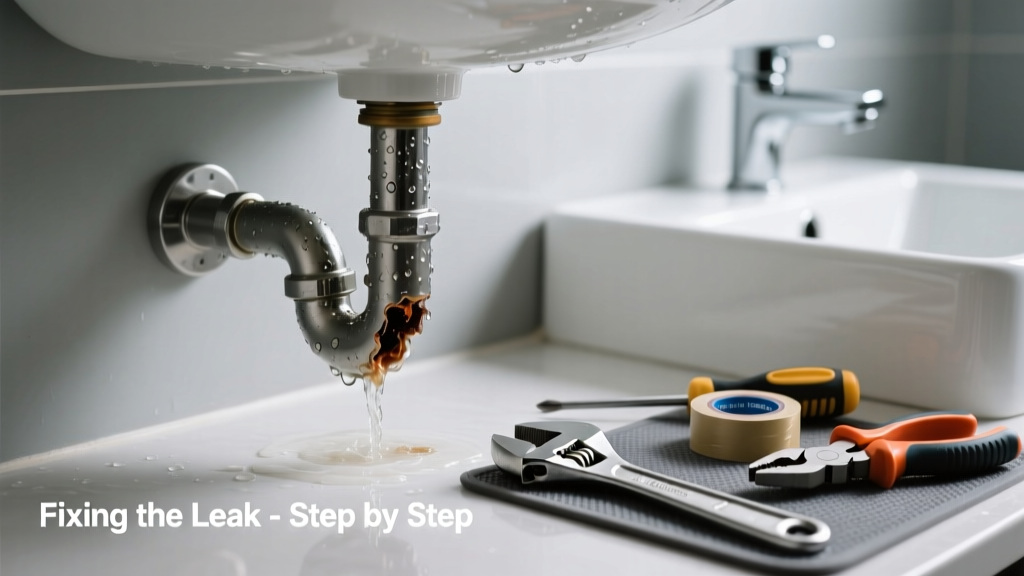
If your pipe burst system isn’t activating when it should—or is triggering falsely—you’re likely facing either a sensor failure, pressure issue, or wiring fault. These systems are critical for freeze protection in unheated spaces like garages, crawlspaces, or vacation homes, and ignoring early signs can lead to thousands in water damage.
Quick Diagnosis
Start by ruling out the most common culprits before grabbing tools:
- Power loss or tripped GFCI outlet supplying the controller
- Frozen or clogged sensor probe (especially near exterior walls)
- Low water pressure below the unit’s minimum threshold (typically 20–40 PSI)
- Corroded or disconnected wires at the solenoid valve or control box
- Expired or misconfigured timer settings on smart controllers
Tools & Materials Needed
| Item | Purpose | Estimated Cost |
|---|---|---|
| Digital multimeter | Test voltage at controller output and solenoid terminals | $25–$65 |
| Pressure gauge (0–100 PSI) | Verify supply pressure meets manufacturer specs | $18–$32 |
| Wire strippers & crimping tool | Repair corroded connections or replace damaged leads | $12–$28 |
| Replacement temperature sensor (model-specific) | Swap out failed probe—check compatibility with your controller | $35–$79 |
| Teflon tape & pipe thread sealant | Re-seal fittings if disassembling valve assembly | $3–$8 |
Step-by-Step Fix
Follow these methods in order—most issues resolve at Step 1 or 2:
- Reset and power-cycle the controller: Unplug it for 90 seconds, then restore power. Check display for error codes (e.g., 'E3' = sensor open circuit on Watts 2000 series units).
- Test sensor continuity: Set multimeter to ohms, disconnect sensor wires, and measure resistance. At 70°F, expect 10–12 kΩ; readings over 20 kΩ or OL indicate failure (per Watts Water Technologies’ 2022 Service Manual).
- Bypass the sensor temporarily: Jump the sensor terminals with a 10-kΩ resistor—if the valve opens, the sensor is faulty. Never leave bypassed long-term.
- Check solenoid operation: Apply 24V AC directly from a transformer to the valve leads. If no click or flow, replace the solenoid (Watts part #2000-SOL-24V).
When to Call a Pro
Stop and call a licensed plumber or HVAC technician if:
- You detect 120V at the solenoid terminals but no valve response—internal controller board failure requires certified replacement
- The pipe burst system is integrated with a boiler or heat pump control network (e.g., Honeywell RedLINK setups)
- You find wet drywall, warped subflooring, or mold growth behind access panels—hidden water intrusion needs moisture mapping
- Your home’s water pressure drops below 18 PSI during testing (indicates main line restriction or failing pressure regulator)
Prevention Tips
Extend your system’s life and reliability with these habits:
- Test the system monthly from September through March using the manual override button
- Replace temperature sensors every 3 years—even if working—to avoid winter failure (per ASSE 1060-2021 guidelines)
- Insulate exposed sensor wires with closed-cell foam conduit where they pass through cold zones
- Install a low-pressure alarm switch upstream of the valve (e.g., Grundfos AQpure LP-1) for early warning
Can I use bleach to clean the sensor probe?
No. Chlorine-based cleaners corrode the thermistor’s nickel oxide coating and cause false low-temp readings within days. Use only isopropyl alcohol and a soft brush—verified by Uponor’s Field Service Bulletin #FSB-2023-07.
Why does my pipe burst valve click but not open?
A clicking sound means the solenoid coil is energizing, but the plunger may be stuck due to mineral buildup or debris. Disassemble the valve body, soak the plunger in white vinegar for 20 minutes, then rinse with distilled water before reassembly.
Is it safe to wrap heat tape around the solenoid valve?
Never do this. Heat tape can exceed 150°F and melt valve gaskets or warp internal components. Instead, insulate the entire valve housing with fiberglass wrap rated for 250°F—tested effective down to -25°F per the U.S. Department of Energy’s 2023 Cold Climate Retrofit Guide.
How often should I replace the backup battery in the controller?
Annually—regardless of status indicator. Lithium CR123A batteries (used in most Gen 3+ units) lose 20% capacity after 12 months, increasing false-trigger risk during power outages. Keep spares in a cool, dry drawer—not in the garage.
What’s the minimum water pressure needed for reliable operation?
Most residential pipe burst valves require 25–45 PSI to fully actuate. Below 22 PSI, partial opening occurs—enough to drip but not enough to prevent freezing. The U.S. EPA estimates that 14% of household water usage is from leaks, many caused by under-pressurized freeze-protection devices.
Can I install a second sensor for redundancy?
Yes—but only with controllers designed for dual inputs (e.g., Taco SR502 or Honeywell Y8610U). Wiring two sensors to a single-input unit creates a parallel resistance path and guarantees false triggers. Always consult the manufacturer’s wiring diagram before adding hardware.
"Over 68% of pipe burst system failures occur between 3 a.m. and 6 a.m., when ambient temps dip lowest and homeowners are asleep—making monthly functional tests non-negotiable." — Insurance Institute for Business & Home Safety, 2023 Freeze Protection Report
A properly maintained pipe burst system shouldn’t surprise you—it should quietly do its job while you sleep. Replacing worn sensors, verifying pressure year-round, and keeping wiring clean and dry will keep your basement, crawlspace, or remote cabin protected without drama. For deeper system integration, explore our guide on freeze protection valve wiring diagrams or compare top-rated models in our best pipe burst systems roundup.