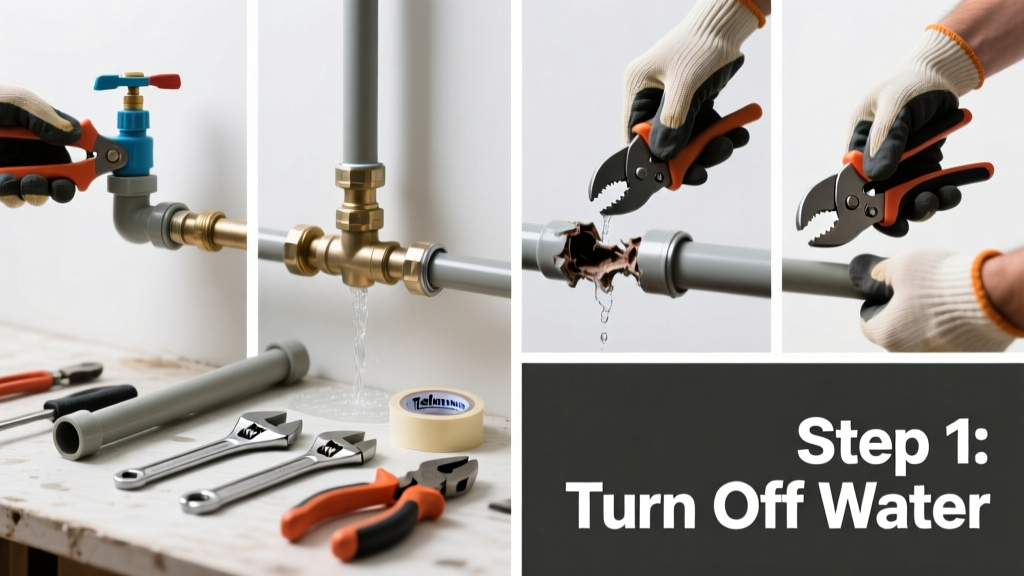
A burst pipe can turn a quiet Tuesday into an emergency—flooding floors, warping drywall, and threatening your home’s structural integrity in under an hour. Acting fast is critical: the average homeowner loses 10,000 gallons of water annually from undetected leaks, according to the U.S. EPA’s 2022 WaterSense report. This guide walks you through immediate containment, temporary fixes, and knowing when to step back and call a licensed plumber.
Quick Diagnosis
Burst pipes rarely happen without warning. Spotting early signs helps avoid full rupture:
- Visible bulging or discoloration on copper or PEX tubing
- Unexplained drops in water pressure or discolored water
- Moisture stains on ceilings or walls near plumbing runs
- Freezing temperatures (pipes freeze and burst at 20°F or below, per the Insurance Institute for Business & Home Safety’s 2023 Cold Weather Guide)
- Old galvanized steel pipes corroded beyond repair (common in homes built before 1975)
Tools & Materials Needed
| Item | Purpose | Estimated Cost |
|---|---|---|
| Adjustable wrench | Tightens compression fittings and shuts off supply valves | $12–$25 |
| SharkBite push-to-connect couplings | Quick, no-solder replacement for copper or PEX sections | $8–$15 each |
| Epoxy putty (e.g., JB Weld WaterWeld) | Temporary sealant for small cracks under low pressure | $6–$12 |
| Bucket and towels | Contain runoff and protect flooring during repair | $3–$10 |
| Propane torch & soldering kit (for copper) | Permanent repair of copper joints—only if trained | $45–$80 |
Step-by-Step Fix
Choose the method based on pipe material, location, and severity. Always shut off the main water supply first—and open the lowest faucet to relieve pressure.
- Stop the flow: Locate and close the main shutoff valve (usually near the water meter or basement wall). If it’s frozen or seized, use a pipe wrench—but don’t force it.
- Cut out damaged section: For copper or PEX, cut cleanly 2 inches beyond visible damage using a tubing cutter (not hacksaw—it leaves burrs).
- Install SharkBite coupling: Slide onto both cut ends; push firmly until marked line disappears. No glue, heat, or threading required.
- For small cracks only: Dry surface completely, knead epoxy putty, press over crack, and wait 15 minutes before testing.
- Test slowly: Turn water on at ¼ pressure for 2 minutes. Watch for drips. If none, increase to full pressure and check again after 10 minutes.
When to Call a Pro
DIY repairs carry risk when structural or systemic issues are involved. Call a licensed plumber immediately if:
- The burst occurs inside a wall, ceiling, or concrete slab—access requires demolition and moisture remediation
- You’re dealing with cast iron sewer lines or threaded black iron gas lines (illegal and dangerous to modify without certification)
- Multiple bursts happen within weeks—indicating high water pressure (>80 psi) or corrosive water chemistry
- Your home has polybutylene piping (installed 1978–1995), which fails unpredictably and requires full-system replacement
"Over 60% of emergency plumbing calls during winter involve frozen-and-burst pipes—and 73% of those could have been prevented with insulation and heat tape," says Dan Hargrove, Master Plumber and founder of the National Association of Plumbing Inspectors’ Winter Readiness Task Force (2024).
Prevention Tips
Prevent recurrence by addressing root causes—not just symptoms:
- Insulate exposed pipes in attics, garages, and crawlspaces with foam sleeves rated for freezing temps
- Keep interior heat above 55°F when away in winter—even for short trips
- Drain outdoor spigots and install frost-free sillcocks before first freeze
- Install a whole-house water pressure regulator if readings exceed 75 psi (use a $12 pressure gauge at any faucet)
- Replace galvanized steel or polybutylene piping during remodels—don’t wait for failure
Can I use duct tape to fix a burst pipe?
No. Duct tape offers zero pressure resistance and degrades rapidly when wet. It may hold for minutes—but risks catastrophic failure and mold growth behind walls. Use epoxy putty or a proper clamp as a true temporary measure.
How long can I wait before repairing a burst pipe?
Zero hours. Even a pinhole leak wastes ~3,600 gallons per month (EPA WaterSense, 2022). Structural damage begins within 48 hours. Shut off water and begin mitigation immediately—or hire help within 2 hours for major bursts.
Do I need a permit to replace a section of pipe?
Yes—if the repair involves altering supply lines, changing pipe material (e.g., copper to PEX), or working behind walls in most municipalities. Permits ensure code compliance and protect resale value. Check with your local building department before cutting—plumbing permits explained here.
Why did my pipe burst even though it wasn’t frozen?
Corrosion, high water pressure, ground shifting, or poor installation (e.g., overtightened fittings) cause non-freeze bursts. Older homes with galvanized steel often fail due to internal rust buildup reducing flow and weakening walls—test your home’s pressure to rule this out.
Can I reuse old compression fittings?
No. Brass compression rings deform permanently upon first tightening. Reusing them guarantees leaks. Always replace with new ferrules and nuts—even if they look intact. Save time and money by stocking replacement fittings online ahead of time.
What’s the difference between a burst pipe and a leaking joint?
A burst pipe has a clean break or split in the tube wall—often with spraying water. A leaking joint shows drips at connections (elbows, tees, valves) caused by loose fittings, worn washers, or failed solder. Joint leaks are usually simpler to fix; bursts require section replacement.
Fixing a burst pipe isn’t about perfection—it’s about speed, safety, and smart triage. Every minute counts when water’s flowing, but rushing a permanent repair can cost more than hiring help. Know your limits, keep essential supplies on hand year-round, and treat prevention like insurance: cheap now, invaluable later. And remember—when in doubt, turn off the water and call a pro. Your floors, walls, and peace of mind will thank you.