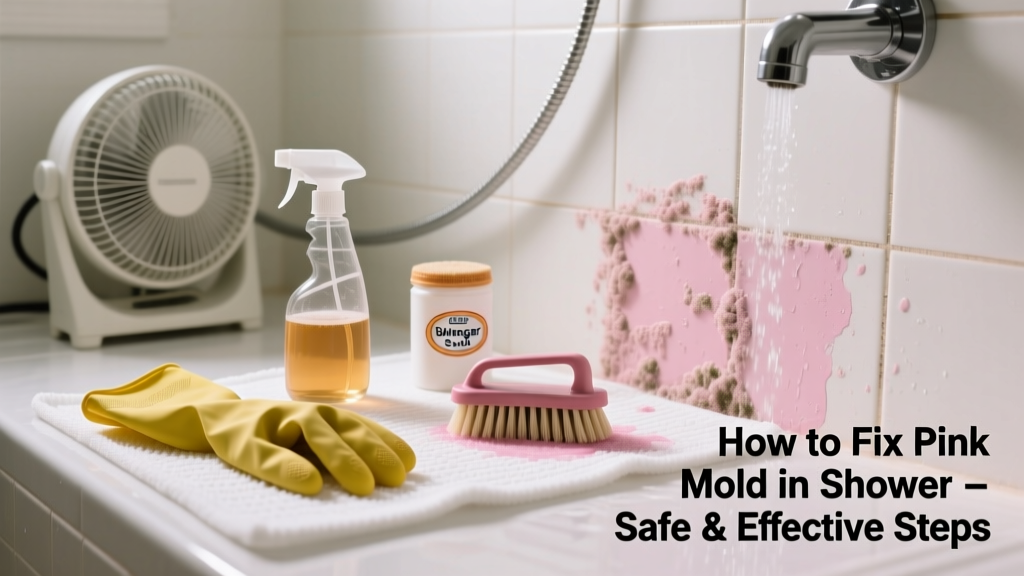
Pink mold in your shower isn’t actually mold—it’s a bacteria called Serratia marcescens, thriving in damp, soapy residue. Left untreated, it stains grout, smells musty, and can trigger respiratory irritation—especially for kids or people with asthma. The good news? Most cases respond well to targeted cleaning and airflow fixes.
Quick Diagnosis
This slimy pink or orange film loves warm, humid spots where soap scum and moisture linger. Here’s what usually invites it in:
- Inadequate bathroom ventilation (no fan, or fan runs less than 20 minutes post-shower)
- Soap residue buildup on tile, silicone, or shower curtains
- Hard water deposits that trap organic matter
- Old or cracked caulk harboring biofilm
- Showerheads or drain covers clogged with hair and debris
Tools & Materials Needed
| Item | Purpose | Estimated Cost |
|---|---|---|
| White vinegar (undiluted) | Kills S. marcescens without toxic fumes; safer than bleach on grout and silicone | $2–$4 |
| Hydrogen peroxide (3%) | Effective disinfectant that breaks down biofilm without discoloring surfaces | $1–$3 |
| Soft-bristle scrub brush or old toothbrush | Cleans crevices without scratching tile or acrylic | $1–$5 |
| Microfiber cloths | Removes residue without leaving lint or streaks | $5–$12 for pack of 6 |
| Exhaust fan timer switch (optional upgrade) | Ensures fan runs 20+ minutes after shower—critical for humidity control | $15–$25 |
Step-by-Step Fix
Use these methods in order—start gentle, escalate only if needed:
- Vinegar soak + scrub: Spray undiluted white vinegar on affected areas (grout lines, caulk edges, showerhead base). Let sit 10–15 minutes, then scrub with soft brush. Wipe dry with microfiber cloth.
- Hydrogen peroxide follow-up: After vinegar dries (30 min), mist 3% hydrogen peroxide on same spots. Let air-dry—no rinsing needed. This targets residual biofilm.
- Caulk refresh (if discolored or cracked): Cut out old caulk using a utility knife and caulk removal tool. Clean seam with vinegar, let dry fully, then apply 100% silicone mildew-resistant caulk like GE Advanced Silicone II.
- Showerhead deep clean: Soak detachable showerhead in vinegar for 1 hour. Use a toothbrush to scrub mineral buildup from nozzles. Rinse thoroughly before reattaching.
When to Call a Pro
DIY stops working—and becomes unsafe—when:
- Pink staining appears behind tiles, under baseboards, or inside walls (sign of hidden moisture intrusion)
- Mold returns within 7 days despite consistent cleaning and ventilation improvements
- You detect a persistent musty odor even after cleaning and fan use
- Your home has unvented gas heaters or a history of chronic leaks (e.g., recurring ceiling stains above the bathroom)
According to the Insurance Institute for Business & Home Safety's 2023 report, 68% of bathroom microbial growth issues linked to structural moisture require licensed water damage restoration—not surface cleaning.
Prevention Tips
Preventing pink bacteria is about disrupting its habitat—not just killing it. Focus on consistency:
- Run your exhaust fan for at least 20 minutes after every shower (install a timer switch if yours doesn’t auto-shutoff)
- Wipe down walls, doors, and fixtures with a squeegee or dry microfiber cloth after each use
- Switch to liquid castile soap or fragrance-free body wash—bar soaps leave more residue
- Clean shower curtain liners monthly in the washing machine with vinegar and baking soda
- Test water hardness; if above 7 gpg, install a point-of-use shower filter to reduce mineral buildup
Can I use bleach on this?
No—bleach is ineffective against Serratia marcescens biofilm and damages grout, silicone, and metal fixtures over time. The U.S. EPA confirms bleach doesn’t penetrate porous surfaces where the bacteria embed, and its fumes pose greater inhalation risk than vinegar or peroxide.
Is pink mold dangerous to breathe?
While not as hazardous as black mold (Stachybotrys), S. marcescens can cause urinary tract infections, wound infections, and pneumonia in immunocompromised individuals. The CDC notes it’s a documented opportunistic pathogen in healthcare settings—making consistent removal especially important for households with elderly or chronically ill members.
Why does it keep coming back in the same spot?
Recurring pink staining almost always points to one of two things: either trapped moisture beneath caulk or tile (check for soft grout or spongy flooring), or persistent soap residue combined with insufficient air exchange. A 2022 study in Indoor Air found that bathrooms with relative humidity above 60% for >2 hours daily had 4.3× higher S. marcescens recurrence rates.
Does vinegar really kill pink mold?
Yes—but only when used correctly. Undiluted white vinegar (5% acetic acid) lowers pH enough to disrupt bacterial cell membranes. For best results, let it dwell 10–15 minutes before scrubbing. Don’t mix vinegar with hydrogen peroxide or bleach—it creates harmful chlorine gas.
Can I paint over pink mold on shower walls?
Never. Painting seals in moisture and organic matter, creating an ideal breeding ground underneath. If you see pink on drywall or greenboard behind tile, stop and consult a water damage specialist. Mold-resistant drywall alone won’t solve underlying humidity or leak issues.
How often should I clean my shower to prevent it?
Weekly surface cleaning with vinegar or peroxide prevents buildup—but daily habits matter more. Squeegeeing after each shower cuts surface moisture time by 90%. Pair that with 20-minute post-shower fan runtime, and most homes eliminate recurrence entirely.
Fixing pink mold isn’t about fighting bacteria—it’s about making your shower inhospitable to it. Once you break the cycle of moisture + residue, the pink fades and stays gone. For deeper issues like recurring leaks or wall moisture, check our bathroom leak detection guide or exhaust fan installation steps. And if you’ve tried everything and still see pink returning near the floor drain, it may be time to inspect your shower drain repair options.