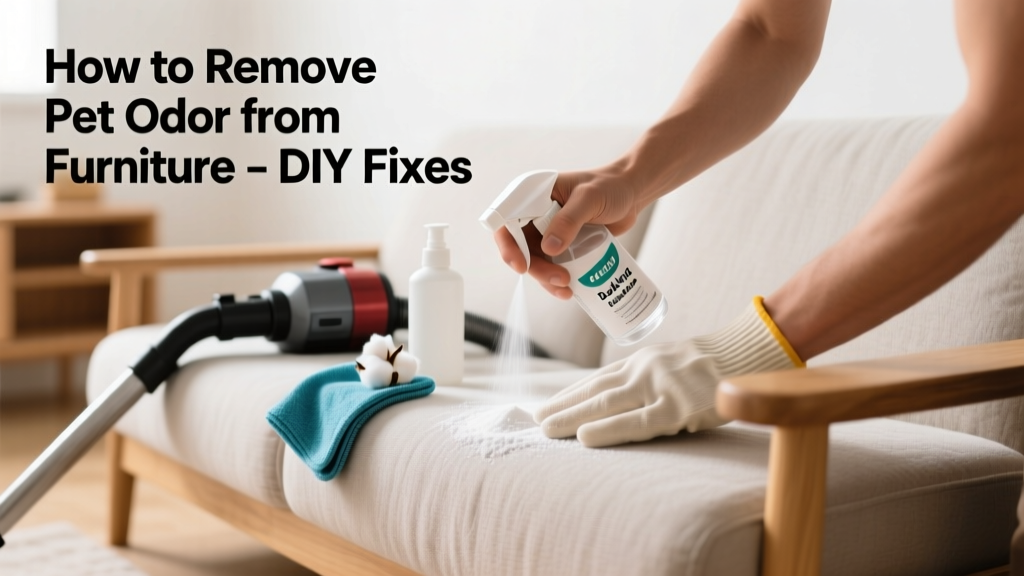
That faint whiff of dog breath or lingering cat urine on your favorite couch isn’t just annoying—it’s a sign that odor-causing bacteria and organic residue have penetrated deep into fabric, padding, or even the frame. Left untreated, these odors worsen, attract pests, and degrade materials over time. The good news? Most cases respond well to targeted, low-risk cleaning—no full replacement required.
Quick Diagnosis
Before grabbing supplies, identify the source and severity:
- Fresh accidents (less than 24 hours old) — surface-level moisture and ammonia scent
- Recurring spots (e.g., near doorways or windows) — behavioral marking, not accidents
- Deep-set odor with no visible stain — urine salts crystallized in foam or wood frame
- Musty, sour smell — mold growth from chronic dampness beneath upholstery
- Odor intensifies when warm or humid — trapped moisture releasing volatile compounds
Tools & Materials Needed
| Item | Purpose | Estimated Cost |
|---|---|---|
| Enzyme-based cleaner (e.g., Nature's Miracle) | Breaks down uric acid and organic proteins at the molecular level | $12–$22 |
| White vinegar (5% acidity) | Neutralizes alkaline urine salts; safe for most fabrics | $3–$5 |
| Microfiber cloths & clean towels | Blotting—not rubbing—to lift moisture without spreading residue | $8–$15 |
| Shop vacuum with wet/dry capability | Extracts deep moisture from cushions and crevices | $60–$120 |
| pH test strips (optional) | Confirms urine salt presence (pH >7) before enzyme treatment | $10–$18 |
Step-by-Step Fix
- Blot & dry immediately: Use clean, absorbent towels to press—not rub—fresh urine. Repeat until no moisture transfers. For older stains, lightly mist with distilled water first to rehydrate crystals, then blot again.
- Apply enzyme cleaner: Saturate the affected area—including 2 inches beyond visible staining. Let sit 10–15 minutes (never dry completely). Enzymes need moisture and time to digest odor sources.
- Vinegar rinse (for persistent alkaline odor): Mix 1 part white vinegar with 2 parts water. Lightly mist *after* enzyme dwell time, then blot. Vinegar lowers pH, helping enzymes work more efficiently.
- Air-dry thoroughly: Use fans (not heat guns) and open windows. Avoid sealing cushions in plastic—trapped humidity breeds mold. Dry time: minimum 24–48 hours depending on foam density.
- Repeat if needed: If odor returns after drying, it means residual salts remain. Re-treat with enzyme cleaner—do not skip dwell time or blotting.
When to Call a Pro
DIY fails when odor originates from structural layers you can’t access—or when safety is compromised. Call a certified upholstery restoration technician if:
- The odor persists after two full enzyme treatments and 72+ hours of airflow
- You detect dampness or softening in the wooden frame—possible rot or mold infiltration
- Your pet has urinary tract issues and accidents are frequent and unexplained (vet consult first)
- The furniture is antique, glued-laminated, or contains memory foam with non-removable covers
"Urine salts can migrate up to 3 inches into cushion foam and bond permanently to polyurethane if left untreated beyond 72 hours." — IICRC S500 Water Damage Restoration Standard, 2022
Prevention Tips
Stop future odors before they start:
- Use washable, zippered furniture covers treated with antimicrobial finish
- Train pets to use designated potty zones with consistent rewards—not punishment
- Vacuum upholstered furniture weekly with a HEPA-filter vacuum to remove dander and dried residue
- Place pet beds away from high-traffic seating areas and rotate them monthly
- Wipe paws before entry during rainy or snowy months to reduce tracked-in ammonia from de-icing salts
Can I use bleach on this?
No. Bleach reacts with urine to produce toxic chloramine gas and doesn’t break down uric acid—the real odor source. It may also weaken fibers and discolor upholstery. Stick to enzymatic or vinegar-based solutions.
Will baking soda alone fix it?
Baking soda only masks odor temporarily by absorbing surface volatiles. It does nothing to neutralize or digest uric acid crystals embedded in foam. Use it only as a final deodorizing dust *after* enzyme treatment and full drying.
What if my cat keeps spraying the same spot?
This is territorial behavior—not an accident. Clean thoroughly with enzyme solution, then apply Feliway Classic spray (a synthetic feline facial pheromone) to the area twice daily for 14 days. Block visual access to the spot with furniture rearrangement or temporary barriers.
Is ozone treatment safe for furniture?
Ozone generators can damage rubber, foam, and natural fibers over repeated use. The EPA warns against using them in occupied spaces due to respiratory risks. They’re rarely needed if enzyme cleaning and drying are done correctly. Professional upholstery cleaning is safer and more effective.
Can I steam-clean pet odor out?
Steam can set urine proteins deeper into fibers and activate dormant odor compounds. Only use steam *after* enzyme treatment and full drying—and only on manufacturer-approved fabrics. Test a hidden seam first. Better alternatives include low-moisture extraction or dry-cleaning solvents labeled for pet odors.
Does UV light detect old urine stains?
Yes—blacklight (365 nm wavelength) reveals dried urine as fluorescent yellow-green patches, even under carpet or behind baseboards. But detection ≠ removal: always follow up with enzyme treatment, not just scrubbing the visible spot.
Removing pet odor from furniture isn’t about masking—it’s about precision, patience, and chemistry. Treat the root cause, not the symptom, and you’ll extend your furniture’s life while keeping your home truly fresh. If you’ve tried enzyme treatments twice with no improvement, don’t waste more time or money: reach out to a certified upholstery restoration specialist. They’ll inspect seams, frames, and sub-layers with moisture meters and industrial-grade extraction—tools most homeowners don’t own or operate safely.