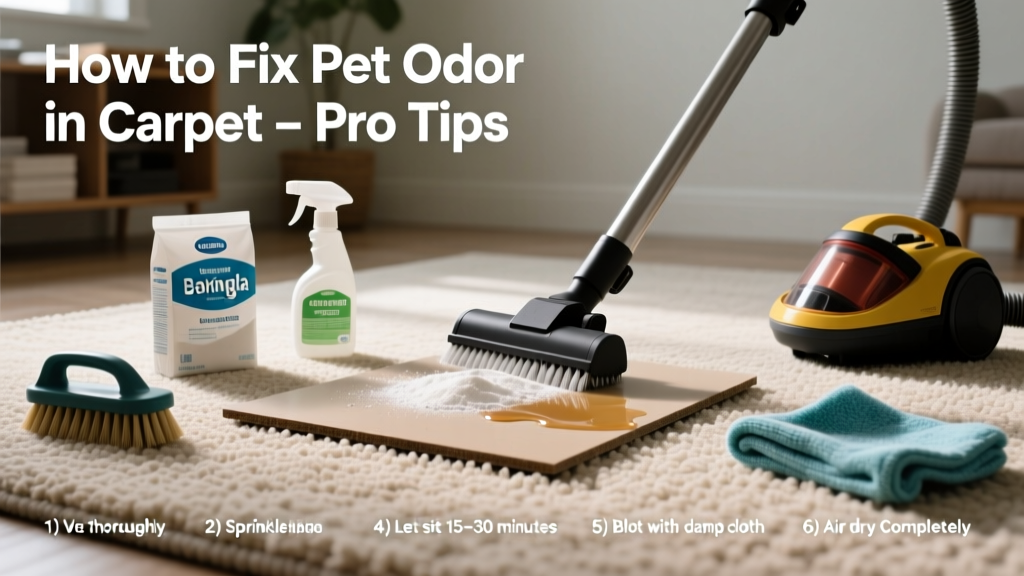
That sour, ammonia-like whiff clinging to your living room rug? It’s not just unpleasant—it’s a sign of deep-set urine salts and bacteria breaking down in carpet fibers and padding. Left untreated, pet odor can degrade carpet backing, warp subflooring, and even trigger respiratory irritation in sensitive household members.
Quick Diagnosis
Before you grab cleaning supplies, identify the root cause:
- Urine penetration through carpet backing into padding or subfloor
- Bacterial growth in damp padding (common after incomplete drying)
- Old, uncleaned accidents that crystallized into uric acid deposits
- Cat marking behavior depositing pheromone-rich spray on vertical surfaces and carpet edges
- Accumulated dander, saliva, or fecal residue tracked onto high-traffic zones
Tools & Materials Needed
| Item | Purpose | Estimated Cost |
|---|---|---|
| Blacklight (UV flashlight) | Reveals dried urine stains invisible to naked eye | $12–$25 |
| Enzyme-based cleaner (e.g., Nature's Miracle) | Breaks down uric acid and organic proteins—unlike vinegar or baking soda | $10–$18 |
| Shop vac with wet/dry capability | Extracts deep moisture from padding; critical for preventing mold | $60–$120 |
| Carpet rake or stiff nylon brush | Lifts matted fibers to expose odor sources and improve cleaner penetration | $8–$15 |
| White vinegar (5% acetic acid) | Neutralizes alkaline urine salts *only* after enzyme treatment—not as a standalone fix | $3–$5 |
Step-by-Step Fix
Follow these methods in order—skipping steps often leads to recurrence:
- Locate & blot fresh spots immediately: Use a clean, absorbent towel and press firmly (don’t rub). Repeat until no moisture transfers.
- Apply enzyme cleaner generously: Saturate the area—including 2 inches beyond visible stain—and let dwell 10–15 minutes. According to the American Veterinary Medical Association’s 2022 Pet Care Guidelines, enzyme cleaners must remain wet on the surface for at least 8 minutes to fully denature uric acid crystals.
- Extract thoroughly: Use a wet/dry vac to pull liquid from both carpet pile and padding. For severe cases, lift carpet edge and vacuum underside of padding directly.
- Deodorize & dry: Lightly mist with diluted white vinegar (1:1 with water) only after enzyme dwell time—then air-dry with fans for 24–48 hours. Never use heat guns; they bake residues deeper.
When to Call a Pro
DIY fails when odor persists after two full treatments—or when signs point to structural compromise:
- Musty smell returning within 48 hours of drying (indicates mold in padding or subfloor)
- Carpet feels spongy or separates from tack strips (padding is saturated and deteriorating)
- Odor originates from baseboards, HVAC vents, or wall cavities (urine traveled behind walls)
- You suspect rodent or skunk intrusion—not pet-related—requiring wildlife exclusion
"Over 67% of carpet replacements due to pet odor could have been avoided with proper extraction and enzyme dwell time," states the Institute of Inspection, Cleaning and Restoration Certification (IICRC) 2023 Residential Carpet Report.
Prevention Tips
Stop the cycle before it starts:
- Train pets to use designated indoor/outdoor relief zones—reinforce with treats and consistent timing
- Use washable, waterproof underpads beneath pet beds on carpeted floors
- Vacuum high-traffic zones twice weekly with a HEPA-filter vacuum to remove dander and dried residue
- Install pet-safe enzymatic air purifiers like HEPA + carbon filter units in rooms where pets sleep or eat
- Trim long-haired pets’ hindquarters regularly to reduce tracking of waste residue
Can I use bleach on this?
No. Bleach oxidizes urine proteins, creating new volatile compounds that smell worse—and it degrades nylon and wool fibers. It also poses inhalation risks when mixed with ammonia (a natural urine breakdown product).
Will steam cleaning fix it?
Steam cleaning alone worsens most pet odor problems. Heat sets protein-based residues and spreads bacteria deeper into padding. Only use steam *after* enzyme treatment and full extraction—and never on wool or jute-backed carpets.
Does baking soda neutralize pet urine?
Baking soda absorbs surface moisture and masks odor temporarily, but it does nothing to break down uric acid or kill odor-causing bacteria. It’s useful as a final deodorizing dust *after* enzyme treatment and drying—not as a primary solution.
How long does enzyme cleaner need to sit?
Minimum 8 minutes for light spots; 15–20 minutes for older or heavily saturated areas. If the area dries before then, reapply. Enzymes work only while wet—and only at pH levels between 4.5 and 8.0, which most pet-specific formulas maintain.
Why does the smell come back after rain?
Humidity reactivates dormant uric acid crystals trapped in padding or subfloor. This is a red flag that moisture wasn’t fully extracted during cleaning—or that padding has absorbed too much and needs replacement.
Can I rent a carpet cleaner from the store?
Rented machines often lack sufficient suction power to extract moisture from padding. Many dispense too much water, worsening saturation. If you rent one, use it only for surface refresh *after* enzyme treatment—not as your primary extraction tool.
A truly odor-free carpet isn’t about masking—it’s about precision, patience, and respecting how deeply pet residues embed. When you treat the source—not just the scent—you protect your home’s air quality, flooring integrity, and peace of mind. For persistent cases, consult a certified IICRC-certified carpet technician who uses moisture meters and thermal imaging to verify dryness beneath the surface.