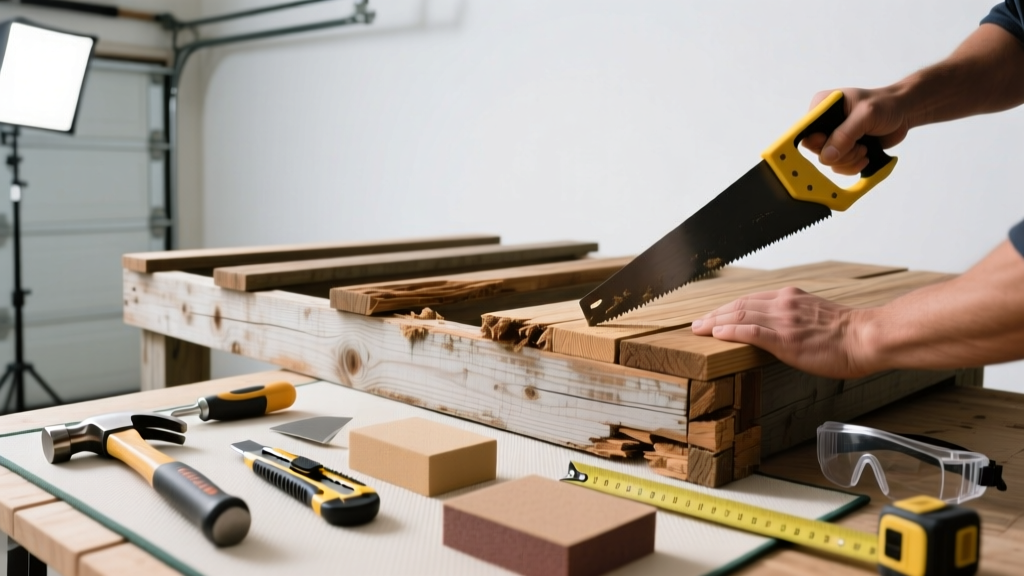
If you’ve spotted soft, spongy wood, dark discoloration, or crumbling grain on your pergola posts or beams, rot has taken hold—and it won’t fix itself. Left untreated, even localized rot can compromise structural integrity in under two seasons. The good news? Many cases are repairable without full replacement—if caught early.
Quick Diagnosis
Rotten wood on a pergola rarely appears out of nowhere. Here are the most common root causes:
- Direct soil contact—especially at post bases—traps moisture and invites fungal growth
- Poor drainage around footings, causing standing water to wick upward
- Unsealed end-grain cuts (like beam ends or notched rafters) absorbing rain like a sponge
- Older pressure-treated lumber where preservative has leached out over 15–20 years
- Algae or moss buildup blocking airflow and retaining dampness against wood surfaces
Tools & Materials Needed
| Item | Purpose | Estimated Cost |
|---|---|---|
| 4-in-1 screwdriver & cordless drill | Removing fasteners and driving new corrosion-resistant screws | $45–$95 |
| Reciprocating saw with pruning blade | Cutting away severely rotted sections cleanly and safely | $60–$130 |
| Wood hardener (e.g., Minwax High-Performance) | Stabilizing remaining sound wood before patching | $12–$18 |
| Epoxy wood filler (e.g., Abatron WoodEpox) | Filling voids that retain shape and resist moisture long-term | $28–$42 |
| Copper-based wood preservative (e.g., CopperGreen) | Brush-on treatment for exposed cut ends and vulnerable zones | $14–$22 |
Step-by-Step Fix
Choose the method based on severity. Start with visual and poke testing: if a screwdriver sinks in more than ¼ inch, replace or reinforce.
- Remove all compromised material: Use a chisel or reciprocating saw to cut back to solid, dry wood—minimum 2 inches beyond visible rot. Wear N95 and goggles; rot dust carries spores.
- Apply wood hardener: Brush liberally onto exposed grain until fully absorbed (usually 2 coats, 2 hours apart). Let cure 24 hours per manufacturer specs.
- Fill and rebuild: For gaps under 2 inches, use epoxy filler shaped with a putty knife. For larger losses (e.g., post base), sister a new pressure-treated 4×4 alongside using through-bolts and galvanized carriage bolts.
- Seal and protect: Prime all repaired areas with oil-based primer, then apply two coats of exterior-grade acrylic latex paint—or better yet, a semi-transparent stain with UV + mildew inhibitors.
When to Call a Pro
Don’t risk safety or code compliance in these situations:
- Rot extends more than 6 inches up a load-bearing post (especially if >30% cross-section compromised)
- You find rot inside hollow aluminum-clad or composite posts—hidden damage requires borescope inspection
- The pergola is attached to your home’s roofline or ledger board, and rot is present there (this risks house structural failure)
- Your local building department requires engineered drawings for repairs—common in high-wind or seismic zones per IRC 2021 Appendix A
Prevention Tips
Prevention isn’t just about sealing—it’s about interrupting the rot cycle at every stage:
- Elevate all posts at least 1 inch above concrete or stone using galvanized post anchors (never set directly in soil or embed in concrete)
- Install 4-inch gravel beds beneath footings to improve subsurface drainage
- Reapply copper naphthenate preservative to end grains every 3 years—studies show this extends PT lumber service life by 40% (Forest Products Laboratory, USDA 2022)
- Trim nearby tree branches to reduce shade and leaf litter accumulation—moisture retention drops 60% with full sun exposure (University of Florida IFAS Extension, 2021)
Can I use bleach on this?
No. Household bleach kills surface mold but doesn’t penetrate or stop underlying decay fungi—and it accelerates metal corrosion on fasteners and brackets. Instead, use a 1:10 vinegar-to-water solution for mild surface cleaning, followed by a borate-based fungicide like Bora-Care for active prevention.
Is pressure-treated wood immune to rot?
No. Modern ACQ-treated lumber resists termites and decay better than older CCA wood, but it still rots when constantly wet—especially at cut ends or where fasteners breach the treatment zone. According to the American Wood Protection Association (AWPA Standard M4-22), ground-contact rated lumber must be labeled “UC4B” or higher for pergola posts.
How long does a repaired pergola last?
A properly repaired and maintained pergola lasts 12–18 years post-fix. That assumes annual inspections, resealing of end grains, and prompt removal of debris from beam tops. Unrepaired, advanced rot can cause catastrophic failure within 18 months—per data from the Insurance Institute for Business & Home Safety’s 2023 report on outdoor structure failures.
"Rot doesn’t announce itself—it spreads silently along grain lines. By the time you see surface cracking, the damage is often 2–3x deeper than it looks." — Greg Gentry, Certified Master Carpenter & Outdoor Structure Inspector, 22 years field experience
Can I paint over epoxy filler?
Yes—but only after full cure (72 hours minimum for Abatron WoodEpox) and light sanding. Use oil-based primer first; water-based primers may not adhere reliably. Skip priming and you’ll get premature peeling, especially on south-facing beams exposed to intense UV.
Do I need a permit to replace a pergola post?
In most municipalities, yes—if the pergola is attached to your home or exceeds 200 sq ft. Detached, freestanding structures under 120 sq ft and under 10 ft tall often qualify for exemption (per IRC R105.2), but always verify with your local building department before cutting or bolting. A $75 permit fee beats a $2,000 stop-work order.
What’s the best sealant for pergola beams?
Use a penetrating oil-based sealer like Ready Seal or Armstrong Clark—not film-forming polyurethanes. Film formers trap moisture underneath and peel in UV exposure; penetrating oils condition wood while repelling water from within. Independent testing by Consumer Reports (2023) found oil-based sealers lasted 3.2 years on average vs. 1.7 years for acrylic topcoats on horizontal surfaces.
A rotting pergola isn’t just an eyesore—it’s a slow-motion liability. Catching it early saves money, time, and peace of mind. Even if you only tackle one post this weekend, you’re stopping decay before it reaches the next beam. And if you’re weighing whether to repair other rotting wood elements around your home, the same principles apply—just adjust for load and exposure. For persistent moisture issues, consider pairing repairs with a gutter redirection project or adding deck drainage channels beneath the structure.